

Birds help reinforce the sandy shores of islands.
A new study has shown that birds, by providing sandy islands with organic fertilizers, help promote the growth of plants that strengthen shorelines and protect them from erosion. This effect is especially important in the context of rising sea levels.
Natura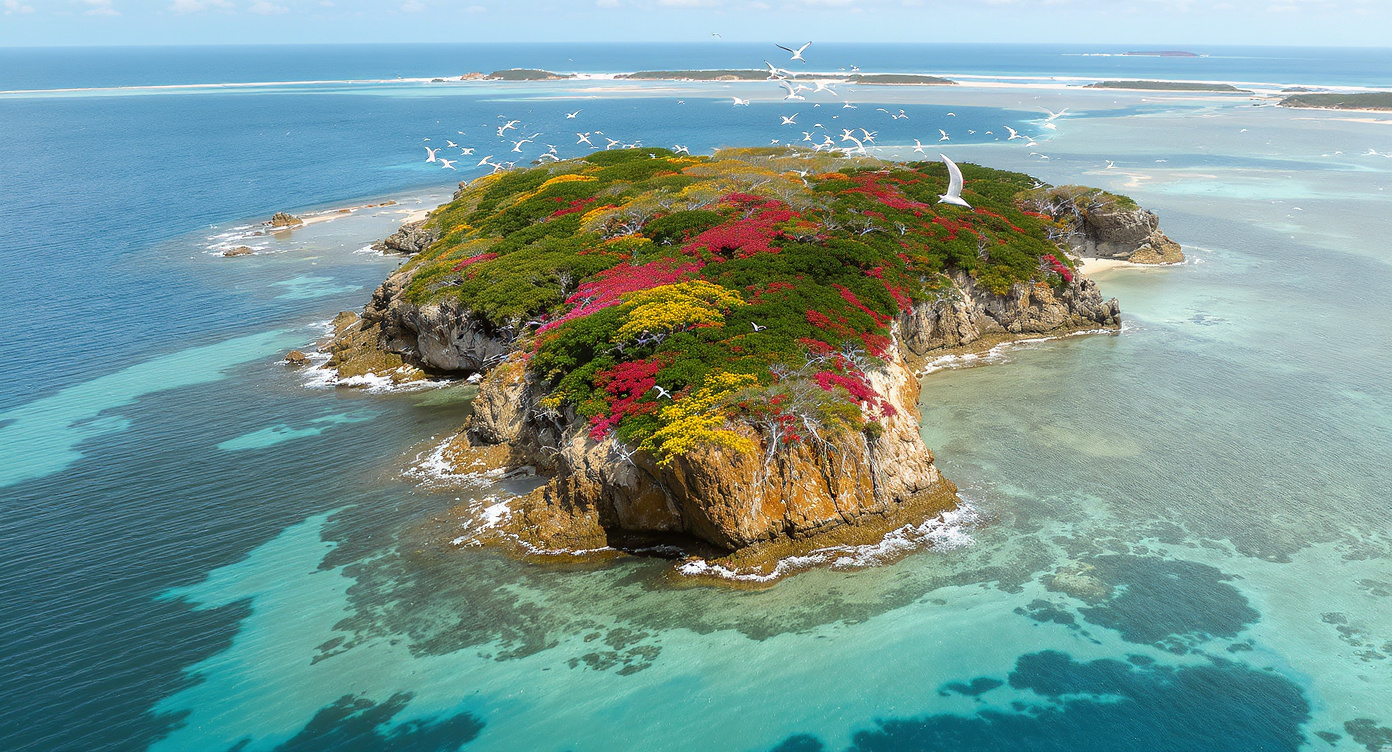
As sea levels rise, coastal ecosystems and their inhabitants face the threat of destruction. Researchers from the Netherlands have discovered an unusual mechanism that helps protect sandy shores from erosion.
The Role of Vegetation in Shoreline Stability
Coastal landscapes covered with vegetation play a crucial role in carbon sequestration, shoreline protection, and maintaining biodiversity. The formation of such shores is determined by the interaction between plant growth and sedimentation processes: dense and well-developed vegetation not only prevents sand from being washed away but also reinforces the coastline.
The Impact of Birds on Sandy Island Ecosystems
Studying these processes is especially important on small, uninhabited sandy islands, where environmental dynamics are high and the nutrient balance largely depends on external sources. In such conditions, birds influence the growth and distribution of plants by providing organic fertilizers. As sea levels rise and suitable nesting areas shrink, understanding the role of birds in maintaining ecosystem stability becomes vital for both bird conservation and shoreline protection.
Research on the Impact of Organic Fertilizers
Scientists from Utrecht University studied how the influx of organic fertilizers affects the functional characteristics of plants, the composition of plant communities, and the morphology of sandy islands in the Wadden Sea. The study involved 118 sample plots on five uninhabited islands, where researchers recorded plant species composition, height, biomass, root depth, soil organic content, and elevation above sea level.
To track nitrogen uptake from bird droppings, stable nitrogen isotope analysis was used on plant leaves. Based on data from nesting colonies, a spatial model was created to map fertilizer distribution within a radius of up to 300 meters. Vegetation condition was assessed using satellite imagery, while changes in topography were monitored with laser scanning data.
Main Findings
The influx of nitrogen from organic waste shifts plant communities toward nitrogen-loving species. Satellite analysis showed that the presence of birds amplifies the effect of spring greening on sand accumulation, enhancing the ability of plants to trap sediments at the start of the season. Organic fertilizers also directly increase nitrogen content in leaves. However, their impact on biomass, height, and root depth was less pronounced and depended on the season and substrate type.
Spatial Variability of the Effect
The study revealed significant spatial heterogeneity in the effect. On average across the islands, the interaction between fertilizers and vegetation explained only a few percent of the changes in elevation, but near large colonies, the contribution reached up to 13 percent. On islands with high natural sedimentation rates, the influence of birds was masked by natural processes.