

A new gas cloud has been discovered near the center of the Galaxy
Astronomers using the Very Large Telescope have discovered a new gas cloud near the black hole Sagittarius A* at the center of the Milky Way. This discovery helps to shed light on the origins of other clouds and the structure of our galaxy.
Cursus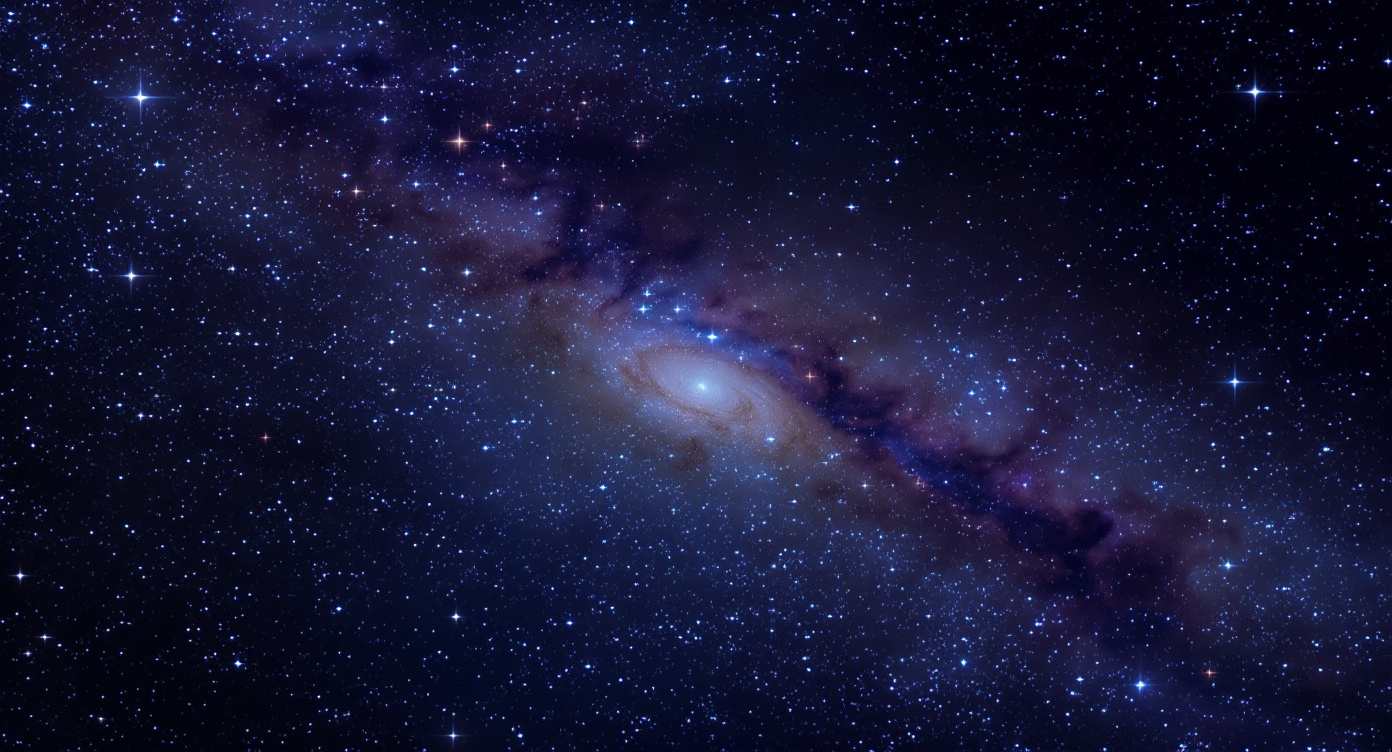
A very large telescope has recently enabled astronomers to discover a new gas cloud near the supermassive black hole Sagittarius A*. This discovery also helps scientists better understand the origins of two other nearby clouds.
New Insights into the Center of the Milky Way
Despite numerous studies, the structure of the Milky Way remains largely mysterious. Every year, new astronomical objects are detected, such as a recently discovered pulsar that rotates 122 times per second and is located at the center of our galaxy. The European Southern Observatory (ESO) has published a new image taken with the Very Large Telescope (VLT), which clearly shows the new gas cloud close to Sagittarius A*.
Equipment and Discovery
The observations were carried out using the advanced ERIS high-resolution imager and spectrograph on the VLT. This allowed astronomers from the Max Planck Institute for Extraterrestrial Physics to identify a new structure, now designated as G2t. The G2t cloud is located about 27,000 light-years from Earth and is surrounded by two other clouds—G1 and G2.
The Connection Between the Clouds
Observational data show that all three clouds are moving along similar orbits around the supermassive black hole. It is believed that they share a common origin. At the center of the galaxy lies a binary system of massive stars, IRS16SW, which orbits Sagittarius A*. As these stars move, they eject significant amounts of gas, from which the G1, G2, and G2t clouds have formed.
The Importance of New Observations
Images captured with the VLT also reveal other stars in this region. The supermassive black hole itself is not visible in the image, although it is located at its center. These new observations may contribute to further studies of the Milky Way’s structure and help identify previously unknown objects in its central region.