

For the first time, the disappearance of a star into a black hole has been recorded.
Astronomers have, for the first time, observed the disappearance of a massive star in the Andromeda galaxy without a supernova explosion—the star transformed directly into a black hole. This discovery will help scientists better understand the final stages of stellar evolution and aid in the search for new black holes throughout the Universe.
Cursus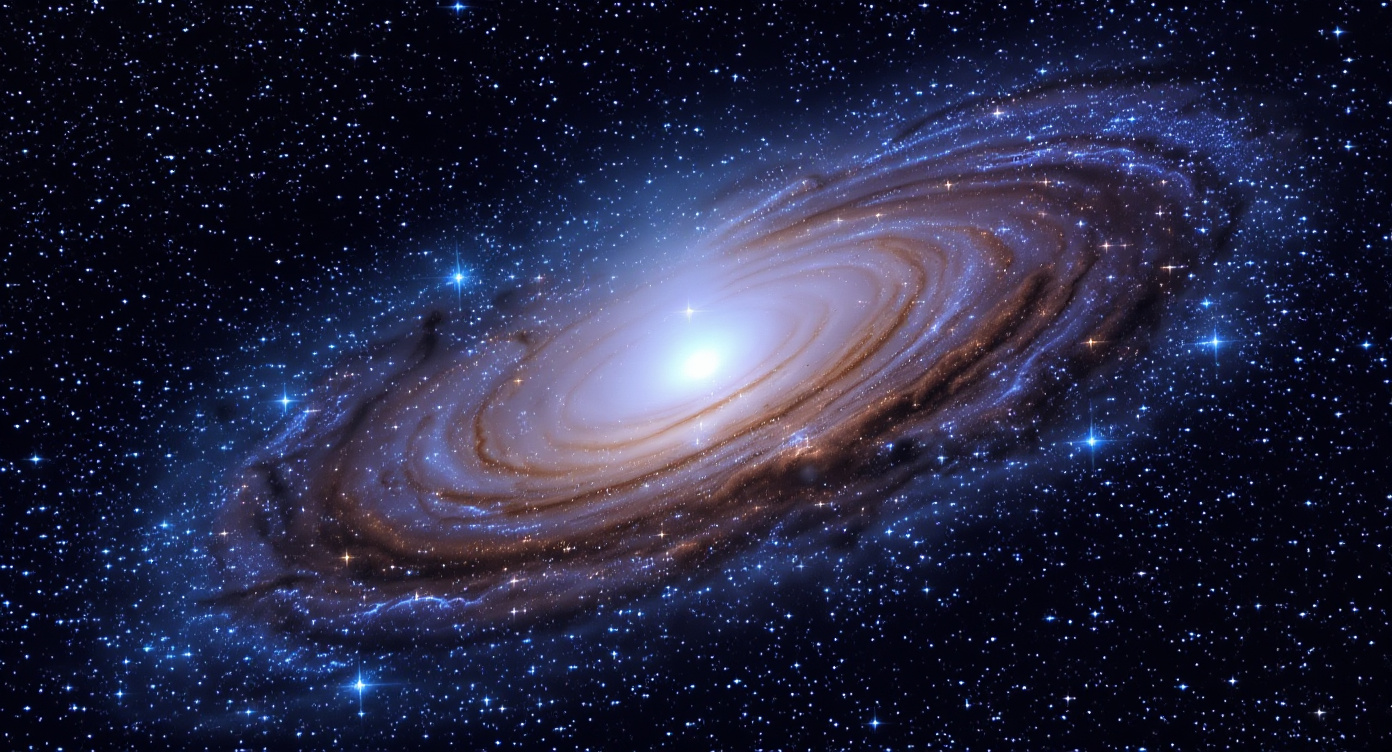
Astronomers have discovered a star in the Andromeda galaxy that is in the process of turning into a black hole. Although observing this transformation is extremely challenging due to the object's size, the discovery could help identify new black holes throughout the Universe.
The Fate of Massive Stars
The life cycle of stars often ends in tragedy: after billions of years, they explode as supernovae. However, the most massive among them can end their journey differently—by collapsing into black holes. This is exactly what happened to the star M31-2014-DS1, one of the brightest in the Andromeda galaxy, located more than 2.5 million light-years from Earth and possessing a mass 13 times greater than that of the Sun.
An Unusual Disappearance
Analyzing data from NASA's Neowise mission, a team led by Kishalay De from Columbia University discovered that more than a decade ago, this star suddenly increased its brightness, becoming 100,000 times brighter than the Sun, and then mysteriously vanished in 2023. To confirm this event, additional observations were conducted using the Hubble Space Telescope. Kishalay De notes:
“At that moment, everything became clear. Stars of such brightness and mass do not simply disappear into the darkness.”
Transformation into a Black Hole
According to astronomers, massive stars usually end their lives in a supernova explosion, after which they may become neutron stars or black holes. However, in the case of M31-2014-DS1, no explosion occurred. As Kishalay De explains, the star’s core collapsed in just a few hours, and now only a faint infrared glow can be observed. Detecting this new black hole is difficult because it is too small for current instruments to observe directly.
The Significance of the Discovery
This discovery could be key to finding new black holes in the Universe, especially when studying disappearing stars. New observation methods allow astronomers to better understand the processes occurring in the final stages of massive stars’ lives and expand our knowledge of the structure and evolution of the cosmos.