

The drought of the 16th century changed the fate of Easter Island.
A new study has revealed that the prolonged drought of the 16th century significantly transformed life on Easter Island, leading to major cultural and social changes. Researchers note that the island's inhabitants demonstrated remarkable resilience, adapting to the harsh climatic conditions.
Natura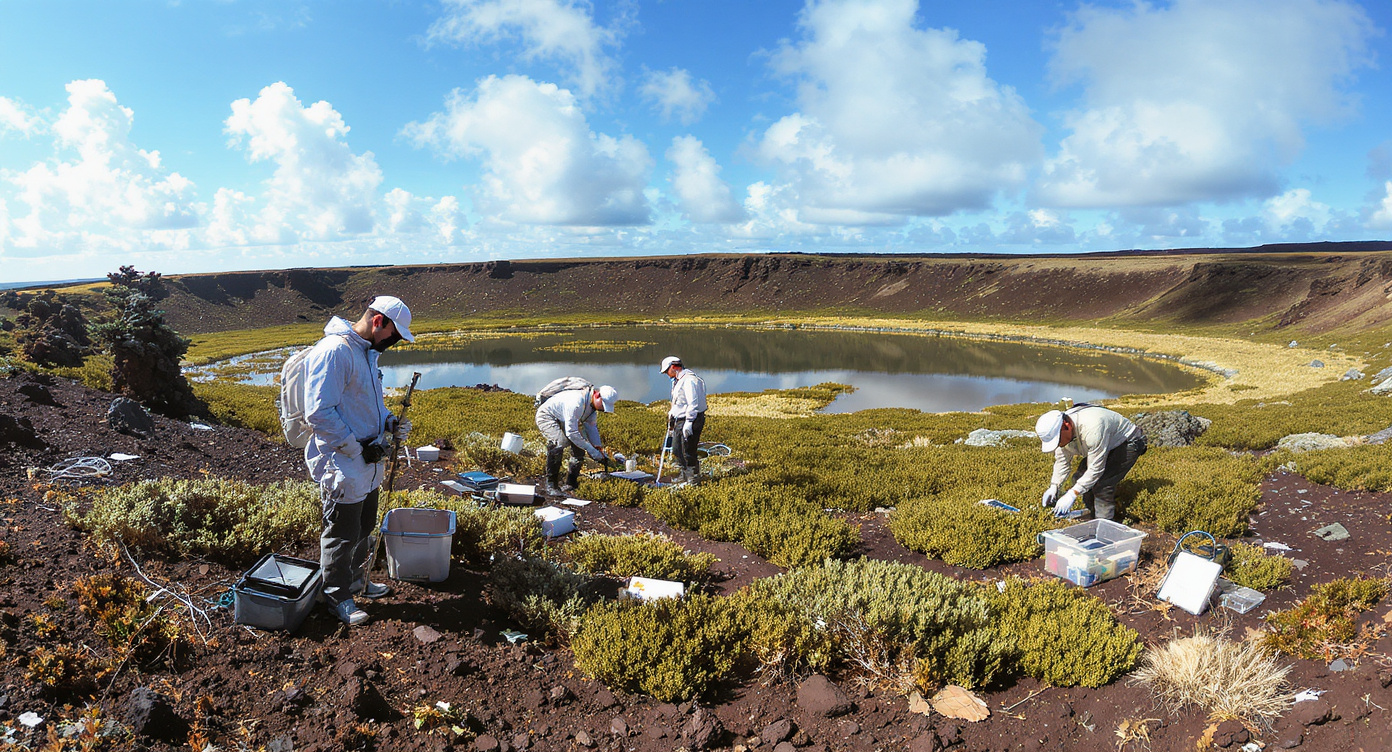
A new study conducted by scientists at the Lamont-Doherty Earth Observatory has provided the most compelling evidence to date that a prolonged drought began to change life on Rapa Nui (Easter Island) around the year 1550. To reconstruct the region’s climate history, researchers analyzed sediment cores extracted from two key freshwater sources on the island: the high-altitude Rano Aroi bog and the crater lake Rano Kao. These sediments contain natural chemical signals that reflect the ecological conditions of the past.
Reconstructing Climate Through Isotopes
By studying the hydrogen isotope composition in plant leaf waxes preserved in the sediments, the researchers were able to reconstruct rainfall patterns over the past 800 years. The results showed that in the mid-16th century, annual precipitation dropped sharply and remained low for more than a century. Rather than indicating a sudden societal collapse, the data suggest that the Rapa Nui communities managed to adapt and survive despite harsh and prolonged climatic challenges. Lead author Redmond Stein noted that the team traced the island’s hidden climate history, which is crucial for understanding the relationship between environment and culture.
Sediments as a Climate Chronicle
Lakes and bogs accumulate layers of sediment over centuries, recording information about the climate of their time. Previous studies of environmental changes on Rapa Nui used analyses of pollen, plant remains, elemental composition, and sediment accumulation rates. However, these indicators can be influenced by several factors at once, including temperature, precipitation, and human activity.
Leaf waxes provide a more direct signal: on Rapa Nui, their chemical composition—specifically, the ratio of “heavy” to “light” hydrogen—reflects the hydrogen content of rainwater absorbed by plants. This approach allowed, for the first time, a quantitative assessment of the scale of the 16th-century drought on the island.
The Drought’s Impact on Culture
The analysis showed that annual rainfall decreased by about 600–800 mm compared to the previous three centuries. This prolonged dry period coincided with significant cultural changes: the construction of ceremonial ahu platforms slowed, Rano Kao became an important ritual center, and a new social system called “Tangata Manu” emerged, where leadership could be earned through athletic competitions rather than inherited through family lines associated with the moai statues.
Archaeologists continue to debate the exact timing and causes of these changes, and it remains difficult to directly link specific events to climate change. Nevertheless, the data indicate that the island’s social and geographic organization after the onset of the drought was markedly different from before.
Rethinking Rapa Nui’s History
For a long time, Rapa Nui was cited as an example of societal self-destruction due to ecological crisis. According to the so-called “ecocide” narrative, deforestation led to conflict and population decline before Europeans arrived in the 18th century, turning the island into a cautionary tale of overconsumption. While widespread deforestation did occur, modern research questions whether it actually caused societal collapse. There is little evidence of a sharp population decline before European contact.
The new study adds a climatic context to this debate. The data show that the islanders were already facing the consequences of drought from the 16th century, which posed a serious challenge for a region with limited freshwater resources. The researchers do not claim that climate alone caused social changes or that deforestation played no role. Instead, they emphasize that changes in rainfall likely influenced how people responded to ecological challenges. The precise consequences remain unclear—for example, reduced rainfall could have increased soil erosion, limited access to drinking water, forced the search for new sources, or hindered plant growth. All this suggests that Rapa Nui’s history is far more complex than the ecocide narrative implies.
Resilience and Modern Lessons
One of the main takeaways from Rapa Nui’s history is human resilience. However, the researchers stress that today’s discussions about climate change should prioritize the perspectives of people living on Rapa Nui and other Pacific islands. These communities are already experiencing the effects of climate change, and their knowledge is more relevant to current challenges than lessons drawn from ancient history. The goal of the research is not to create a new cautionary tale for the modern world, but to replace an overly simplistic picture with a more accurate one.
Future Research Prospects
The team is now working with a much longer isotopic record from leaf waxes in Rano Aroi, covering about 50,000 years. This expanded timeline could reveal how atmospheric circulation in the southeastern Pacific has responded to climate changes over tens of thousands of years. Rapa Nui, located more than 3,000 kilometers from the Chilean coast and over 1,500 kilometers from the nearest inhabited island, offers a unique window into past atmospheric processes.
As the only significant source of terrestrial sediments in this region, Rapa Nui provides unique data for study. Scientists still have limited understanding of what determines weather conditions in the southeastern Pacific, and current climate models do not adequately reflect them. The new record may offer valuable insights into how regional climate systems have changed over long periods of time.