

Urban night lighting intensifies the allergy season
A new study has found that nighttime lighting in cities disrupts the biological rhythms of plants, extending the pollen season and increasing the number of days with dangerous concentrations of allergens in the air. The authors recommend taking light pollution into account in urban planning and in forecasts for people with allergies.
Natura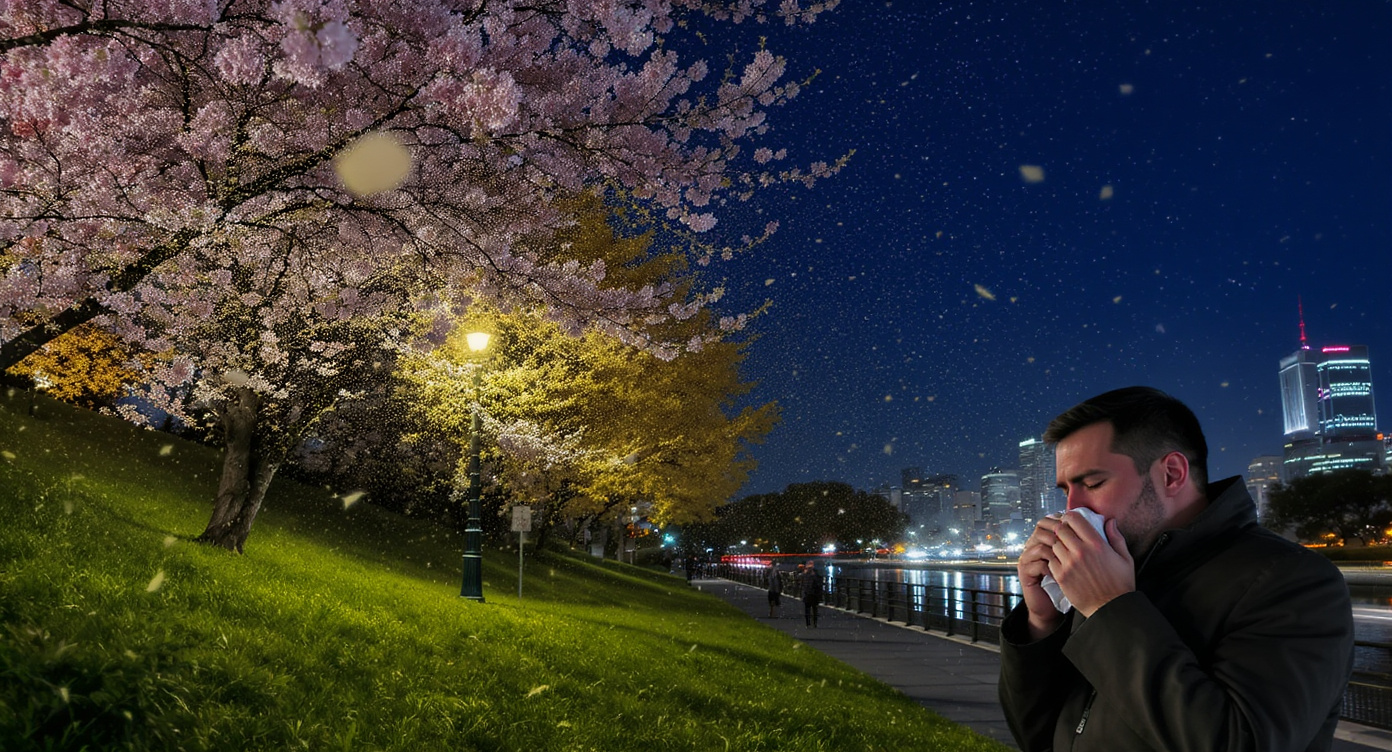
American ecologists and epidemiologists have discovered that nighttime lighting in large cities disrupts the biological rhythms of plants, causing them to bloom longer than usual. A 12-year data analysis revealed that light pollution not only extends the pollen season but also significantly increases the number of days with dangerous concentrations of allergens in the air.
Light Pollution and Seasonal Allergies
Seasonal allergies are becoming an increasingly serious public health issue. Typically, worsening symptoms are linked to climate change: rising temperatures and higher carbon dioxide levels stimulate more active flowering in plants. However, statistics show that city dwellers suffer from allergies more severely and for longer periods than rural residents, even though cities are warmer.
Researchers suggested that the cause may be related to street lighting. The life cycle of plants (phenology) depends on the length of daylight, which signals when to bud or shed leaves. Artificial light mimics an abnormally long day, disrupting the internal clocks of trees and grasses. Until now, the scale of this impact on human health had not been assessed.
Study Process
The scientists focused on the densely populated and brightly lit Northeast region of the United States. To investigate the link between street lighting and allergies, they combined three data sets from 2012–2023: pollen measurements from National Allergy Bureau (NAB) monitoring stations, satellite images of the Earth at night, and climate summaries. Using statistical modeling, the authors separated the effects of light from those of temperature to determine the “pure” contribution of nighttime lighting to the flowering calendar.
Main Findings
In areas with intense nighttime lighting, the pollen season starts earlier—sometimes by as much as 20 days compared to darker zones. But the effect of light is even more pronounced on the end of the season: artificial lighting turned out to be a more significant factor in delaying the end of flowering than air temperature. Trees under streetlights “think” that summer is continuing and keep releasing pollen well into late autumn.
As a result, residents of major cities like New York or Philadelphia may face an allergy season lasting more than 250 days a year. Additionally, light increases the intensity of pollen production: in areas with high light pollution, the number of days with severe allergen levels makes up 27% of the entire season, compared to just 17% in darker areas.
Recommendations
This study shifts light pollution from being seen as a minor environmental inconvenience to a serious health risk. The authors recommend rethinking urban planning: for example, avoiding the planting of light-sensitive, allergenic species (such as plane trees or ragweed) directly under streetlights, and taking nighttime lighting maps into account when making allergy forecasts.