

The red pigment in birds has been found to serve as a protective mechanism.
Biologists have discovered that the reddish pigment pheomelanin in birds serves an important protective function, helping the body safely eliminate excess toxic cysteine through their feathers. This finding explains why evolution has preserved this mechanism despite its association with an increased risk of melanoma.
Cursus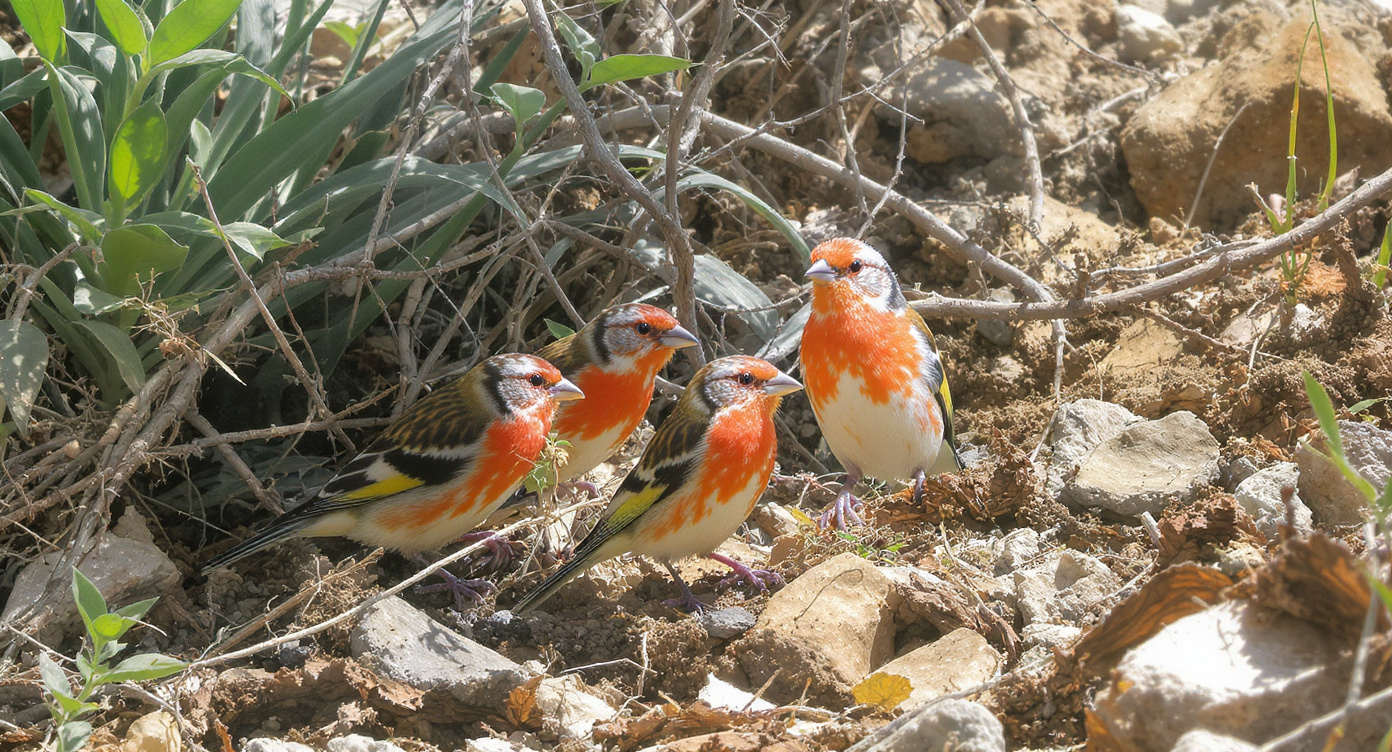
Biologists have discovered that the reddish pigment pheomelanin, previously considered useless and even dangerous due to its association with melanoma, actually serves an important protective function in birds. The organism uses the synthesis of this pigment to neutralize excess cysteine—a sulfur-containing amino acid that, in high amounts, is toxic to cells. Toxic sulfur reserves are eliminated from the body through the feathers.
Pheomelanin: Features and Mysteries
Pheomelanin gives hair a red or reddish tint in humans and colors the plumage of birds. Unlike the dark eumelanin, it does not protect against ultraviolet radiation, promotes oxidative stress, and increases the risk of developing melanoma—a type of skin cancer. For a long time, scientists could not explain why genes responsible for red coloration persist in populations, since natural selection usually eliminates traits that are harmful to survival.
The Protective Role Hypothesis
Researchers have suggested that pheomelanin plays a hidden protective role related to its chemical composition. Its synthesis requires cysteine, which is beneficial in normal amounts but becomes toxic in excess, leading to tissue damage. The production of pheomelanin allows the organism to use surplus cysteine to create an inert pigment and safely remove it through keratinized tissues such as feathers.
Experiment with Finches
A group of Spanish biologists experimentally tested this hypothesis on 65 adult zebra finches. This species is ideal for comparison: males have orange spots containing pheomelanin and black spots with eumelanin, while females lack the red pigment.
For a month, the birds were given water with increased cysteine content. Some males received the drug ML349, which blocks the MC1R receptor and stops pheomelanin synthesis, simulating a situation where excess raw material cannot be converted into pigment. The control group synthesized the red pigment freely.
Research Results
To assess the birds' condition, scientists measured the level of malondialdehyde in the blood plasma—a marker of oxidative cell damage. In males with blocked pheomelanin synthesis, the concentration of this toxic marker increased by 0.55 picomoles per microliter, indicating chemical cell damage due to the inability to process excess cysteine.
Males able to synthesize the pigment coped successfully: they used the surplus sulfur to color their feathers, and their cellular stress level dropped by 0.53 picomoles per microliter. Spectral analysis showed that the orange spots became brighter, while the black feathers remained unchanged. Females, unable to produce pheomelanin, also suffered from increased oxidative damage on the cysteine-rich diet.
The Significance of the Discovery
The study confirmed that pheomelanin synthesis acts as a physiological buffer, maintaining safe cysteine levels and converting this chemically active amino acid into harmless keratin. Evolution has preserved this mechanism as a means of protection against poisoning, despite the associated risk of developing melanoma.