

Moroccan discoveries are reshaping our understanding of Homo sapiens’ ancestors
Recent discoveries in Morocco suggest that the ancestors of Homo sapiens may have originated in North Africa rather than Europe, which changes our understanding of the origins of modern humans.
Cursus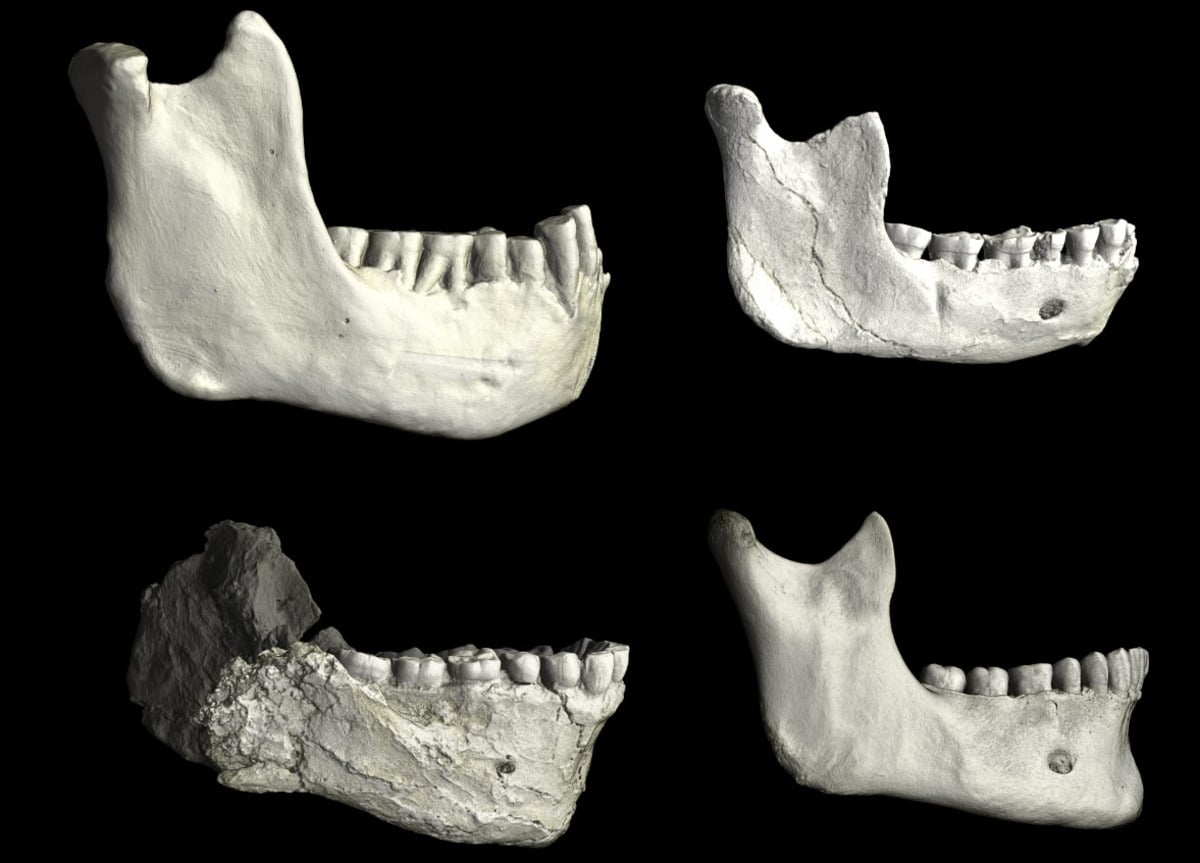
The question of who was the direct ancestor of modern humans, Neanderthals, and Denisovans has long sparked intense scientific debate. Some anthropologists believed that the European Homo antecessor played this role, while others pointed to an Asian origin for the ancestral species. However, recent discoveries in North Africa suggest that the key to this mystery may lie in a completely different region.
Human Evolution: Well-Known and Unclear Stages
Overall, the evolutionary path of humans is traced fairly clearly: from the emergence of upright walking about seven million years ago, through the creation of the first stone tools by australopithecines, to the appearance of the genus Homo. Recently, the oldest remains of Homo sapiens—members of our own species—were discovered in Morocco.
Nevertheless, some important stages in this history remain unclear. For example, according to geneticists, around 800,000 years ago, the population of the ancestors of modern humans sharply declined to just a few thousand individuals, nearly leading to their extinction (the so-called "bottleneck effect"). This may have been linked to asteroid impacts, one of which caused an explosion with a force of about a million megatons, possibly resulting in a prolonged "asteroid winter."
Population Crisis and Evolutionary Mysteries
Genetic studies confirm that during the era of the asteroid impact, the population of ancient humans decreased a hundredfold. In the Middle Pleistocene, humanity teetered on the brink of extinction for over 100,000 years. So few human bones from this period have been found that it is difficult to understand how their evolution progressed. After 800,000 years ago, Homo erectus appears much less frequently and only in certain regions, despite having existed for hundreds of thousands of years before with little skeletal change.
Genetic data indicate that between 765,000 and 550,000 years ago, the ancestors of the three most advanced human species—modern humans, Neanderthals, and Denisovans—split into separate lineages. All three species already had brains comparable in size to those of modern humans. However, their common ancestor could not have been directly Homo erectus—the differences are too great, as confirmed by genetics. This means there must have been another ancestral species for all three later intelligent human types.
Where to Look for the Ancestor: Europe or Africa?
Several decades ago, Spanish archaeologists proposed Homo antecessor as such an ancestor, based on scattered bones found in Spanish caves. However, a complete skeleton of this species has not yet been discovered, and the preserved elements, especially the teeth, resemble Neanderthals more than modern humans or Denisovans.
Recently, an international team of scientists published in Nature an analysis of human bones dating to about 773,000 years ago, found near present-day Casablanca (Morocco), in the so-called Grotte à Hominidés. The age of the find was determined by a layer with the Brunhes–Matuyama magnetic reversal, making the dating highly reliable. Thus, science gained a rare opportunity to peer into the "bottleneck" era of human ancestors, when their numbers were extremely low and survival was a challenge.
Features of the Moroccan Discoveries
Among the bones found were two lower jaws, several teeth, and vertebrae from two adult individuals, one of whom was small in stature. There is no complete skeleton, which complicates analysis, but even the available fragments have provided valuable information. As with Homo antecessor, who lived in the same era further north in Spain, the bones combine archaic features (for example, elements of the lower jaw resemble Homo erectus) with signs of evolutionary advancement.
However, the human from Casablanca and Homo antecessor are different species. The teeth of the Moroccan finds are more similar to those of modern humans, whereas those of Homo antecessor are closer to Neanderthals.
Closer to the Origins of Homo sapiens
The authors of the study conclude that the Moroccan human more closely resembles the ancestors of Homo sapiens—our own species, whose earliest representatives lived in what is now Morocco 450,000 years after the Casablanca finds. Scientists note that all ancient (older than 90,000 years) remains confidently attributed to Homo sapiens have been found either in Africa or in Asia near the Suez Isthmus.
Therefore, researchers believe it is most likely that our species arose in Africa from an African ancestral species. It is also possible that the same human form migrated through Gibraltar into Spain and evolved there into the Homo antecessor population, whose descendants became the Heidelberg people and later Neanderthals.