

The earliest myxines had a complex sense of smell.
A new study has revealed that hagfish, among the oldest vertebrates, possessed a complex sense of smell. This discovery changes our understanding of how sensory organs developed in early animals.
Cursus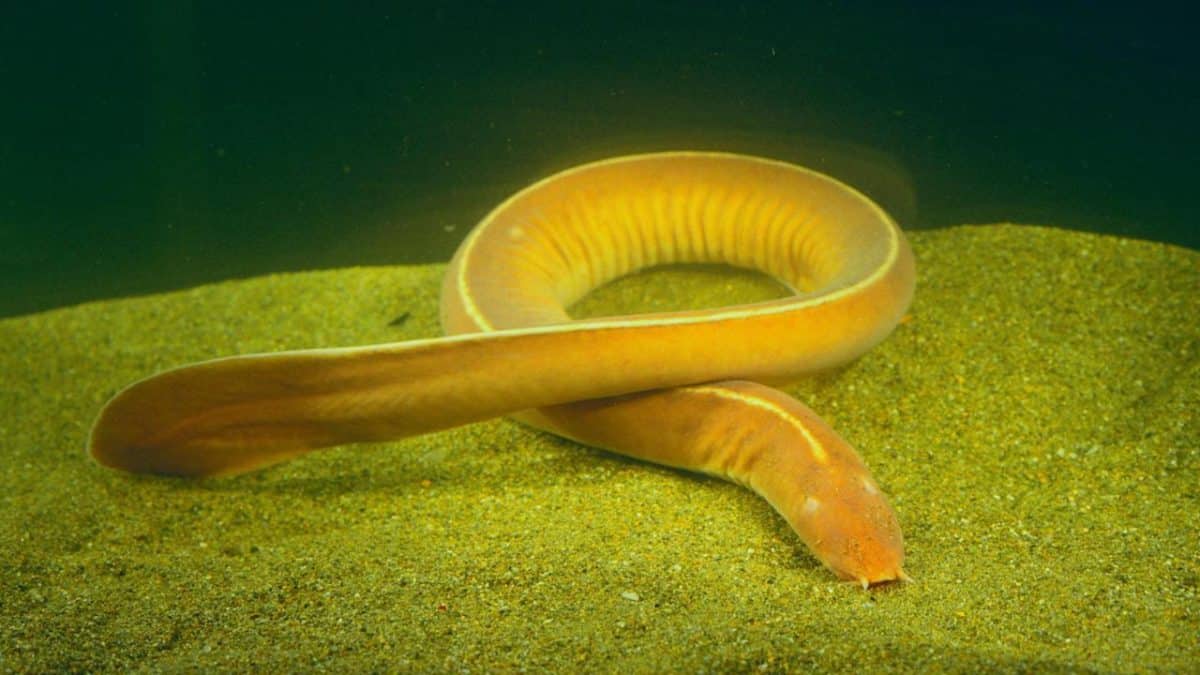
Biologists have debunked the notion that the sensory organs of ancient jawless vertebrates were primitive, discovering that hagfish possess a wide array of receptors essential for finding food. The study revealed that the ability to distinguish complex odors and amino acids emerged in the common ancestor of vertebrates long before the evolution of jaws.
Hagfish: Ancient Predators with Advanced Sense of Smell
Hagfish are predatory animals that outwardly resemble a slippery hose. They inhabit the complete darkness of the ocean floor, where they search for weakened prey and carrion, relying entirely on their sense of smell. These creatures are considered among the oldest vertebrates: their ancestors branched off from the lineage leading to modern animals about 500 million years ago, and hagfish themselves have been known to science for over 300 million years. During this time, their external and internal appearance has changed very little.
Rethinking the Evolution of Olfaction
For a long time, evolutionary biologists believed that hagfish and other "living fossils" possessed a primitive, simplified olfactory system. Comparisons with their closest relatives—the lampreys—produced conflicting results: lampreys had a predominance of certain receptor types, while others, important for higher animals, were almost absent. Scientists tried to determine whether the common ancestor of all vertebrates was genetically simple, or if each branch developed its own sensory tools independently.
Genetic Analysis of Hagfish
In a new study, researchers analyzed the genome of the coastal hagfish (Eptatretus burgeri) and identified which genes are active in its olfactory epithelium. In addition to computer analysis, they used in situ hybridization to determine, with the help of a microscope, in which specific cells and tissue layers the discovered receptors are expressed.
An Unexpectedly Complex Receptor System
The results showed that hagfish are genetically "tuned" to certain chemical signals. Their DNA contains 135 genes for type 2 vomeronasal receptors (V2R), which are responsible for detecting amino acids and peptides—markers of food. At the same time, hagfish completely lack TAAR-type receptors, which detect amines (such as the smell of decay) and which lampreys have specialized in during evolution. Histological analysis confirmed that the hagfish nose is complexly organized: different types of receptors are arranged in strict layers, reminiscent of the olfactory organization in mammals.
A New Understanding of Sensory Organ Evolution
This discovery changes our understanding of how sensory organs evolved in vertebrates. It turns out that the common ancestor of all vertebrates, which lived more than 500 million years ago, already possessed a complex olfactory system. Later, ancient groups did not stop evolving but took different paths: lampreys specialized in certain odors, while hagfish developed a unique, hypertrophied V2R receptor system, allowing them to survive in total darkness.