

Biophysicists have uncovered the secret behind viruses' precise attacks
Scientists have discovered how spherical viruses precisely determine the direction for releasing their genetic material: hidden inside their shell is a unique chemical bond that sets the attack point. This breakthrough could lead to the development of more effective medicines and nanocontainers.
Cursus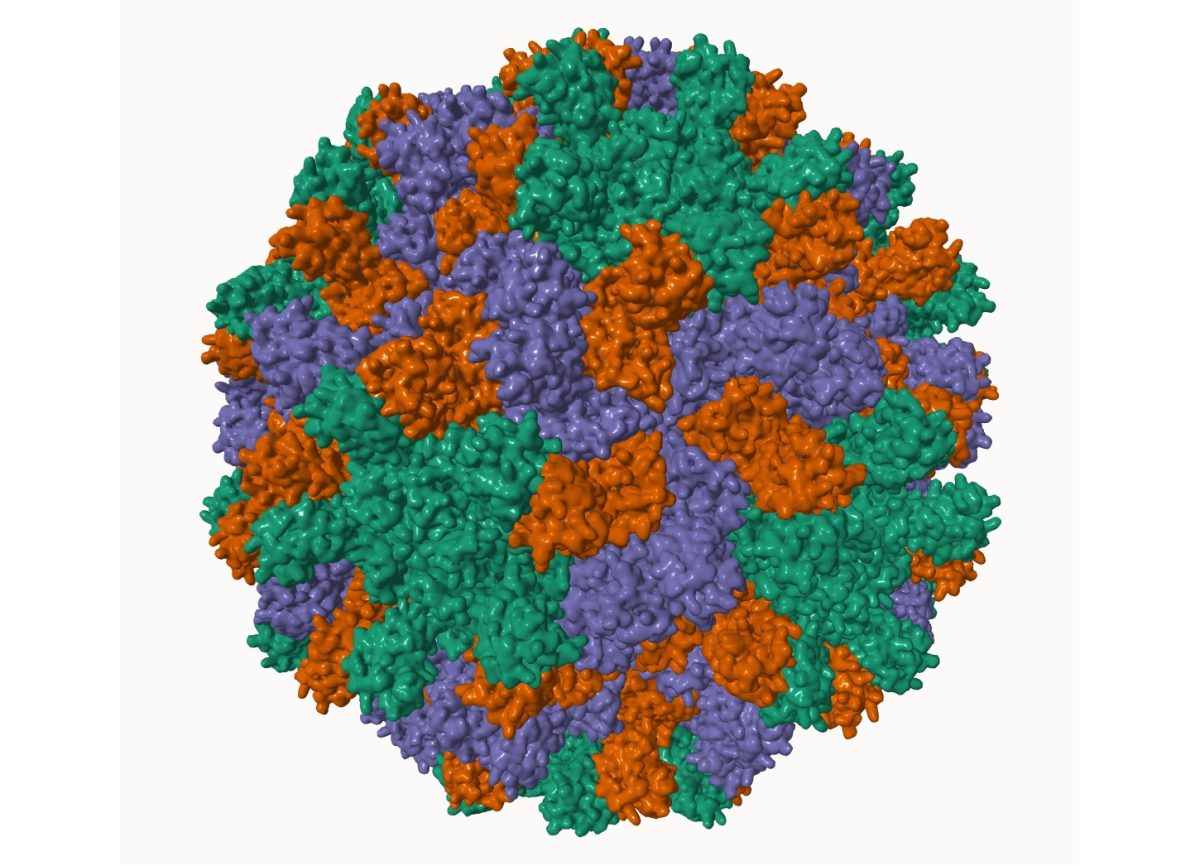
Biophysicists have uncovered a hidden mechanism that enables spherical viruses to precisely determine the direction for their attack. It turns out that the perfect symmetry of a viral shell is merely an illusion: inside, a single strong chemical bond is concealed, transforming the chaotic disintegration of the particle into a targeted release of genetic material.
Virus Geometry and the Engineering Paradox
Most simple viruses have the shape of an icosahedron—a geometric figure reminiscent of a soccer ball. This structure provides maximum strength with minimal material, but it also presents an engineering puzzle: a perfect sphere has no “front” or “back,” so for a long time it was unclear how a virus determines the exact point through which to release its RNA when entering a cell.
Bacteriophages have a special tail-like syringe for this purpose, but plant and animal viruses lack any visible adaptations. Scientists suspected there must be a hidden targeting mechanism inside, but the densely packed genome made it difficult to detect.
Experiment with Turnip Crinkle Virus
In a new study published in Science Advances, researchers examined the turnip crinkle virus (TCV). Instead of studying the virus at rest, they simulated the conditions inside an infected cell by altering the acidity of the environment. This caused the viral particle to “swell” and begin preparing for RNA release. By combining cryo-electron microscopy and mass spectrometry, the team created a detailed map of the virus’s transitional state.
A Critical Anomaly in the Shell Structure
Within the shell, which consists of 180 identical proteins, scientists discovered a crucial anomaly: two proteins were tightly joined by a unique covalent isopeptide bond, forming what is known as the p80 dimer. This chemical “knot” acts like an off-center weight in a die: it attracts and holds the viral RNA, creating an uneven pressure distribution inside the capsid.
The Mechanism of Directed Genetic Material Release
When the virus enters the host organism and loses calcium ions, its shell expands like a compressed spring. The usual weak bonds between proteins break, but the unique isopeptide “anchor” firmly holds its part of the genome. This generates a guiding force that pushes the RNA outward through a precisely defined opening, delivering the genetic code directly to the cell’s ribosomes to initiate infection.
The Significance of the Discovery
The results showed that spherical viruses are not just symmetrical containers, but complex asymmetric machines with a programmed disassembly scenario. Understanding exactly where the “pin” of the viral grenade is located could help in designing nanocontainers for drugs that release their contents in a targeted, rather than random, manner.
The study’s authors also believe their findings will be useful for developing treatments against viruses with icosahedral shapes, such as poliovirus and enteroviruses.