

Intestinal molecules influence liver metabolism
Scientists have identified molecules produced by the gut that influence metabolism and blood sugar levels through the liver. This discovery could lead to new approaches in the treatment of obesity and type 2 diabetes.
Salus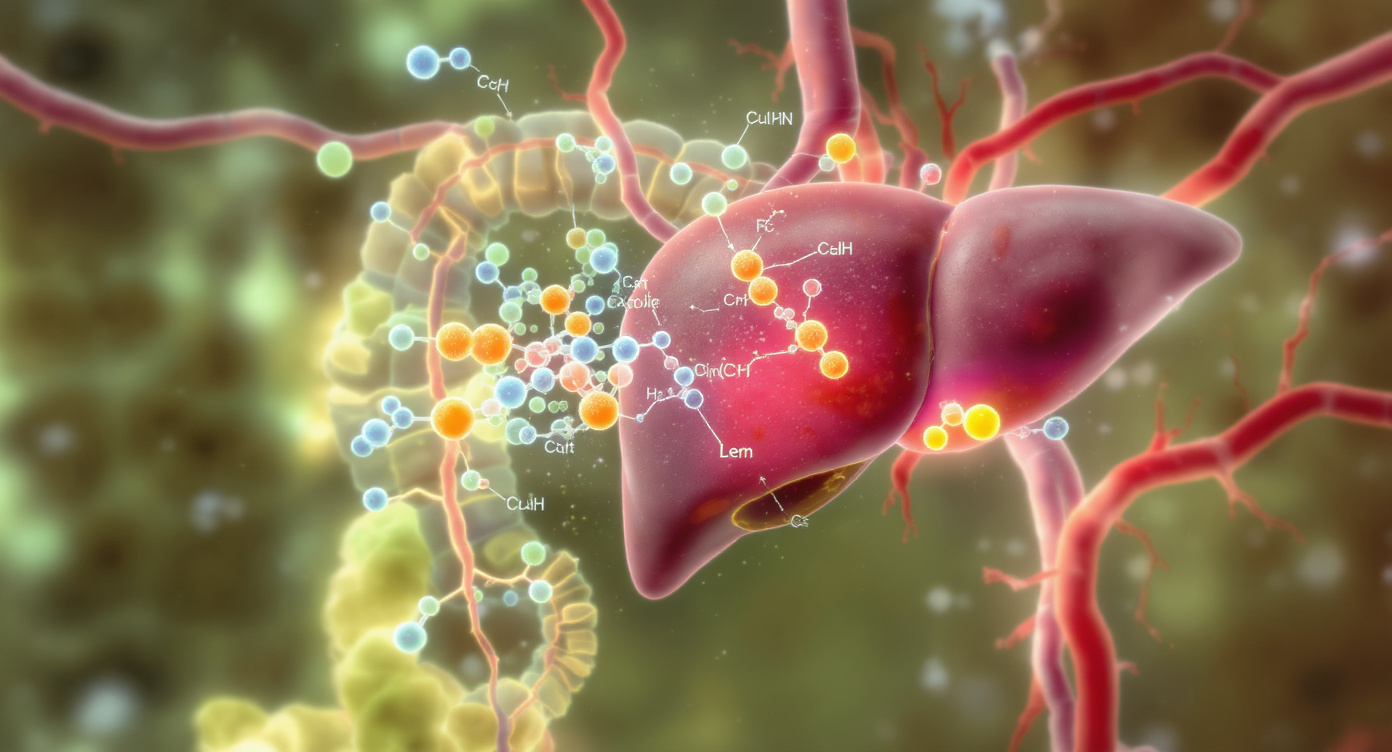
Researchers have discovered molecules produced by the gut that influence how the liver regulates energy metabolism and blood sugar levels. These findings open up new possibilities for improving metabolic health.
New Insights into Gut-Liver Interaction
As part of a research project supported by FAPESP and conducted at Harvard University (USA), scientists identified a set of metabolites that travel from the gut to the liver and then, via the heart, circulate throughout the body. These circulating compounds appear to affect metabolic pathways in the liver and the body's sensitivity to insulin. The results could lay the groundwork for new approaches to treating obesity and type 2 diabetes. The study was published in the journal Cell Metabolism.
The Role of the Portal Vein and Microbiota
The liver's portal vein transports most of the blood from the gut to the liver, making the liver the first organ to receive products of gut microbiota activity. In the liver, these substances can undergo conjugation, transformation, or elimination before entering the systemic circulation. By analyzing blood exiting the gut and peripheral blood circulating through the body, researchers were able to more precisely determine which microbiota-derived metabolites are present in each area and how they might influence liver metabolism and overall metabolic health.
Gut Microbiota and the Risk of Metabolic Diseases
In recent years, scientists have increasingly recognized that the gut microbiota plays a key role in linking genetics, environmental factors, and the development of metabolic disorders. Studies have shown that people and animals with obesity, type 2 diabetes, impaired glucose tolerance, or insulin resistance often have a different gut microbiota composition compared to those without these conditions.
However, it remains challenging to pinpoint exactly which bacteria or their metabolites cause these differences and how they interact with gut tissues. To investigate this, a recent study analyzed metabolites in the blood of mice with varying susceptibility to obesity and diabetes. Samples were taken from the portal vein and peripheral blood.
The Impact of Environment and Genetics
In healthy mice, researchers found 111 metabolites enriched in the portal vein and 74 in peripheral blood. When mice genetically predisposed to obesity and type 2 diabetes were fed a high-fat diet, the number of metabolites in the portal vein dropped from 111 to 48. This suggests that factors such as diet can significantly influence the distribution of these compounds.
The metabolite profiles of mice susceptible to metabolic disorders differed from those of resistant strains, confirming that genetic background plays an important role in shaping the set of metabolites reaching the liver.
Interaction of Microbiota, Genetics, and Environment
The study showed that both environmental factors and host genetics can interact with the complex pathways of the gut microbiota. As a result, different combinations of metabolites may reach the liver and then the peripheral bloodstream, likely playing a significant role in the development of obesity, diabetes, and metabolic syndrome.
Studying the Influence of Microbiota and Metabolites
To determine which bacteria and their products contribute to these metabolite profiles, researchers treated obesity- and diabetes-prone mice with an antibiotic targeting specific gut microorganisms. As expected, the treatment altered the microbiota composition and the balance of metabolites in both peripheral blood and the portal vein.
One result was an increase in metabolites such as mesaconate, which participates in the Krebs cycle—a key energy process in cells.
The Effect of Individual Metabolites on the Liver
Using these data, scientists exposed liver cells (hepatocytes) to mesaconate and its isomers—chemical compounds with the same molecular formula but different structures. This exposure improved insulin signaling and regulated genes involved in fat accumulation in the liver (lipogenesis) and fatty acid oxidation—both processes are crucial for maintaining metabolic health.
Prospects for Further Research
The metabolites found in the blood of these two regions play an important role in mediating the microbiota's influence on liver metabolism and the development of insulin resistance in type 2 diabetes associated with high-fat diets.
In the future, researchers plan to more thoroughly characterize each metabolite and determine how they are formed. A deeper understanding of how the microbiota affects metabolism could eventually lead to the discovery of molecules that become new therapeutic agents for treating metabolic diseases.