

Thinning the Forest: Balancing Timber, Carbon, and Nature
A long-term experiment in the forests of Victoria has shown that strategic thinning promotes the growth of large trees, increases carbon storage, and helps preserve biodiversity, while also supporting timber production. This approach can serve as an effective alternative to clear-cutting and helps strike a balance between environmental sustainability and economic interests.
Natura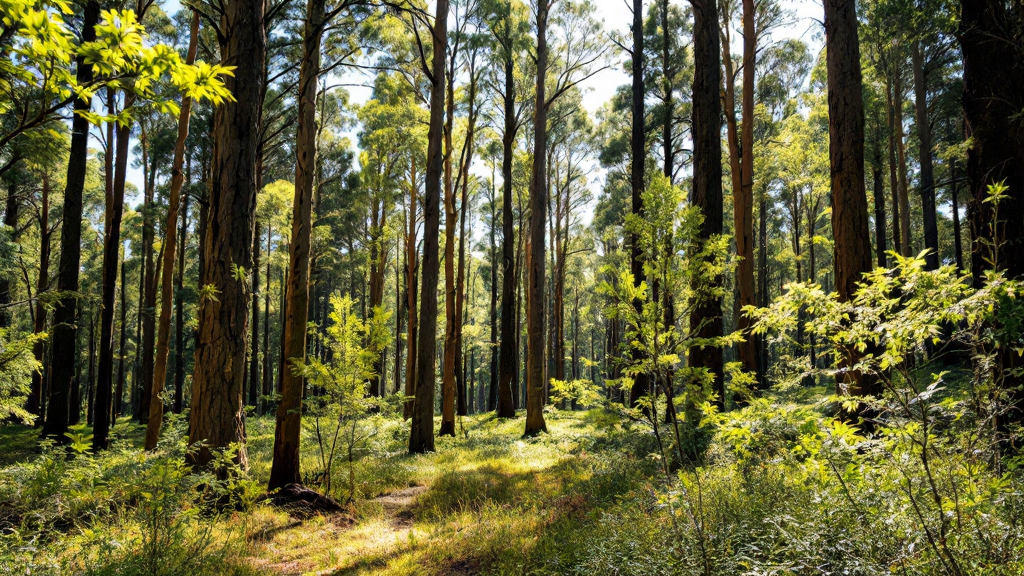
Long-Term Forest Experiment: The Impact of Strategic Thinning
A forgotten experiment conducted in the forests of Victoria over 30 years ago revealed that targeted thinning helps develop larger trees while simultaneously supporting carbon accumulation, wildlife conservation, and timber production.
The History of Forest Management Debates
For decades, Australia has debated the best ways to manage its forests. Discussions often focus on choosing between total forest protection and logging to support local economies and communities. Since the 1970s, concerns have been raised about clear-cutting practices, where all trees in an area are removed. Ecologists pointed to the destruction of habitats for rare species and the loss of ecological value. Foresters argued that mountain ash is adapted to catastrophic fires, and clear-cutting is a forestry equivalent of such fires. Despite heated debates, key questions about the consequences of clear-cutting and comparisons with less intensive methods remained unanswered.
Experimental Approaches to Forest Restoration
In the mid-1980s, the Victorian government restructured the forestry industry and invested significantly in finding alternatives to clear-cutting. Silvicultural experiments were carried out at two sites: Tanjil Bren in the Central Highlands and Cobbidge Three Creek in East Gippsland. The experiment compared traditional clear-cuts, small clear-cuts, and intensive thinning, where 50–70% of trees were removed. Untouched forest plots were left as controls.
At Tanjil Bren, the forest was a dense regrowth of mountain ash after the 1939 fires. Numerous sample plots were established to monitor the growth of thousands of seedlings. By the early 2000s, it became clear that mountain ash regenerated best on clear-cut sites. On plots with retained tall trees or small clearings, understory species like acacia dominated.
Returning to the Experiment and New Findings
After the initial results were published, the experiment was largely forgotten, but the trees continued to grow. In 2014, researchers revisited the Tanjil Bren site to assess the long-term effects of different forest management methods. They found that, after 30 years, mountain ash remained abundant and robust on large clearings and clear-cut areas. Of particular interest were the intensively thinned plots: the remaining trees had reached impressive sizes, with some exceeding 1.5 meters in diameter. Thinning provided trees with more space and resources, resulting in a 20% increase in diameter compared to control zones.
Moreover, thinned plots accumulated as much or even more carbon in their wood as untouched zones. Over 30 years, intensively thinned forests not only restored all the carbon removed during logging but also accumulated additional amounts comparable to growth in undisturbed areas.
Ecological Consequences
Larger trees are more resilient to fires and more likely to develop hollows, which are vital habitats for rare species such as the greater glider and Leadbeater’s possum. Acacias, widespread in most silvicultural plots, are also essential for possums, which use them for foraging and moving through the forest. Camera traps recorded Leadbeater’s possums on all studied silvicultural plots, but not on any of the untouched ones.
Key Lessons from the Experiment
The SSP experiment at Tanjil Bren revealed three main lessons:
The Importance of Long-Term Experiments
Long-term silvicultural studies are crucial for understanding how forests respond to intervention. Many such experiments in Australia have been abandoned and need attention before it’s too late.The Benefits of Thinning
Thinning is not a compromise solution. This method can simultaneously provide timber for local industry, promote carbon accumulation, and improve conditions for wildlife. This approach challenges the common “conservation versus production” dichotomy.No Universal Solution
There is no single silvicultural method suitable for all forests. The Tanjil Bren experiment showed that alternatives to clear-cutting exist that can meet public demand for timber, maintain carbon stocks, and preserve biodiversity.
Looking Ahead
While thinning is not always applicable, it can be a valuable tool for creating a diversity of tree ages and sizes, especially in forests affected by clear-cutting or severe fires.