

Drones alter elephant behavior during observation
A new study has shown that drones can cause short-term stress and behavioral changes in African elephants. However, when used carefully, their impact is minimal and the animals quickly adapt.
Natura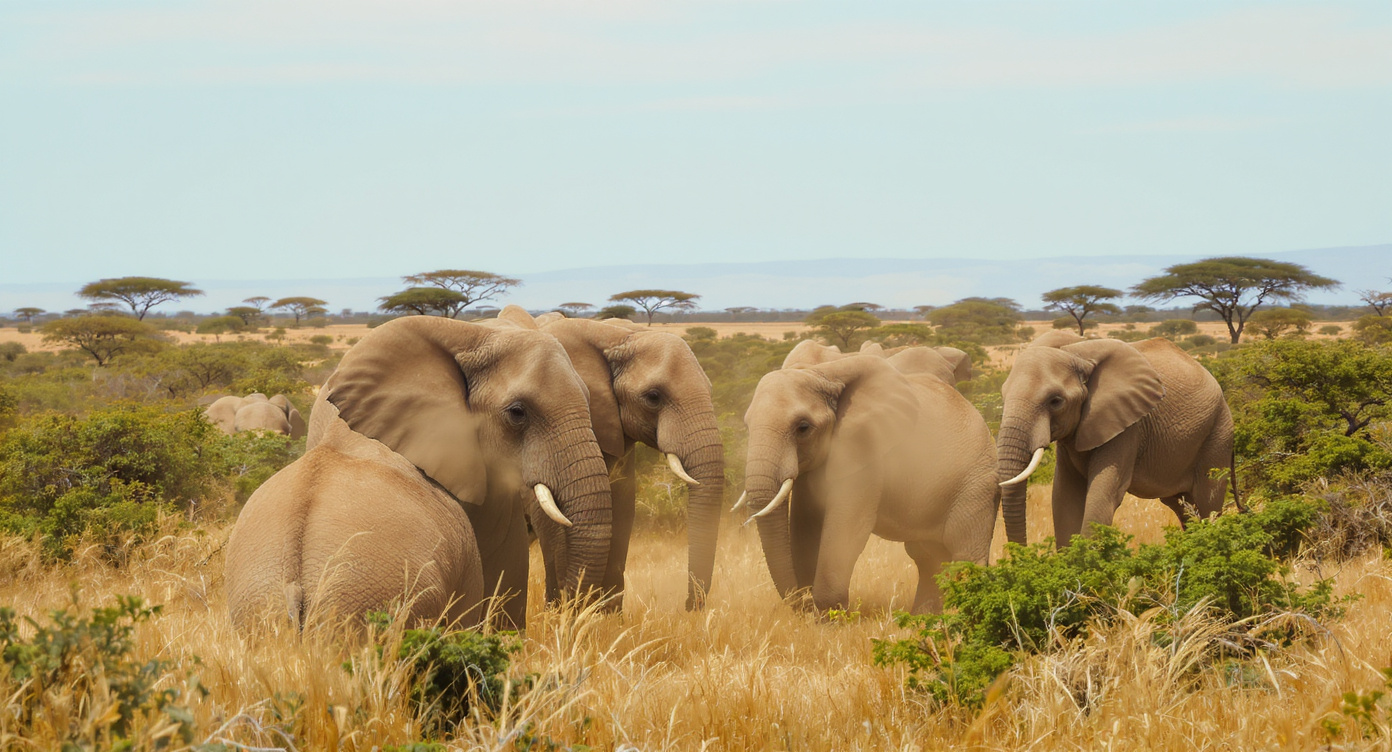
Drone technologies offer ecologists a unique opportunity to unobtrusively observe animals in their natural habitats. A recent study conducted by Kenyan scientists focused on how African elephants respond to drones and how quickly they become accustomed to them.
A Revolution in Wildlife Observation
The use of compact aerial drones has become a real breakthrough for studying animal behavior. Drones allow researchers to access previously unreachable corners of nature and capture the smallest details of animal life. However, despite their small size and relative quietness, drones can still cause stress in animals, which may distort their natural behavior. Minimizing such impact is a key condition for ethical observation, especially when working with social species.
Otherwise, an unfamiliar object can provoke aggression. For example, in the Dutch safari park Burgers Zoo, there was a recorded incident where a chimpanzee knocked down a passing drone with a stick after climbing a tree to reach it.
Studying Elephants’ Reactions to Drones
Researchers from the organization Save the Elephants conducted an experiment in Kenya’s Samburu and Buffalo Springs national reserves. Their goal was to determine how much stress drones cause African savanna elephants and how quickly the animals adapt to their presence. The elephants’ reactions were assessed both in the short term (during a single flight) and in the long term (with repeated drone encounters). The results were published in the journal Nature.
The experiment involved 14 family groups of elephants: seven resident and six migratory. In total, 35 field trials were conducted using an industrial quadcopter, which was wind-resistant and equipped with powerful zoom cameras. The drone was launched from a distance of 500 meters and observed the elephants from an altitude of 120 meters for six minutes before returning to its starting point.
Behavioral and Stress Level Analysis
From the recorded videos, one-minute fragments were selected and shown in random order to ethologists for analysis of activity and signs of anxiety in the animals. Individual characteristics of each group were also considered, allowing researchers to determine the elephants’ stress levels at different times.
In the first minutes of the flight, the proportion of anxious elephants in a group increased on average by almost 11%. However, by the end of the observation, anxiety levels returned to baseline, indicating short-term habituation during a single flight. In repeated trials, overall stress in the animals was significantly lower than during the first encounter, suggesting long-term adaptation.
Changes in Elephant Behavior
Despite a decrease in obvious signs of anxiety, the statistics showed consistent changes in activity: during drone flights, elephants ate 28–50% less, moved around 83–100% more, and rested less. After the drone left, the animals compensated by increasing their resting time. Thus, even without visible panic, a passing quadcopter remains a stimulus capable of altering the elephants’ daily routine.
The Importance of a Gentle Approach
The study also showed that when the drone was launched from a greater distance, flown at maximum altitude, and approached from downwind to minimize noise, there were no observed disruptions in animal behavior. This demonstrates that a careful approach can reduce stress responses to a minimum.
Therefore, with thoughtful use, modern technologies open new possibilities for studying and protecting wildlife without disturbing their natural way of life.