

African wild dogs set a new migration record
Young male African wild dogs traveled over 4,000 kilometers in nine months, setting a new record among African mammals. This discovery is important for understanding migration patterns and for the conservation of this rare species.
Natura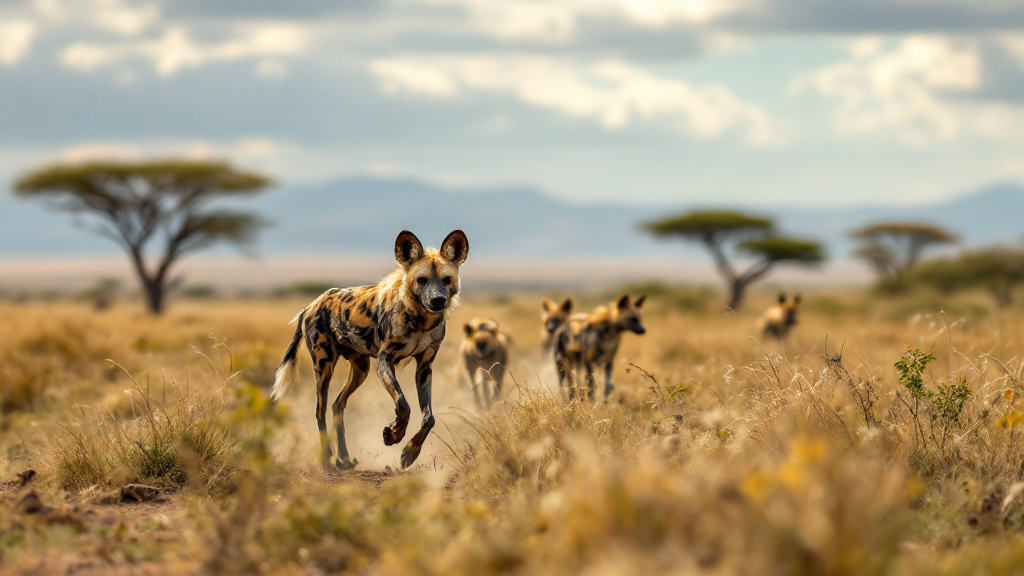
Young male African wild dogs traveled over 4,000 kilometers in nine months after leaving their parental pack and eventually settled in a new territory. This journey marks the longest recorded dispersal among African mammals.
Species Characteristics and Habitat
African wild dogs (Lycaon pictus), also known as painted wolves or African hunting dogs, inhabit savannas and open woodlands south of the Sahara. The species is endangered due to habitat loss, disease, and poaching. Their population is estimated at 3,000 to 5,500 individuals.
These canids are well adapted for long-distance running, with slender bodies, long legs, and remarkable endurance. They live and hunt in close-knit family groups with a complex social structure, where typically only the dominant male and female breed. Other pack members help raise the young or may leave the group to seek their own territory.
Study of a Record-Breaking Migration
Young wild dogs usually leave their pack at two to three years old. In July 2025, four sisters from the same litter left their pack in Kafue National Park (Zambia), followed two weeks later by three brothers. Researchers fitted one individual from each group with radio collars to track their movements.
The females spent several weeks in hunting grounds near the park, while the males headed east into central Zambia. Both groups reached the outskirts of large settlements, carefully avoiding cities.
In September 2025, after traveling more than 1,000 kilometers, the brothers and sisters met for a day before parting ways again. The males continued south, steering clear of busy roads, while the females also moved south but are believed to have died in October near Kabwe, likely caught in poachers’ traps.
The males skirted Kabwe, crossed two large reservoirs, and by April 2026 had established themselves in a new territory at the edge of the Great Rift Valley. Their total journey covered 4,126 kilometers, the longest recorded dispersal route among African mammals. For comparison, wildebeest migrate up to 1,800 kilometers annually between Kenya and Tanzania.
The Importance of Migration for Species Conservation
This remarkable journey demonstrates that African wild dog populations remain connected across vast areas of Eastern and Southern Africa, despite significant distances between habitats. This connectivity highlights the species’ potential to recover in regions where it has disappeared.