

Tropical oceans have temporarily increased the mass of Antarctic ice
Between 2021 and 2023, persistent warming of the tropical ocean led to increased snowfall over East Antarctica, resulting in a temporary gain in the ice sheet's mass. The study emphasizes that such events are short-lived and do not reverse the long-term decline of Antarctic ice.
Cursus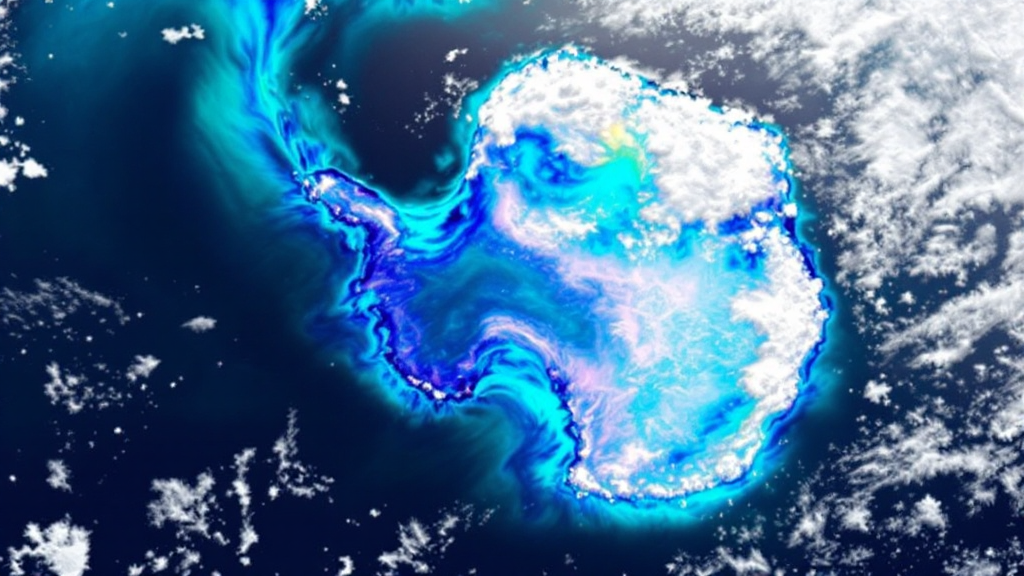
Brief Description of the Event
Between 2021 and 2023, a persistent area of unusually warm tropical ocean contributed to increased snowfall over East Antarctica. This led to a temporary net gain in the ice sheet’s mass by approximately 695 billion tons. These findings were obtained during a study published in August 2023.
Mechanisms of Atmospheric Changes
The research showed that prolonged warming in the tropical warm pool, located between the western Pacific Ocean and the eastern Indian Ocean, triggered a series of atmospheric changes that affected weather conditions over a vast area, including Antarctica. This warming led to the formation of a Rossby wave train that moved toward the continent, promoting north-south axis circulation over East Antarctica, altering moisture transport routes, and increasing precipitation in the region. Collectively, these changes temporarily slowed the overall process of Antarctic ice sheet mass loss.
Ice Sheet Mass Dynamics
The Antarctic ice sheet is considered one of the key uncertainties in predicting future global sea level rise. Over the past twenty years, Antarctica has been losing ice at an average rate of about 140.5 billion tons per year. However, between 2021 and 2023, there was a temporary mass gain of 695 billion tons—the largest increase recorded by the GRACE satellite missions.
Research Methods
To determine the causes of this unusual mass increase, various types of data were combined: satellite gravity measurements, snow accumulation records from ice cores, and atmospheric circulation modeling. The goal was to identify the source of the additional moisture and the mechanisms delivering it to East Antarctica.
The Role of the Tropical Warm Pool
In 2021–2023, persistent warming was observed in the tropical warm pool. This warming triggered the development of a large-scale atmospheric phenomenon—a Rossby wave train—that extended toward high southern latitudes and contributed to a reorganization of atmospheric conditions around Antarctica. A dipole circulation pattern formed along the north-south axis, with low pressure south of Australia and high pressure along the East Antarctic coast. As a result, moisture transport routes shifted, and the movement of water vapor from the mid-latitudes of the Indian Ocean to East Antarctica via atmospheric rivers intensified.
Atmospheric Rivers and Snowfall
Atmospheric rivers are relatively narrow streams in the atmosphere capable of carrying large amounts of water vapor over long distances. When they reach cold regions like Antarctica, the moisture falls as heavy snow. Modeling showed that the dipole circulation directed moist air from the mid-latitudes of the Indian Ocean toward East Antarctica, allowing more atmospheric rivers to reach the continent. This resulted in prolonged, intense snowfall in areas such as Queen Mary Land and Wilkes Land, significantly increasing the ice sheet’s mass.
Impact of Anthropogenic Factors
An assessment of the contribution of human-induced factors showed that they accounted for only 9% of the observed snowfall anomaly. This indicates that the overall increase in atmospheric moisture linked to global warming was not the main cause of this event.
Long-Term Trends and Conclusions
Observations and modeling suggest that similar periods of persistent warming in the tropical warm pool occur roughly once a decade. Thus, the tropical warm pool acts as a remote “regulator” capable of influencing snowfall and ice mass in East Antarctica over several years. Changes in tropical ocean temperatures can reorganize atmospheric circulation in ways that affect the amount of snow falling on the Antarctic continent.
Limitations and Outlook
Despite the significant temporary mass gain of the ice sheet, the study emphasizes that this phenomenon was short-lived and does not reverse the long-term decline of Antarctic ice cover. The West Antarctic ice sheet continues to lose mass, and some outlet glaciers in East Antarctica remain vulnerable to the effects of warm ocean waters, which accelerate ice movement.
Significance of the Study
The results demonstrate that persistent warming in the tropical warm pool can temporarily increase the mass of the Antarctic ice sheet by altering atmospheric circulation and snowfall patterns. The study also identifies the north-south dipole circulation over East Antarctica as a crucial link connecting tropical climate conditions with changes in Antarctic ice mass. This research reveals a long-distance climate connection, showing that conditions in the tropics can significantly impact Antarctica.