

How seahorses became the champions of male pregnancy
Seahorses are unique in that it is the males who carry and give birth to the offspring. A new study reveals the genetic and hormonal mechanisms behind this phenomenon, as well as its evolutionary significance.
Cursus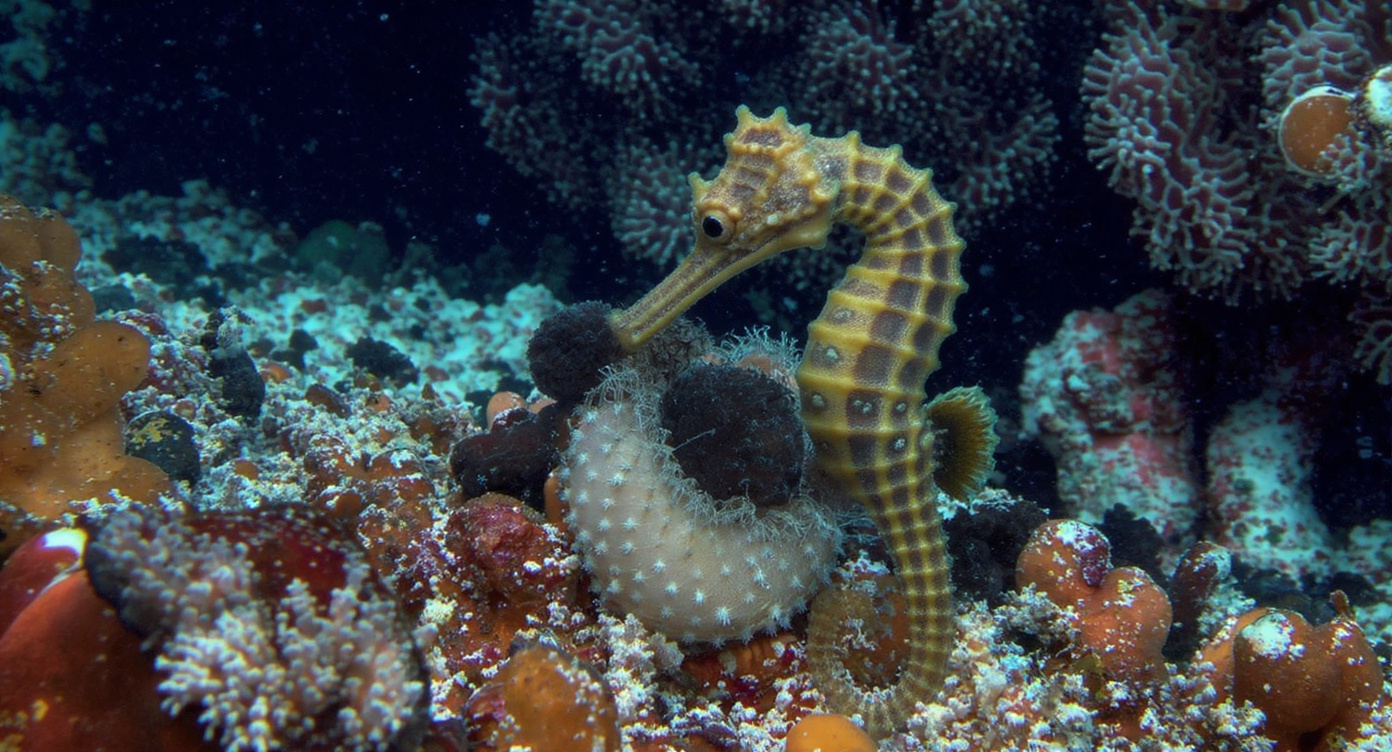
Seahorses are known for their unique method of reproduction: unlike most other animals, it is the males—not the females—who carry and give birth to the offspring. A recent international study conducted by scientists from China and Germany has provided deeper insight into the genetic and cellular mechanisms underlying this so-called "male pregnancy" in members of the Syngnathidae family.
How Seahorses Carry Their Young
Female seahorses deposit their eggs into a special brood pouch located on the male’s abdomen, where fertilization takes place. Inside this pouch—which functions similarly to a mammalian uterus and placenta—the embryos receive nutrients and oxygen from the father’s body. The developing young are kept safe until birth, at which point the fully formed juveniles are released into the water.
Genetic and Hormonal Features of Male Pregnancy
In an article published in the journal Nature Ecology & Evolution, researchers from several Chinese universities and the University of Konstanz (Germany) explored at the cellular level how this reversal of reproductive roles became possible. Comparative genomic analysis and RNA expression studies revealed that unusual hormonal and immune mechanisms play a key role in this process.
Unlike mammals, where pregnancy is regulated by female sex hormones, in seahorses, androgens—male hormones—are central. These hormones promote the thickening of abdominal skin tissues and the development of blood vessels, leading to the formation of a placenta-like structure.
The Discovery of the Male Pregnancy Gene
An international team of scientists has identified a gene in seahorses responsible for the male’s ability to carry offspring. The results of this discovery were published in the journal Nature.
The Immune System and Pregnancy
The researchers also examined the unique features of the seahorse immune system. For a successful pregnancy, it is crucial that the parent’s body does not recognize the embryos as foreign and reject them. In many species, this immune tolerance is provided by the foxp3 gene, but it was not found in male seahorses. Scientists suggest that male hormones may help suppress the immune response, as androgens often have similar properties.
Evolutionary Aspects and the Significance of the Study
Biologists note that fish of the Syngnathidae family, which includes seahorses, are an excellent model for studying the evolutionary transition from egg-laying to live birth. Genetic data indicate that in the early stages of evolution, sticky eggs may have attached to special areas on the male’s body, and brood pouches for protection and nourishment of the young appeared later.
This research not only reveals the unique biological traits of seahorses but also helps us understand how unusual forms of parental care and reproductive strategies can arise in nature.