

Jupiter saved Earth and created meteorites
A new study has revealed that Jupiter played a crucial role in the formation of planets and meteorites, protecting the inner planets from destruction and contributing to the emergence of a second generation of meteorites.
Cursus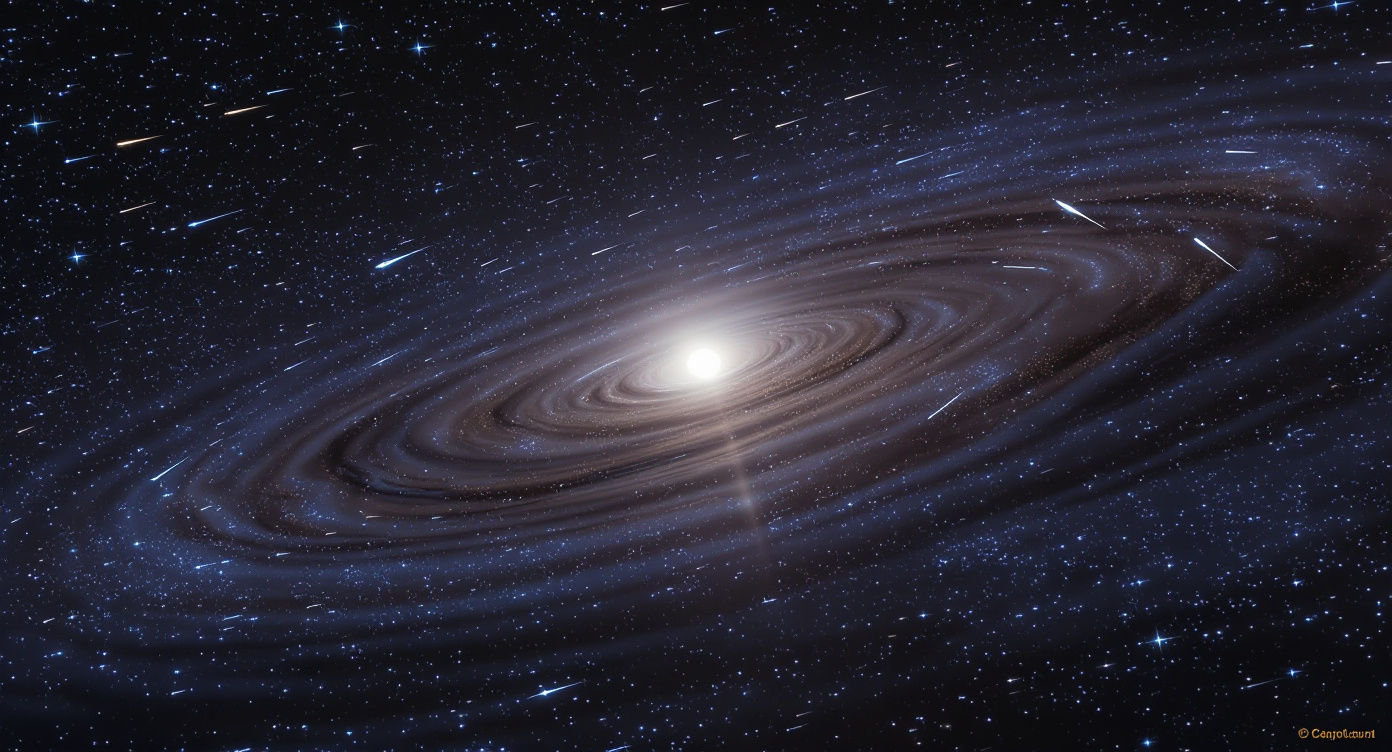
Computer simulations of the early Solar System have revealed Jupiter’s crucial role in shaping the inner planets and meteorites. The gas giant’s gravity shielded Earth and its neighboring planets from falling into the Sun.
85% of meteorites found on Earth are chondrites, which contain small inclusions. Unlike iron meteorites—fragments of protoplanetary cores—chondrites never became part of forming planets. Around 4.5 billion years ago, rocks melted due to heat released by the decay of radioactive elements, including aluminum-26. Iron meteorites contain a lot of magnesium-26 isotope, while chondrites have almost none, indicating they formed later.
Analysis shows that chondrites, which are second-generation meteorites, formed 2–3 million years after the Solar System began, when radioactive aluminum-26 had nearly disappeared. Their composition matches the inner material of the system, even though Jupiter created a gap in the protoplanetary disk that separated inner and outer materials.
Researchers from Rice University have explained this mystery. Jupiter’s gravity generated spiral density waves, creating zones of increased pressure—essentially gravitational “traps” for dust, gas, and planetesimals. In these regions, chondrites and the inner planets—Mercury, Venus, Earth, and Mars—were formed.
Without Jupiter, particles would have either contributed to planet formation or fallen into the Sun. In other star systems, planets are usually located closer to their star than Mercury is to the Sun, which reduces the chances of habitable worlds with solid surfaces existing there.