

LG and Nvidia accelerate the development of home robots
LG and Nvidia are expanding their collaboration in robotics by creating a new data center to train home robots using both real and synthetic data. The project aims to accelerate the adoption of smart robots in everyday life, but the widespread appearance of fully autonomous home assistants is not yet guaranteed.
Ingenium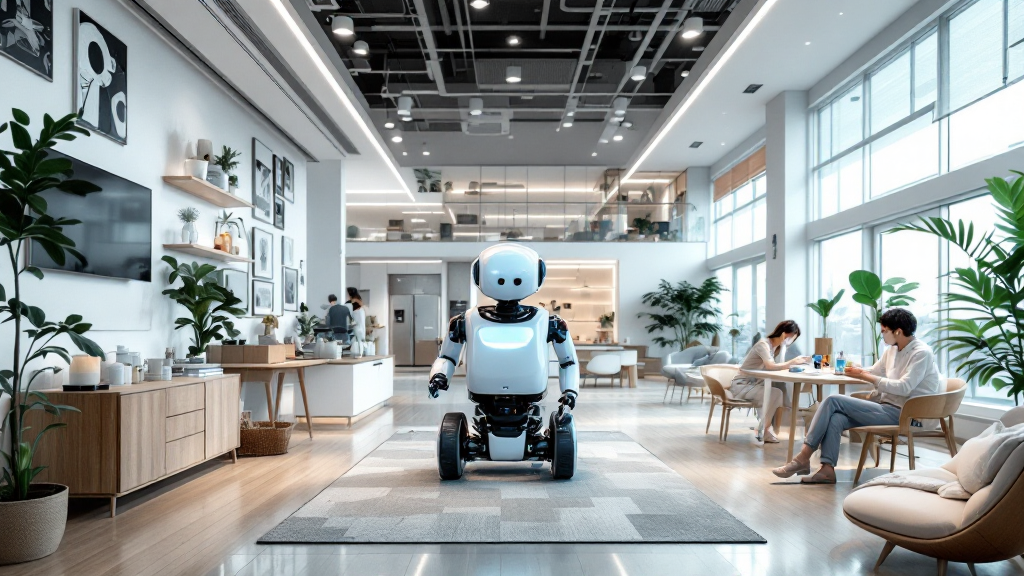
LG and Nvidia are expanding their collaboration in robotics in Seoul. A new data center is being established at LG’s research campus in Yangjae, which by the end of 2026 is expected to provide 100,000 hours of training data. To achieve this, LG plans to combine real-world data collected from manufacturing and logistics processes, as well as during robot deployment, with synthetic datasets. Nvidia will contribute its technologies, including Omniverse, Cosmos, and the Isaac robotics platform.
Training for LG’s CLOiD robots will take place in simulated living environments, as well as in virtual manufacturing and logistics scenarios. Unlike Tesla and BYD, which use bipedal designs, CLOiD moves on a wheeled base.
The collected data will be integrated into LG’s Robot Foundation Model to enhance the capabilities of humanoid robotic systems. Currently, CLOiD performs household tasks such as delivering groceries from the refrigerator, managing home appliances, and sorting laundry. The robot is equipped with two arms, each with seven degrees of freedom, and hands with five independently controlled fingers. Unlike Tesla Optimus and Figure 03, CLOiD uses a wheeled platform for mobility. The 1X NEO model is also designed for home use, while Agility Digit and Apptronik Apollo are focused on logistics and industry.
LG is actively developing its robotics division. In July, the company opened a specialized center and plans to offer household robots alongside industrial and service solutions. Competition in the market is intensifying: Tesla is developing the versatile humanoid robot Optimus, BYD is working on the Xiao Di model for manufacturing tasks, Xpeng is creating Iron, and Ubtech is refining the industrial humanoid robot Walker S2. Unitree, with its G1 and H2 models, is also among the leading Chinese robot manufacturers.
The planned 100,000 hours of data are intended to support the continuous cycle of deploying robots in real-world conditions, simulation, and artificial intelligence training. LG aims to accelerate the preparation of its robots for complex tasks and lay the groundwork for entering the consumer robotics market. However, expanding this partnership does not guarantee the rapid emergence of fully autonomous home robots.