

New electronic zones discovered in kagome metal
For the first time, scientists have obtained direct evidence of the existence of active flat electronic bands in a kagome superconductor, opening up new possibilities for the development of quantum materials and future technologies.
Cursus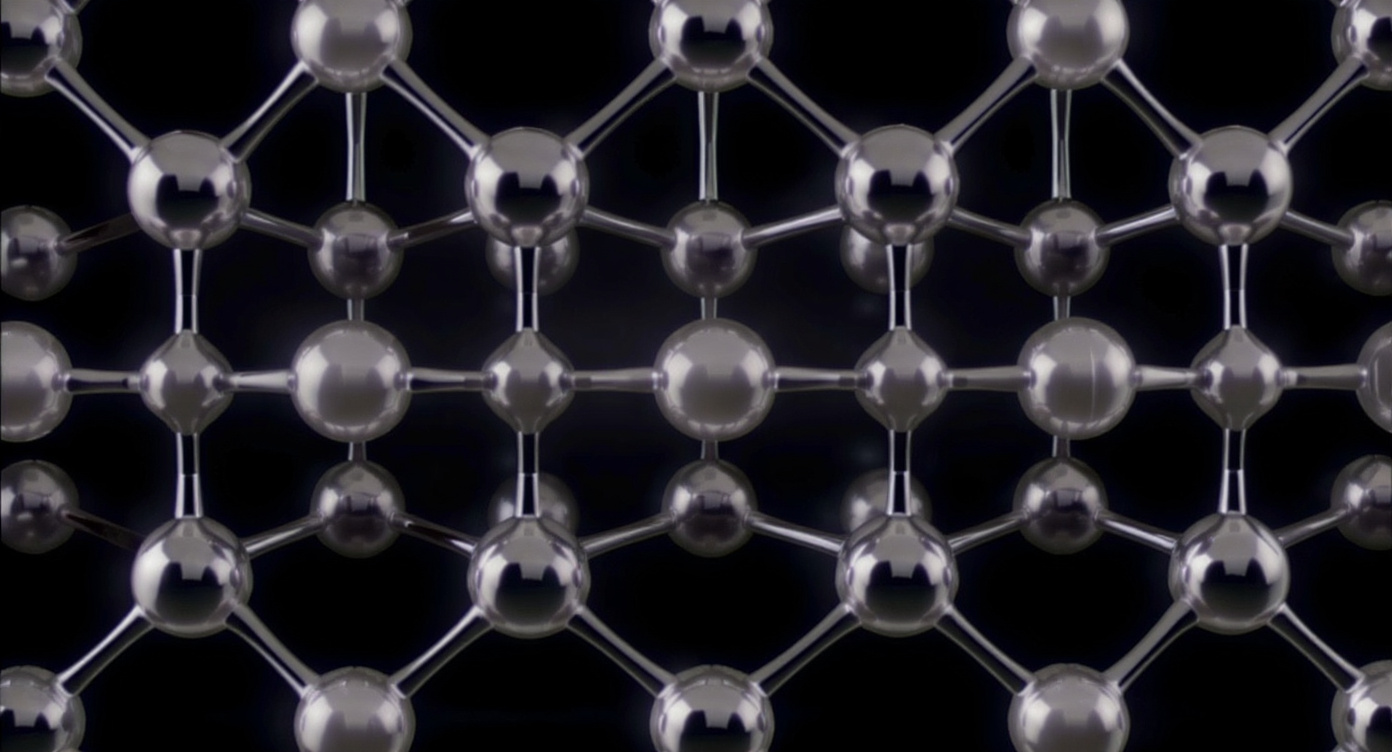
Researchers from Rice University and other scientific institutions have, for the first time, obtained direct evidence of active flat electronic bands in a kagome superconductor. This discovery could pave the way for new approaches to creating quantum materials, including superconductors, topological insulators, and spintronic devices that may be used in future electronic and computing technologies. The study was published on August 14 in the journal Nature Communications and focuses on the kagome metal CsCr₃Sb₅, which becomes superconducting under pressure.
Features of Kagome Metals
Kagome metals are characterized by two-dimensional lattices formed by interconnected triangles. Recent theoretical studies have predicted that such structures can host compact molecular orbitals—standing electron waves that promote unusual superconductivity and novel magnetic orders, activated by electron correlation effects. In most materials, these flat bands are located too far from the active energy levels to significantly influence the material’s properties. However, in CsCr₃Sb₅, these bands have a direct impact on the material’s characteristics.
Research Methods
To study the active standing electron modes, the research team used two advanced synchrotron techniques and theoretical modeling. Angle-resolved photoemission spectroscopy (ARPES) was employed to map the electrons emitted under synchrotron radiation, revealing signatures of compact molecular orbitals. Resonant inelastic X-ray scattering (RIXS) was used to measure magnetic excitations associated with these electronic modes.
Theoretical Support and Crystal Synthesis
The theoretical analysis involved modeling strong correlations using a specially designed electronic lattice model, which reproduced the observed features and helped interpret the experimental results. Achieving such precise data required unusually large and pure CsCr₃Sb₅ crystals, synthesized using an improved method that produced samples 100 times larger than previous ones.
Significance of the Study
This research highlights the importance of an interdisciplinary approach that combines materials design, synthesis, electronic and magnetic spectroscopy, and theoretical modeling. The results open new perspectives for the development of quantum materials and future technologies.