

Scientists have developed food from plastic waste
American researchers have developed a technology that transforms plastic waste into protein-rich food using genetically modified yeast. While widespread adoption is still a long way off, this method opens up new possibilities for recycling plastics and producing food products.
Ingenium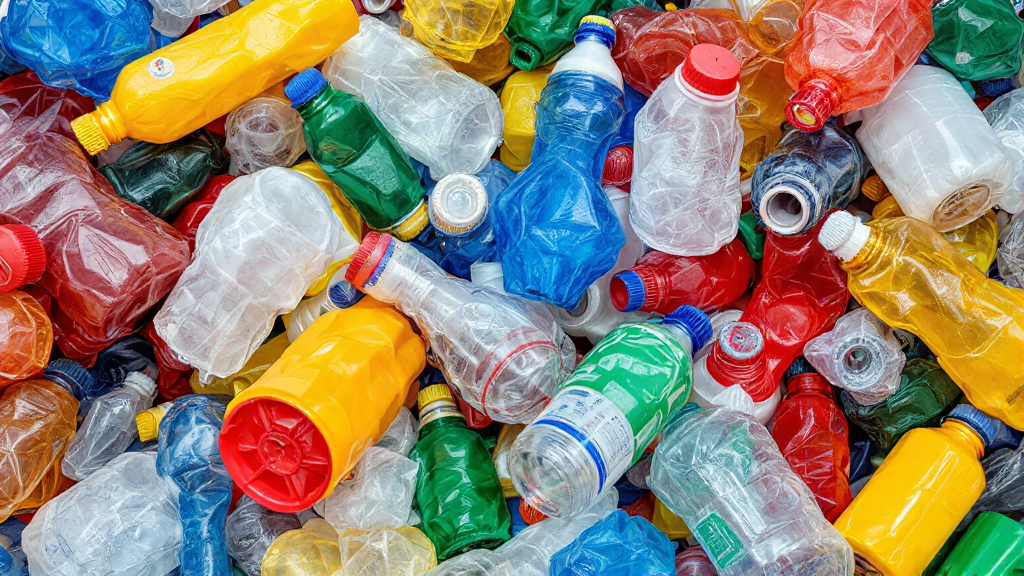
Every year, hundreds of millions of tons of plastic are produced worldwide, and a significant portion of it quickly becomes waste. According to the UN, annual plastic production exceeds 400 million tons, with about two-thirds of this amount used for products with a short lifespan. Of this, 46% ends up in landfills, while another 22% is improperly disposed of and accumulates in the environment—oceans, soil, and air. Microplastic particles have been found in various human organs, including the ovaries and the olfactory bulbs of the brain.
At the same time, the issue of food security remains: hundreds of millions of people around the world continue to suffer from hunger. In 2025, 7.8% of the global population—about 645 million people—faced hunger.
Research in plastic recycling aims to reduce waste and extract useful raw materials for food production. It has been established that plastic is a complex organic compound rich in carbon, and some microorganisms can break down certain types of plastic, using the carbon within for synthesizing their own biomass, including proteins.
In 2016, the bacterium Ideonella sakaiensis was discovered, capable of breaking down polyethylene terephthalate (PET), the material used to make plastic bottles. The enzymes of this bacterium gradually decompose PET into simple compounds, which are then used as sources of carbon and energy.
Based on these discoveries, a technology was proposed in which PET is first broken down, and then the resulting products are used by microorganisms to synthesize biomass and other useful substances, including proteins. However, existing methods require significant resources and often have low efficiency.
American researchers combined genetic engineering techniques with oxidative hydrothermal processing. In their experiment, they used plastic bottles and plant waste (corn stalks and leaves), which were chemically treated with water, oxygen, high temperature, and pressure. This process produced compounds suitable for assimilation by microorganisms.
These compounds were then used to grow various types of yeast: Saccharomyces boulardii, Saccharomyces cerevisiae, and Rhodosporidium toruloides. One yeast strain was genetically modified using CRISPR technology to produce the necessary enzymes. Different microorganisms performed different functions, forming a biological production line.
Saccharomyces cerevisiae was modified to convert ferulic acid from plant biomass into vanillin, which is used in the food and fragrance industries. For Rhodosporidium toruloides, adaptive laboratory evolution was applied, enabling this yeast to efficiently use ethylene glycol (a PET breakdown product) as a carbon source and produce β-carotene, which can be converted into vitamin A in the human body.
The resulting material was combined with yeast protein biomass, starch, fiber, and a sweetener. Using 3D printing, a mixture was formed and used to make protein cookies called μBites with a vanilla flavor. Analyses showed no obstacles to consuming this product as food, but full-scale human trials have not yet been conducted—additional approval is required.
The developers note that their goal was not only to obtain protein food from plastic but also to create a more complete and appealing product. Mass production of such products is still far off: according to estimates, they may not appear on the market for at least another 20 years. During this time, it will be necessary to verify the safety of the technology, develop methods for processing more contaminated plastic waste, and confirm that food ingredients meet industry standards.
Among the main obstacles are not only safety concerns but also technological and economic limitations. The global scale of plastic production and accumulation requires large-scale solutions, while waste collection and recycling are associated with high costs. The production of new plastic remains relatively inexpensive, reducing the economic attractiveness of recycling.
There is also a psychological barrier: information about microplastics in water, food, and the environment makes consumers wary, and the idea of eating products made from plastic waste may cause rejection. The use of genetically modified microorganisms also raises additional questions.
Currently, this technology is seen as a direction for further research rather than a ready-made solution to the global problem. The principle of converting waste into useful substances with the help of microorganisms could also be applied in other fields.
The results of this work were presented at the American Chemical Society conference in Chicago.