

Mushrooms turned out to be an important food source for primates.
A new study has shown that mushrooms play an important role in the diet of some primates in Tanzania, and for baboons, they have become a preferred food source. These findings help us better understand the possible diets of ancient hominids.
Cursus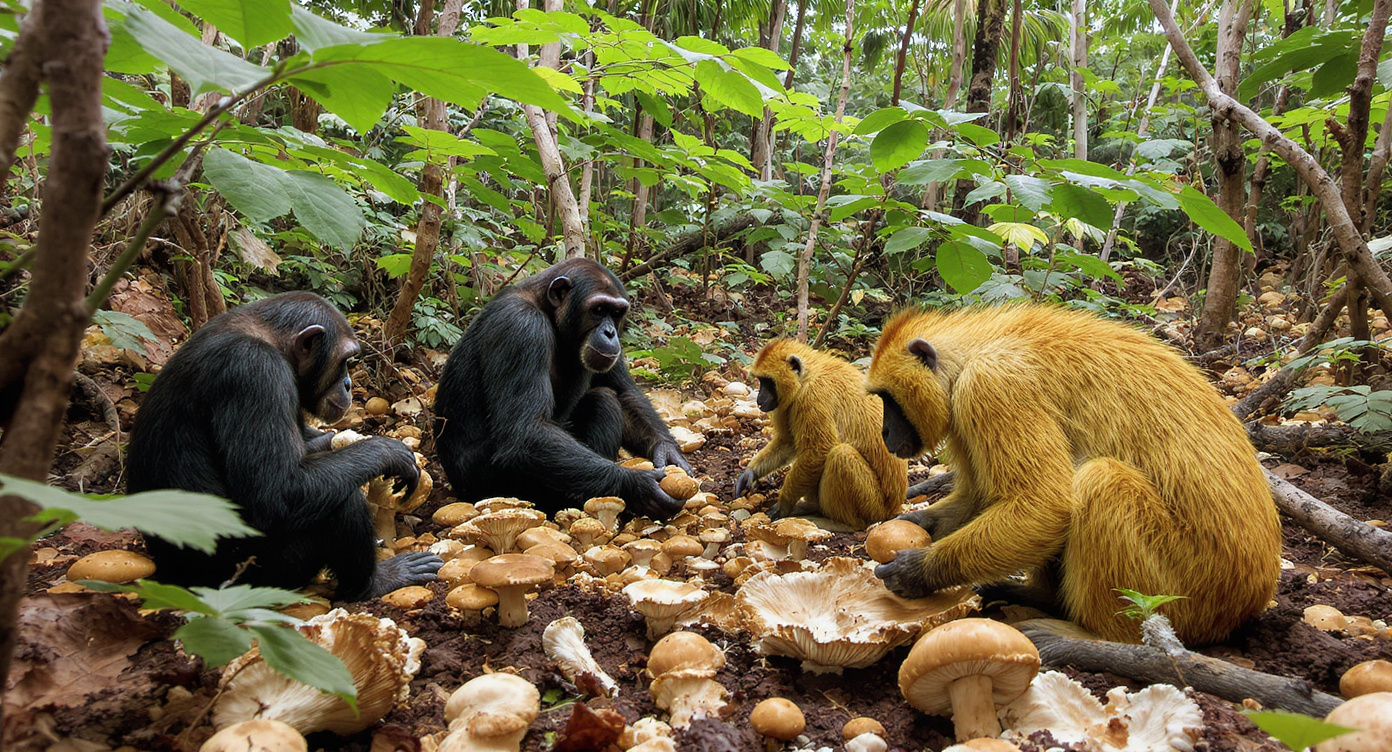
A new study conducted in Tanzania has revealed that mushrooms play an unexpectedly important role in the diets of three primate species. For one of these species, mushrooms have become not just a backup food source, but a preferred choice.
Although mushroom consumption among primates is fairly common, they usually make up only a small portion of their diet, which is dominated by fruits and plant matter. However, some primate species practice mycophagy more frequently. For example, it was previously established that western lowland gorillas living in the forests of the Republic of Congo eat truffles year-round.
In the new study, researchers observed chimpanzees (Pan troglodytes schweinfurthii), red-tailed monkeys (Cercopithecus ascanius), and yellow baboons (Papio cynocephalus) living in the Issa Valley in western Tanzania. From 2015 to 2023, specialists recorded the dietary habits of these primates and monitored the availability of mushrooms in their habitat. In total, about 50,000 feeding episodes were analyzed.
The results showed that all three species regularly consumed mushrooms, but their dietary preferences differed. Chimpanzees and red-tailed monkeys included mushrooms in their diet mainly during the rainy season, when mushrooms were abundant and ripe fruits—their main food—were scarce. On average, mushrooms made up 2% of their diet, but during peak months, this rose to 11% for chimpanzees and nearly 8% for monkeys.
Baboons turned out to be true mushroom enthusiasts: mushrooms accounted for up to 11% of their annual diet, and in some months, more than 36% of all food consumed. Remarkably, baboons continued to eat mushrooms even outside the rainy season, when they were less available. For Papio cynocephalus, mushrooms became a preferred food, not just a fallback option.
According to experts, such dietary differences may be a strategy to reduce food competition among species living in the same ecosystem. This division allows primates to avoid conflicts when searching for food and to use available natural resources more efficiently.
Scientists believe their findings also shed light on the possible diets of ancient hominids. The wooded savanna of the Issa Valley resembles the presumed natural environment in which human ancestors evolved. If modern primates living in similar ecosystems eat mushrooms, it is likely that australopithecines, Homo habilis, and other human ancestors did the same. Archaeological evidence supports this theory: scientific literature describes cases where traces of mushrooms were found in the dental plaque of Neanderthals.