

The population of Amur leopards has tripled over the past decade.
Over the past ten years, the population of Amur leopards in Russia has nearly tripled thanks to enhanced protection efforts. To further restore their numbers, plans are underway to expand their habitat and strengthen international cooperation.
Natura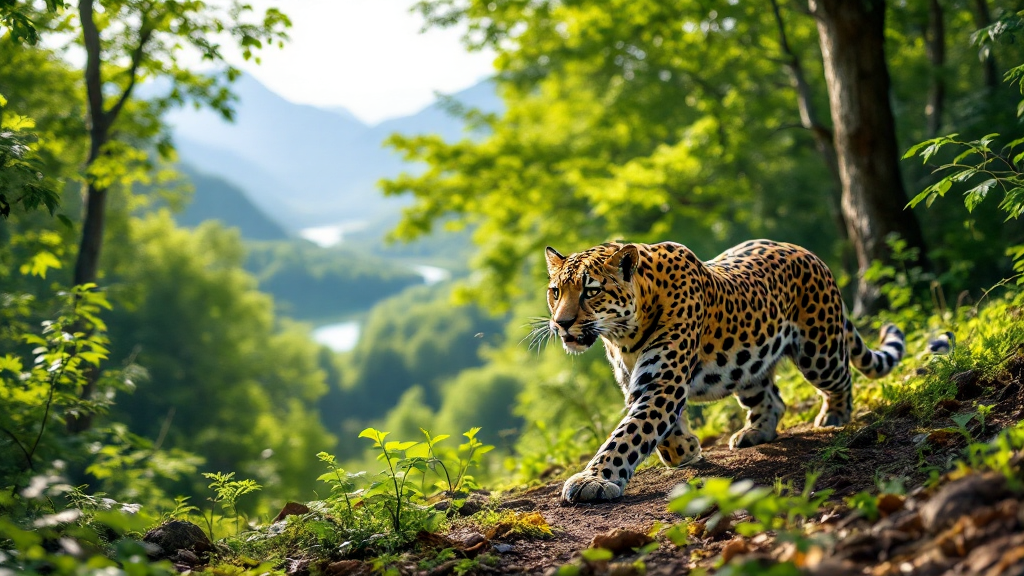
Far Eastern leopards are among the rarest big cats in the world and are currently threatened with extinction. Over the past ten years, their population in Russia’s “Land of the Leopard” National Park has nearly tripled.
Historical Range and Current Status
In the 19th century, Far Eastern leopards inhabited the southern part of the Ussuri region (now the territories of Primorsky and Khabarovsk Krais), the northeast of China, and the Korean Peninsula. By the end of the 20th century, their range had shrunk to a small area in the southwest of Primorsky Krai in Russia and adjacent regions in northern China. Today, the boundaries of their habitat remain unclear and shift depending on the season.
Conservation and Population Recovery Efforts
In 2013, Russia’s Ministry of Natural Resources set a goal to preserve the viability of the Far Eastern leopard population and restore its historical range. To effectively protect this endangered species, it is essential to study the demographic processes that influence population recovery.
Research Findings
Staff from the “Land of the Leopard” National Park, together with international colleagues, analyzed camera trap data collected from 2014 to 2023. The results were published in the journal Scientific Reports.
Over the decade, leopard density nearly tripled—from 0.89 to 2.64 individuals per 100 square kilometers. The average annual population growth rate was 12%. The main driver of this growth was the high survival rate of adult animals, attributed to enhanced protection measures. Adult leopard survival was estimated at 79–91%.
Kitten birth rates had a smaller impact on population growth—about 4.7%. On average, each litter had 1.5 cubs, though this number has decreased over time. As the leopard population increased, the size of individual territories shrank. Researchers note that the population is approaching the carrying capacity that the national park can support.
International Cooperation and Future Prospects
To further restore the subspecies, it is necessary to expand their habitat and strengthen international cooperation. In 2024, Russia and China signed an agreement to create a transboundary reserve for the Far Eastern leopard and the Amur tiger. The new reserve, uniting protected territories, has been named the “Land of Big Cats.” Within this area, 223 leopards have been recorded: 135 in Russia and 115 in China, with 27 animals crossing the national border.