

A jaguar has traveled a record-breaking 2,000 km across the Amazon.
An adult jaguar has traveled more than 2,000 kilometers across the southern Amazon, setting a new record for its species and surprising scientists with its unusual route. This discovery changes our understanding of what big cats are capable of and highlights the importance of natural corridors for their survival.
Natura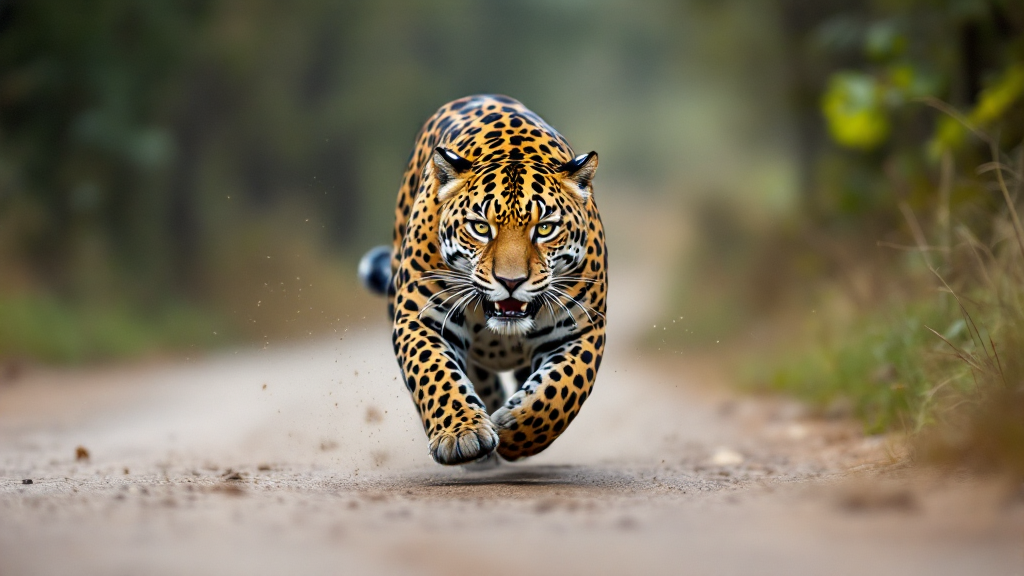
One of the planet’s most elusive predators has completed a journey previously thought unlikely for its species. An adult jaguar crossed forests, farmland, and roads in the southern Amazon, covering a distance comparable to traversing an entire country. The reasons why this animal left its usual territory and set out on such a trek remain unknown. The answer to this question could reshape our understanding of what big cats are capable of and the territories they need to survive.
Ecological Corridors and Habitat
In central Brazil, near the Araguaia River, lies a major natural corridor connecting the Cerrado savannas with the Amazon’s rainforests. This area is crucial for the migration and survival of large animals such as jaguars and pumas.
Jaguars are solitary by nature. Young individuals become independent at around one and a half to two years old, after which they leave their parents’ territory to search for their own area for shelter and hunting.
Observations and a Record-Breaking Journey
Since 1999, jaguars have been monitored in Brazil. Until recently, recorded dispersals of these predators were limited to a few dozen kilometers, with the longest movements reaching about 100 kilometers.
In 2025, a male jaguar named Gaspar displayed extraordinary behavior: after leaving a territory of about 697 square kilometers along the Araguaia River, he traveled more than 2,000 kilometers. This set a new record for the species and revealed that jaguars are capable of much greater journeys than previously believed.
Gaspar was captured and fitted with a GPS collar in November 2024. At the time, he was eight years old and weighed 92 kilograms. Initially, he stayed within his territory, but after several months, he began moving south.
The Route and Conditions of the Journey
The jaguar traveled along the southern edge of the Amazon, venturing deep into the Cerrado. The straight-line distance between the starting and ending points of his route was 2,122 kilometers. The actual path was even longer, as the animal did not move in a straight line, so the real distance covered was likely greater.
During his journey, Gaspar crossed not only forests but also pastures, rice fields, sugarcane plantations, highways, and other human-altered landscapes. This fact especially intrigued researchers, as the jaguar managed to traverse environments traditionally considered difficult and dangerous for large predators.
A total of 5,050 GPS points were collected and analyzed. The collar automatically recorded his coordinates every hour. Data was transmitted for 381 days, and on average, the jaguar covered 9.76 kilometers per day.
Unknown Fate and Possible Reasons for Migration
At the end of November 2025, Gaspar’s collar stopped working. After the signal ceased, the animal’s fate became uncertain—whether his journey continued or ended is unknown. Possible reasons include equipment failure, human intervention, or poisoning.
The reasons why the jaguar left his familiar territory and embarked on such a long journey are still unclear. Usually, long-distance dispersals are made by young animals, but Gaspar was an adult, making his case unusual. Possible explanations include being displaced by a stronger male, changes in habitat conditions, or searching for an area with more food. However, even after a year of wandering, the jaguar did not settle in a new territory, which sets his behavior apart from that of typical young dispersers.
Conservation Significance
This predator’s journey demonstrates how far jaguars can travel and how challenging it is to protect them. Animals with such wide-ranging movements often leave protected areas and face threats from humans.
On farms and ranches, jaguars are often killed due to attacks on livestock. Poaching remains another serious problem. Protected reserves alone are no longer enough to ensure the species’ survival. Jaguars need larger natural corridors that allow them to move safely between different habitats.
The results of this research were published in the journal Ecology.