

Controlled burns save sequoias from extinction
A new study has shown that controlled burns significantly increase the survival rate of giant sequoias during extreme wildfires. This approach is recognized as a key tool for their preservation.
Natura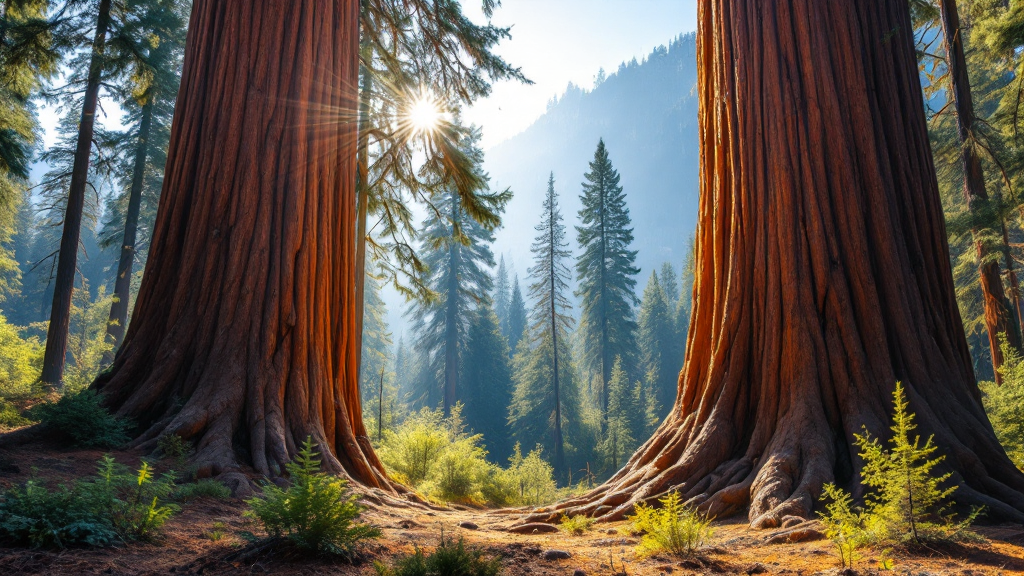
In 2020 and 2021, two major wildfires in the Sierra Nevada, California, destroyed many giant sequoias. A study by the University of California, Davis, showed that the use of controlled burns significantly reduced the loss of these trees.
An analysis published in Nature Communications found that giant sequoias exposed to controlled burns over the previous decade survived the Castle Fire in 2020 and the KNP Complex Fire in 2021 nearly four times more often than trees that had not undergone such treatment. Controlled burns proved to be an effective method for reducing sequoia mortality, even during extreme wildfires. For conservationists, the managed use of fire is now considered a key tool in protecting these trees.
Giant sequoias are among the largest and longest-living organisms on Earth. A single tree can weigh as much as fifteen blue whales, and some are over three thousand years old. In the wild, they are found only on the western slopes of the Sierra Nevada in California. These trees evolved in conditions of regular, low-intensity fires, which is why their thick bark and high crowns provide protection, and smaller fires clear the undergrowth, return nutrients to the soil, and encourage the growth of new sequoias.
For a long time, mature sequoias were considered almost immune to fire. However, after the 2020 and 2021 wildfires, which destroyed entire groves that had survived for centuries, it became clear that even these trees can perish in sufficiently intense fires. More sequoias died in those two years than ever before.
Since the 1960s, Sequoia and Kings Canyon National Parks have implemented one of the largest controlled burn programs in the country. This has created a mosaic of groves with different fire histories: some areas were treated recently, while others had not seen fire for over a hundred years, leading to the accumulation of deadwood, shrubs, and other flammable material.
This diversity allowed researchers to assess the impact of controlled burns on sequoia survival during extreme wildfires. Experts from UC Davis, the US Geological Survey, and the National Parks combined various remote sensing methods, including aerial lidar and high-resolution satellite imagery.
The team studied the state of flammable materials before the fires and analyzed the aftermath for about 26,400 giant sequoias in 19 groves affected by the Castle and KNP Complex fires. The results showed that controlled burns conducted over the previous decade reduced the likelihood of sequoia death by about 77%. Trees in treated areas were roughly four times more resilient than those in untreated areas.
Computer modeling indicated that early controlled burns prevented the loss of around 1,900 giant sequoias. It is estimated that another 3,900 trees could have survived if all sequoias in the affected groves had received similar treatment.
Climate change is increasing the frequency and intensity of disturbances in old-growth forests, including droughts and extreme wildfires. Despite the natural resilience of giant sequoias to ordinary fires, the study confirms their vulnerability to severe wildfires.
The data collected indicate that controlled burns help protect sequoia groves by reducing the amount of flammable material before major fires. Modern remote sensing techniques and rigorous statistical analysis allow for a deeper understanding of the effects of controlled burns compared to traditional observations and field studies.