

The increase in brain size among Homo may have been a random process.
A new study challenges the traditional view that the increase in brain size among Homo species was the result of natural selection, suggesting instead that this process may have occurred by chance. An analysis of skulls indicates that these changes are better explained by models of neutral evolution rather than by directed selection.
Cursus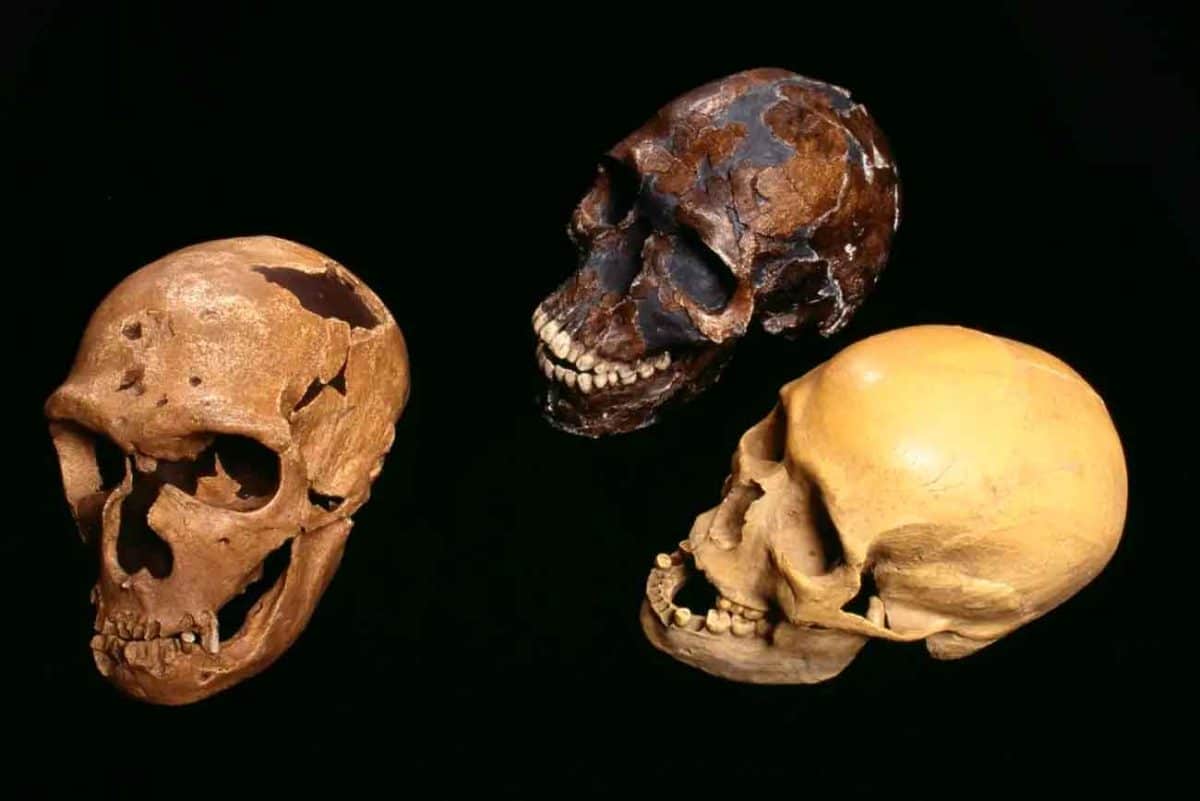
One of the key anatomical features in the evolution of the genus Homo is considered to be the significant increase in cranial capacity over the past approximately two million years. During this period, the average volume has roughly tripled. However, a recent study has challenged the traditional hypothesis that this process was solely the result of natural selection, suggesting instead that these changes may have occurred by chance.
Traditional Views on Brain Evolution
For a long time, anthropologists believed that the increase in human brain size—both in absolute terms and relative to body size—was primarily driven by Darwinian selection. It was assumed that brain evolution was influenced by environmental changes, dietary factors, cognitive abilities, the complexity of social life, and technological advancements. A larger brain was seen as an adaptation to the need to survive in changing conditions, coordinate actions within groups, and transmit knowledge.
It is believed that over the last two million years, the cranial capacity of Homo ancestors increased from 400–500 cubic centimeters in australopithecines to 1300–1500 cubic centimeters in Neanderthals and Homo sapiens. At the same time, facial structure also changed: faces became less massive, jaws, teeth, and brow ridges decreased in size.
The New Study and Its Methods
In the new study, researchers analyzed 87 skulls of Homo representatives, including sapiens, Neanderthals, Homo erectus, Homo habilis, and other early forms. Using three-dimensional geometric morphometrics, they compared the shape of the facial part of the skull and the volume of the braincase.
The researchers did not limit themselves to simply comparing skull sizes from different periods. Instead, they focused on the dynamics of changes over time to determine which evolutionary model best describes the observed transformations in the skull and face of Homo.
Comparing Evolutionary Models
Six mathematical models of evolution were considered. One described constant natural selection favoring increased brain size and reduced facial size—a classic scenario in which evolution preserves traits that provide an advantage. Another model assumed neutral evolution, where changes occur without a predetermined direction and can accumulate randomly. The remaining models described various forms of stabilizing selection and stasis—long-term preservation of anatomical traits within a relatively narrow range of values.
Main Findings of the Study
The results showed that the increase in cranial capacity among Homo representatives did occur, but Darwinian selection likely either did not drive this process or its influence was minimal. The changes were best explained by models of neutral evolution. This means that the acquired forms and sizes of the braincase could have resulted from random evolutionary processes rather than a purposeful drive toward a specific goal.
Neutral evolution does not rule out the advantages of a larger brain, but it suggests that the increase in size was not necessarily the result of a continuous “race for super-abilities,” where each increase in brain volume improved survival chances and was fixed by selection. The data indicate the important role of random processes.
The data also revealed signs of stasis, where anatomical traits remain within a certain range for long periods, and noticeable changes occur only during times when limiting factors are relaxed. Exactly which factors allowed these constraints to be overcome remains unknown.
Changes in the Facial Part of the Skull
A similar pattern was observed in the analysis of the facial part of the skull. The face of Homo maintained roughly the same “template” over many generations, with transformations occurring only when new conditions arose, such as those related to developmental features of the organism.
Study Limitations
One of the main challenges of the study is the limited paleontological record: only 87 skulls were analyzed, which is a small sample. Anthropologists had to reconstruct hundreds of thousands of years of evolution from a limited number of preserved remains, so some rapid evolutionary changes may have gone unnoticed.
It is also noted that even if the neutral evolution model best fits the data, this does not mean that natural selection was entirely absent. Adaptive processes are still possible, especially if selection acted in short bursts or changed along with environmental conditions. For example, there may have been periods of strong selection following rapid environmental changes, followed by long periods of stability.
The study was published in the journal Nature Communications.