

Malaria influenced the settlement patterns of ancient humans in Africa.
A new study shows that the risk of malaria infection significantly influenced the settlement patterns of ancient humans in Africa, alongside climate factors. Malaria shaped the demographic structure of populations, dividing groups and determining their choice of habitats.
Cursus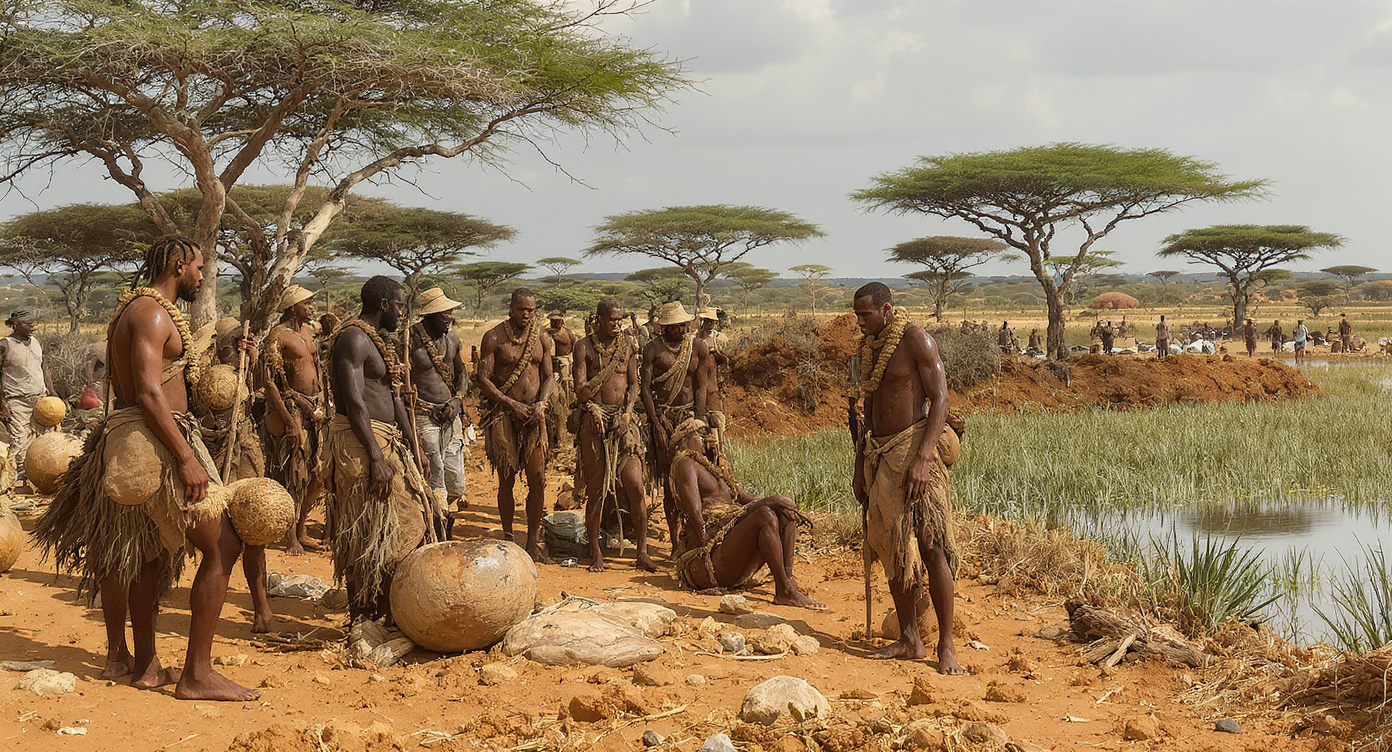
The main factor traditionally associated with the choice of habitats by early Homo sapiens in Africa was considered to be climate. However, recent research indicates that as early as 74,000 years ago, and possibly even earlier, the risk of malaria infection played a crucial role.
Modern data show that Homo sapiens did not originate from a single center in Africa. The species emerged through the interaction of small populations scattered across different regions of the continent. To survive, these groups had to adapt to a variety of environmental conditions.
Until recently, the spread of human populations across Africa was explained mainly by climatic factors. However, adaptation occurred not only among humans but also among the pathogens they encountered.
Studies have shown that, in addition to climate, malaria had a significant impact on the southward migration of Homo sapiens from the Sahara between 74,000 and 5,000 years ago. This infectious agent has accompanied humanity throughout its history, transmitted by bites from female Anopheles mosquitoes infected with the Plasmodium falciparum parasite.
To assess the impact of malaria on the settlement choices of ancient hunter-gatherers, researchers combined models of malaria mosquito distribution in Africa with both modern and ancient climate data, as well as information on malaria incidence in various regions of the continent.
Based on these models, areas with a higher risk of malaria infection for ancient humans were identified. These assessments were compared with archaeological data on the distribution of human populations across Africa.
The results showed that ancient people either avoided high-risk malaria zones or were unable to survive in such areas. For example, the absence of evidence of settlements near major rivers may indicate an avoidance of swampy regions where malaria-carrying mosquitoes were common.
Thus, the threat of malaria directly influenced the choice of habitats, pushing human groups out of high-risk zones and contributing to the separation of populations across Africa. These processes shaped the demographic structure of humanity over the past 74,000 years and likely began even earlier. By dividing human societies, malaria played a role in forming the population structure observed today.