

Hummingbirds have developed a resistance to alcohol found in nectar.
Some pollinators, such as hummingbirds, receive small amounts of ethanol from nectar every day, yet they show no signs of intoxication. This may indicate that they have developed a tolerance to alcohol over the course of evolution.
Cursus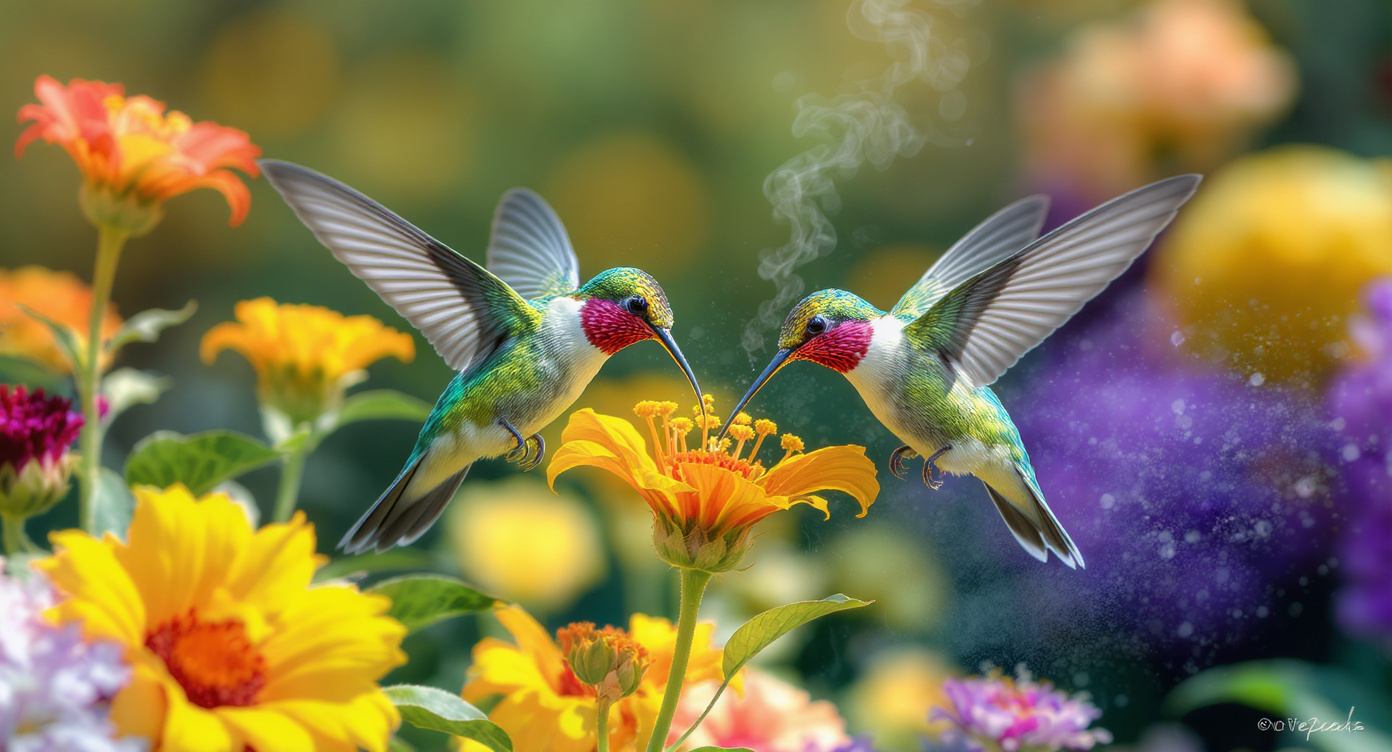
Floral nectar contains a small amount of ethanol, which is regularly ingested by pollinators such as hummingbirds throughout the day. Despite this, these animals do not show signs of intoxication, which may indicate that they have developed a tolerance to ethanol over the course of evolution.
Nectar Composition and Consumption by Pollinators
Nectar is the main food source for many pollinators, including bees, wasps, butterflies, bumblebees, and hummingbirds. Some of these animals consume daily amounts of nectar comparable to their own body weight. As insects and birds move between flowers and assist in pollination, they ingest small doses of alcohol with the nectar, which forms as a result of sugar fermentation by yeast fungi.
Study of Ethanol Content
During the study, 147 nectar samples were collected from 29 species of flowering plants, including those preferred by hummingbirds. Ethanol was detected in 48% of the samples, and in 26 plant species, alcohol was present in at least one sample. The average ethanol concentration ranged from 0.016% to 0.032% by mass, and in some cases reached 0.056%, which is roughly equivalent to 0.1% alcohol by volume.
Impact on Hummingbirds
For many species, nectar is the primary energy source. Hummingbirds, for example, drink nectar daily in amounts ranging from 50% to 150% of their body weight. According to calculations, Anna's hummingbirds (Calypte anna), which live along the Pacific coast of North America, receive about 0.2 grams of ethanol per kilogram of body weight per day—comparable to a single serving of alcohol for a 70-kilogram human.
Experiments have shown that at low ethanol concentrations (up to 1% by volume) in sugar water, hummingbirds actively visit feeders. As the concentration increases, the frequency of visits decreases, and at 2% it drops by half.
Evolutionary Adaptation and Metabolism
Despite regular alcohol consumption, hummingbirds and other nectar-feeding animals do not display obvious signs of intoxication. This may suggest an evolutionary development of ethanol tolerance. The rapid metabolism of hummingbirds allows them to quickly extract energy from food, which may prevent the intoxicating effects of alcohol from manifesting.
Nectar also contains other compounds, such as nicotine and caffeine, which can influence animal behavior. The specific effect of ethanol on hummingbird preferences and behavior has not yet been determined.
Connection to the Evolution of Alcohol Tolerance
This research is part of a broader program aimed at finding evidence that alcohol tolerance has naturally evolved in many animals, including human ancestors. Previous studies have shown that the feathers of Anna's hummingbirds contain ethyl glucuronide—a byproduct of ethanol metabolism—indicating that these birds can process alcohol similarly to mammals. Similar compounds have been found in the urine of chimpanzees that feed on overripe fruit.