

Flying foxes save Australia's forests and economy
Australian flying foxes, once considered pests, help generate millions of new trees each year and contribute hundreds of millions of dollars to the country's economy. Research highlights their crucial role in forest restoration and the importance of protecting these animals.
Natura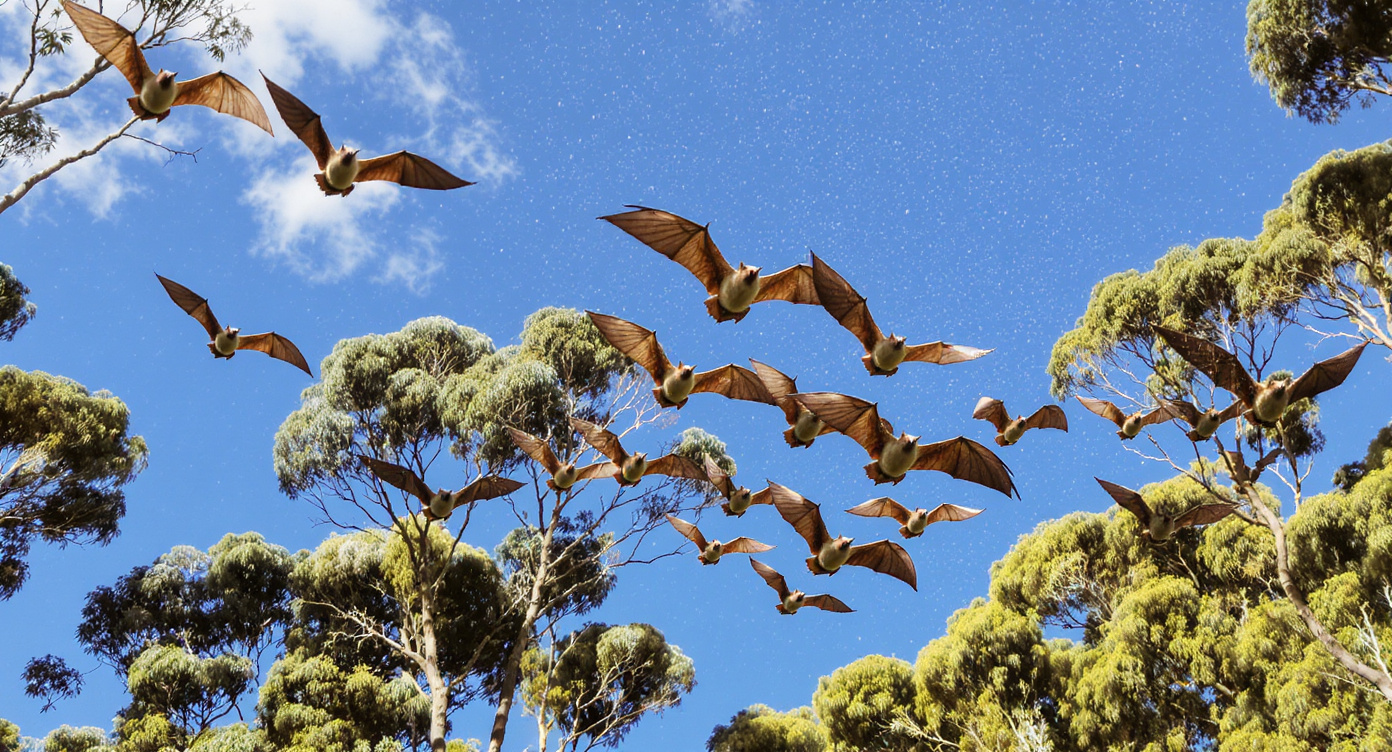
Australian authorities have previously eradicated entire colonies of flying foxes, considering them dangerous pests. However, recent studies have shown that these animals, once associated with the spread of coronaviruses, actually help generate tens of millions of new trees each year and bring hundreds of millions of dollars to the Australian economy.
Biological Features of Flying Foxes
Grey-headed flying foxes (Pteropus poliocephalus) are endemic to Australia and are among the largest bat species. An adult can weigh up to one kilogram, with a wingspan reaching up to a meter. During their migrations along Australia’s eastern coast, these animals disperse seeds, spreading them through their droppings.
Historical Attitudes and Threats
For a long time, flying foxes were viewed as potential natural reservoirs of dangerous viruses, including coronaviruses and the Ebola virus. They were often treated with hostility: poisoned, shot, and destroyed using flamethrowers and napalm, without recognizing their ecological importance.
Research on Ecosystem and Economic Contributions
An international team of researchers analyzed the contribution of flying foxes to Australia’s ecosystem and economy, particularly in the forestry sector. Data from over 1,200 flying fox habitats collected between 2020 and 2022 were used in the study.
Based on this data, scientists assessed the role of flying foxes in seed dispersal and calculated that thanks to them, more than 91 million new trees appear annually, most of which are eucalypts. Eucalypts are vital to Australia’s forestry industry: they are used to produce building materials, furniture, paper, cellulose, as well as fuel and raw materials for essential oils.
The ecological contribution was converted into an economic equivalent based on the value of timber resources for the industry. The annual benefit is estimated to range from 195 to 673 million dollars.
Comparison with Other Countries
This study is the third of its kind in the world and the first in Australia to quantitatively assess the economic value of bats for ecosystems. In other countries, such as Texas, bats protect cotton and corn crops from pests, while in Mexico, they pollinate blue agave, which is essential for tequila production.
Ecological Functions and Importance
Flying foxes perform two crucial ecological functions: they disperse seeds and transfer pollen between flowers while feeding on nectar. Thanks to their high mobility, they can travel long distances and carry large seeds, connecting fragmented ecosystems. This is especially important for restoring forests damaged by fires and human activity.
Researchers introduced the term “flying fox wave effect” to describe how these animals, covering hundreds of kilometers in just a few days, facilitate gene exchange between isolated tree populations and repopulate areas where local seed sources have disappeared.
Vulnerability and the Need for Protection
Despite their significant contribution, Pteropus poliocephalus remains vulnerable. They face threats from habitat destruction, wildfires, and extreme heat, which can kill tens of thousands of individuals in a single day in some regions. Experts believe that protecting flying foxes should be given as much attention as the conservation of bees, which also face serious threats.
The results of the study were published in the journal Scientific Reports.