

A dolphin robot collects oil from the surface of the water
Australian engineers have developed a robot that can move independently across water and efficiently collect oil spills using a unique filter. In the future, this device will be able to operate fully autonomously, cleaning up polluted areas.
Ingenium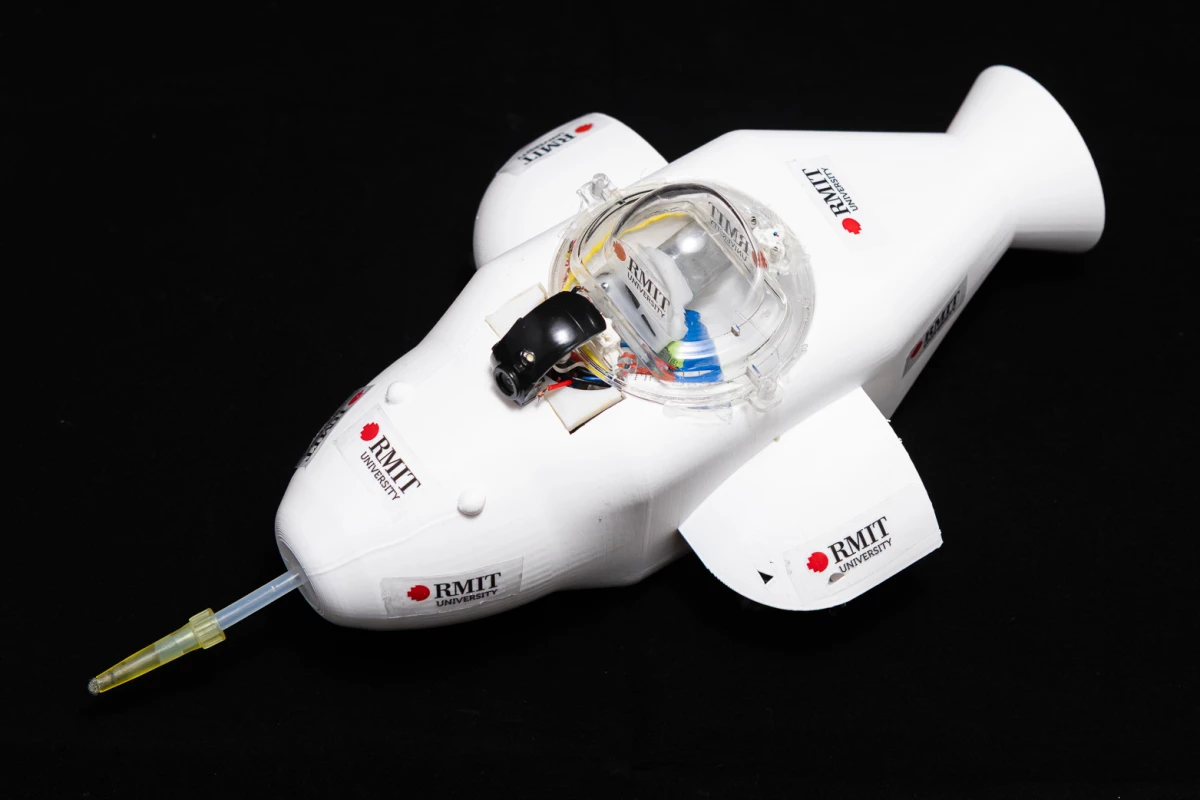
Most existing systems for cleaning up oil spills at sea operate passively, waiting for the oil slick to approach them. A new robot developed at RMIT University in Australia can independently move across the water’s surface and collect oil from spills. The prototype, named Electronic Dolphin, is inspired by the unique structures of dolphins and sea urchins.
How the Device Works
The robot, about the size of a sneaker, is equipped with a unique filtration system modeled after the structure of sea urchins. As it moves over an oil slick, a built-in pump draws contaminated water into a filter designed like a sponge, coated with microscopic spikes (made from oleic acid, functionalized barium carbonate, and nanosheets of reduced graphene oxide). These spikes trap tiny air pockets, causing water to roll off the filter while oil remains on its surface.
As a result, the filter absorbs only oil, without becoming saturated with water. Once the filter is full of oil, the oil can be drained and the filter reused. The collected oil is stored in an internal chamber within the device.
Test Results and Future Prospects
In laboratory tests, the Wi-Fi-controlled robot collected oil from water at a rate of about 2 milliliters per minute with over 95% purity, operating for around 15 minutes on a single battery charge. There are plans to significantly increase the size of the device in the future.
Looking ahead, the robot is expected to function as a fully autonomous system: independently collecting oil from the water’s surface, returning to a base station to offload the collected oil, and then heading back to the spill site. This cycle can be repeated until the contaminated area is completely cleaned.
The research findings have been published in the scientific journal Small.