

The Antarctic ice sheet is rapidly losing area.
In recent decades, certain sections of the Antarctic ice sheet have retreated by more than 40 kilometers due to the warming of ocean waters. These changes could accelerate ice loss and impact global sea levels.
Natura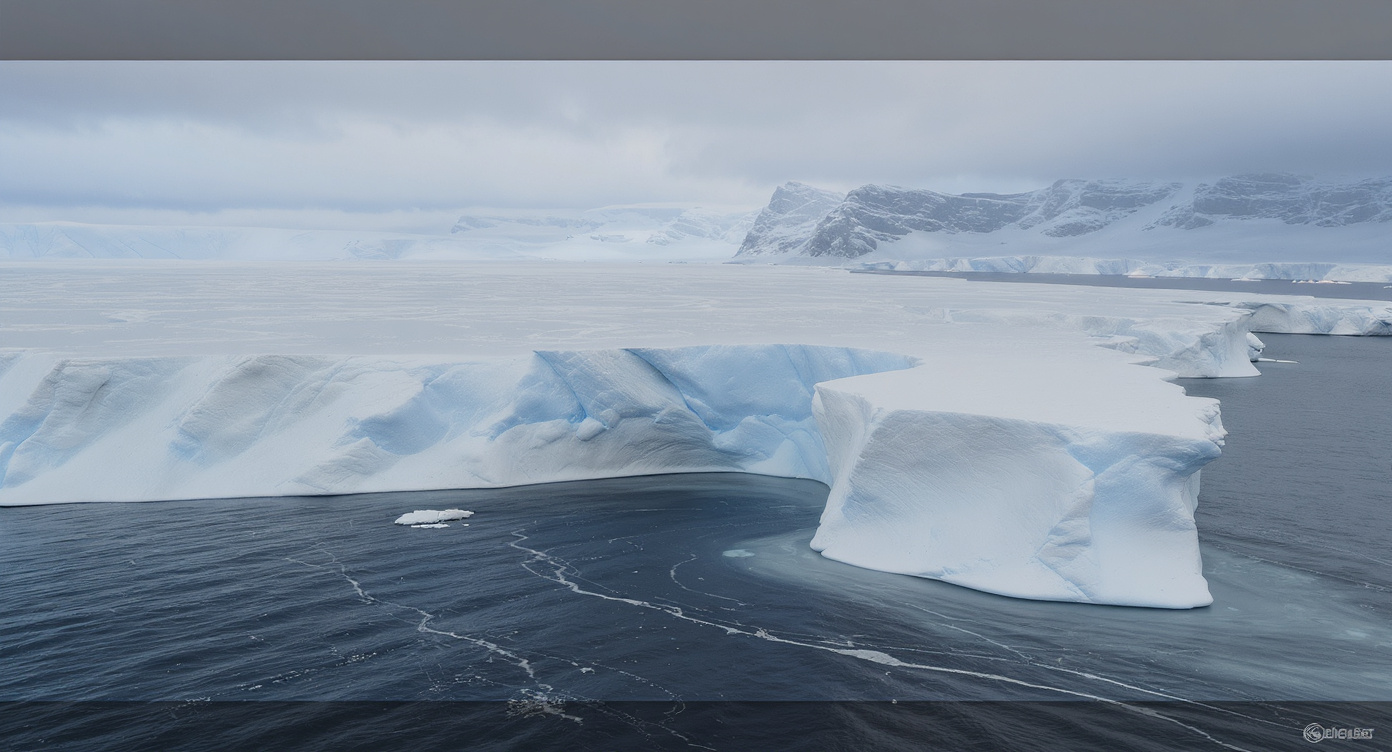
Research has shown that over the past three decades, certain sections of the Antarctic ice sheet have retreated by more than 40 kilometers. Analysis of satellite radar data revealed that rising ocean temperatures are weakening the ice sheet from below, which could impact future global sea levels.
For more than 30 years, satellites have been recording changes in Antarctica. Based on the collected data, a study was conducted, and its results were published in the journal Proceedings of the National Academy of Sciences (PNAS).
In several regions of Antarctica, the grounding lines of the ice have shifted significantly. The grounding line is the boundary where the ice stops resting on land and begins to float in the ocean. In some areas of West Antarctica along the Amundsen Sea, the ice has retreated by 42 kilometers since the 1990s. Overall, between 1996 and 2025, the continent has lost about 12,800 square kilometers of grounded ice—almost half the area of Belgium.
The main factor driving these changes is warmer ocean water. A current known as Circumpolar Deep Water penetrates beneath floating ice shelves, causing them to melt from below. As the ice thins, it loses its grip on the bedrock, and the grounding line moves further inland, indicating a weakening of the ice sheet.
At the same time, more than 77% of Antarctica’s coastline remains stable. However, continued retreat of the grounding lines could accelerate ice loss and contribute to rising global sea levels.
To monitor these changes, data from the Copernicus Sentinel-1 mission, operated by the European Space Agency (ESA), are actively used. These satellites are equipped with radars capable of observing through clouds and during nighttime, making them highly effective for year-round monitoring of polar regions.