

The oldest biped: a discovery that changes human history
The discovery of a femur belonging to an ancient female hominin in Bulgaria could reshape our understanding of human origins, suggesting a possible European origin for the first upright-walking beings. Analysis of the find revealed features indicative of bipedal movement, making Graecopithecus one of the earliest known bipeds.
Cursus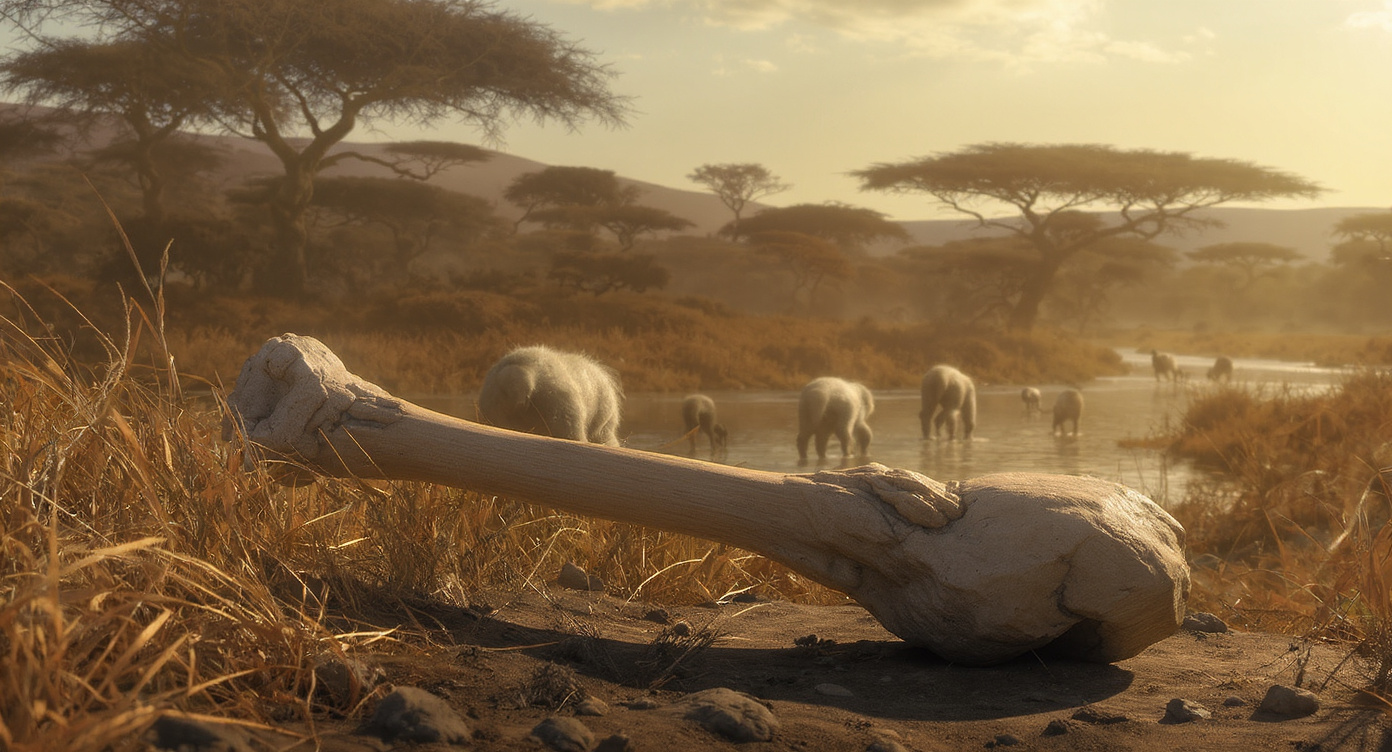
Until recently, it was believed that the first humans appeared in Africa, and that the ability to walk on two legs emerged there about six million years ago. However, the discovery of a fossilized femur belonging to a female hominin who lived 7.2 million years ago could change our understanding of human origins.
Description of the Discovery
A detailed description of the fossil, found in Azmak north of Chirpan in southern Bulgaria, was published in the journal Palaeobiodiversity and Palaeoenvironments. The research was conducted by specialists from the National Museum of Natural History in Bulgaria, Aristotle University of Thessaloniki (Greece), the University of Tübingen (Germany), and the University of Toronto (Canada). Analysis showed that the bone belonged to a representative of the genus Graecopithecus, an extinct ancestor of humans that lived in southeastern Europe during the late Miocene, around 7.2 million years ago.
Previously Known Finds
Before this, Graecopithecus was known only from two finds: a fragment of a lower jaw with teeth discovered near Athens, and a molar found in the same area where the femur was unearthed—in Azmak.
Hypotheses about Human Origins
In 2017, an international team of paleontologists and anthropologists, based on dental analysis, suggested that Graecopithecus might be the earliest hominin, that is, a direct ancestor of humans. This raised the possibility that humanity could have originated in Europe. Such a hypothesis sparked debate in the scientific community, since most hominin remains have so far been found in Africa.
Signs of Bipedalism
The teeth of Graecopithecus did not allow scientists to determine how this creature moved. However, analysis of the femur revealed features indicative of bipedalism, such as an elongated and upward-oriented neck between the shaft and the head of the bone, specific attachment points for the gluteal muscles, and the thickness of the outer bone layer—traits similar to those found in fossil bipedal ancestors of humans and in modern humans.
Comparison with Other Hominins
Previously, convincing evidence of bipedalism had been found in Orrorin, an extinct hominin that lived in what is now Kenya about six million years ago. The femur from Azmak is dated to 7.2 million years ago, suggesting that Graecopithecus could be the oldest known bipedal creature.
Locomotion Features
The femur of Graecopithecus differs from that of monkeys that live exclusively in trees. These hominins moved differently from their later relatives, combining both bipedal and quadrupedal locomotion.
Ecological Conditions
The owner of the femur was a female weighing about 24 kilograms. She lived by a river in a wooded-grassy savanna, resembling the modern landscapes of East Africa.
Origin of Graecopithecus
Researchers suggest that Graecopithecus descended from apes that lived 8–9 million years ago in the region of today’s Balkans and Anatolia (Asia Minor), which in turn originated from ancestors in Western and Central Europe.
Impact of Climate Change
About 6–8 million years ago, major climatic changes in the Eastern Mediterranean and Western Asia led to the formation of vast semi-deserts and deserts. This triggered several waves of Eurasian mammal migrations into Africa and influenced the development of the modern fauna of African savannas.
Possible Migrations
It is possible that during this period, anthropoid apes, including Graecopithecus, also spread south from the Balkans into Africa, where later appeared such extinct human ancestors as Orrorin and Australopithecus.