

Northern forest fires release more carbon
A new study has shown that wildfires in boreal forests release much more carbon into the atmosphere than previously thought, especially due to the underground burning of peatlands. This finding calls for a reassessment of climate models and risk management strategies.
Natura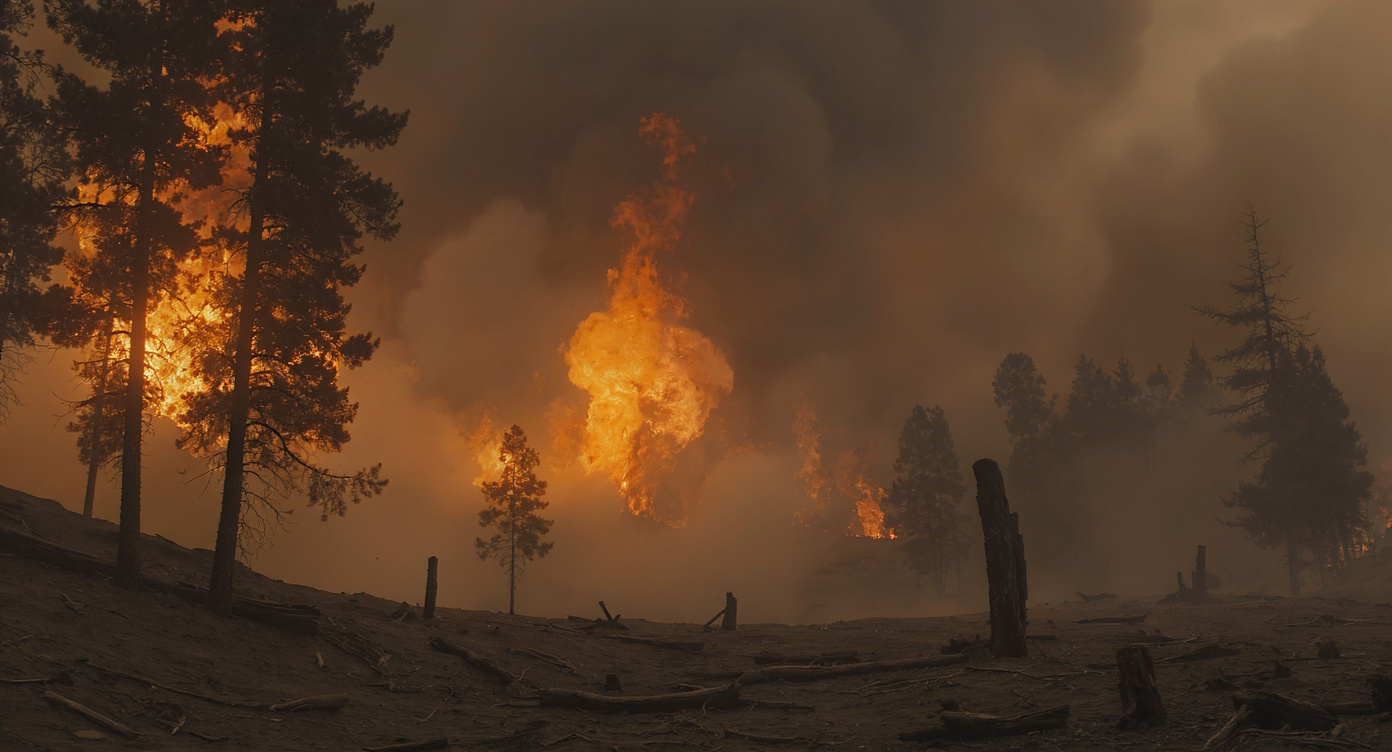
Wildfires sweeping across the vast boreal forests of Alaska, Canada, Scandinavia, and Russia have a much greater impact on the climate than previously thought. A new study by researchers at the University of California, Berkeley, has found that northern wildfires can release far more carbon into the atmosphere than current estimates suggest.
Unique Aspects of Burning in Boreal Forests
Unlike fires in other regions, wildfires in boreal forests affect not only trees but also deep layers of soil rich in organic matter. These areas often contain peatlands—soils made up of partially decomposed plant remains that have accumulated over hundreds or even thousands of years. Due to the cold and damp climate, organic material decomposes slowly, leading to significant underground carbon reserves.
Underestimation of Emissions in Existing Models
Many widely used models that estimate carbon emissions from wildfires do not fully account for underground burning. Most models rely on satellite observations of visible fire hotspots and are designed for fires in lower latitudes. As a result, they may miss slow, smoldering fires that burn deep within peatlands and organic soils. Such fires can smolder for weeks or even years, releasing large amounts of ancient carbon into the atmosphere.
Analysis of Wildfires in Sweden
In a study published in Science Advances, researchers analyzed 324 wildfires that occurred in Sweden in 2018. The scientists combined national forest data with direct field measurements to reconstruct the amount of carbon released by each fire and to create a detailed emissions map. The analysis showed that local conditions—such as climate, vegetation, and soil characteristics—significantly influence the amount of carbon stored in forests and released during fires.
Comparing the reconstructed data with six global wildfire models revealed significant discrepancies. In some areas, the models overestimated emissions, while in others—especially where fire penetrated deep into the soil—emissions were severely underestimated. For example, in Dalarna County, carbon emissions were underestimated by a factor of 14 compared to actual measurements.
Methodology for Measuring Emissions
To determine the amount of carbon released from soil during fires, the research team collected data from 50 sites affected by fire in 2018. At each site, they measured the thickness of the organic soil layer and collected samples. By comparing the carbon content in burned soil with samples from nearby untouched forests, the researchers calculated the volume of carbon emitted.
Prospects for Further Research
The group is now collaborating with colleagues from other institutions as part of the Western Fire & Forest Collaborative to apply similar methods in the forests of the western United States. Although western U.S. forests typically lack the thick peat soils found in the north, other factors—such as climate conditions, types of trees and vegetation, and soil health—also influence wildfire emissions. The team also plans to study the role of soil microbes—bacteria and fungi—in forest recovery after fires.
Implications for Assessing Climate Risks
Forests in both southern and northern latitudes may look different, but they share a common carbon balance. A more accurate understanding of carbon cycling between land and atmosphere will help better predict the consequences of future wildfires in a warming climate and develop more effective strategies to reduce climate risks for society.