

Two ancient species of marine predators have been discovered in Australia.
A recent analysis of fossils has revealed that remains in Australia, previously thought to belong to a single species of ancient marine predators, actually represent two distinct species. This discovery points to a more complex ecosystem following the Permian-Triassic extinction and broadens our understanding of ancient amphibian migrations.
Cursus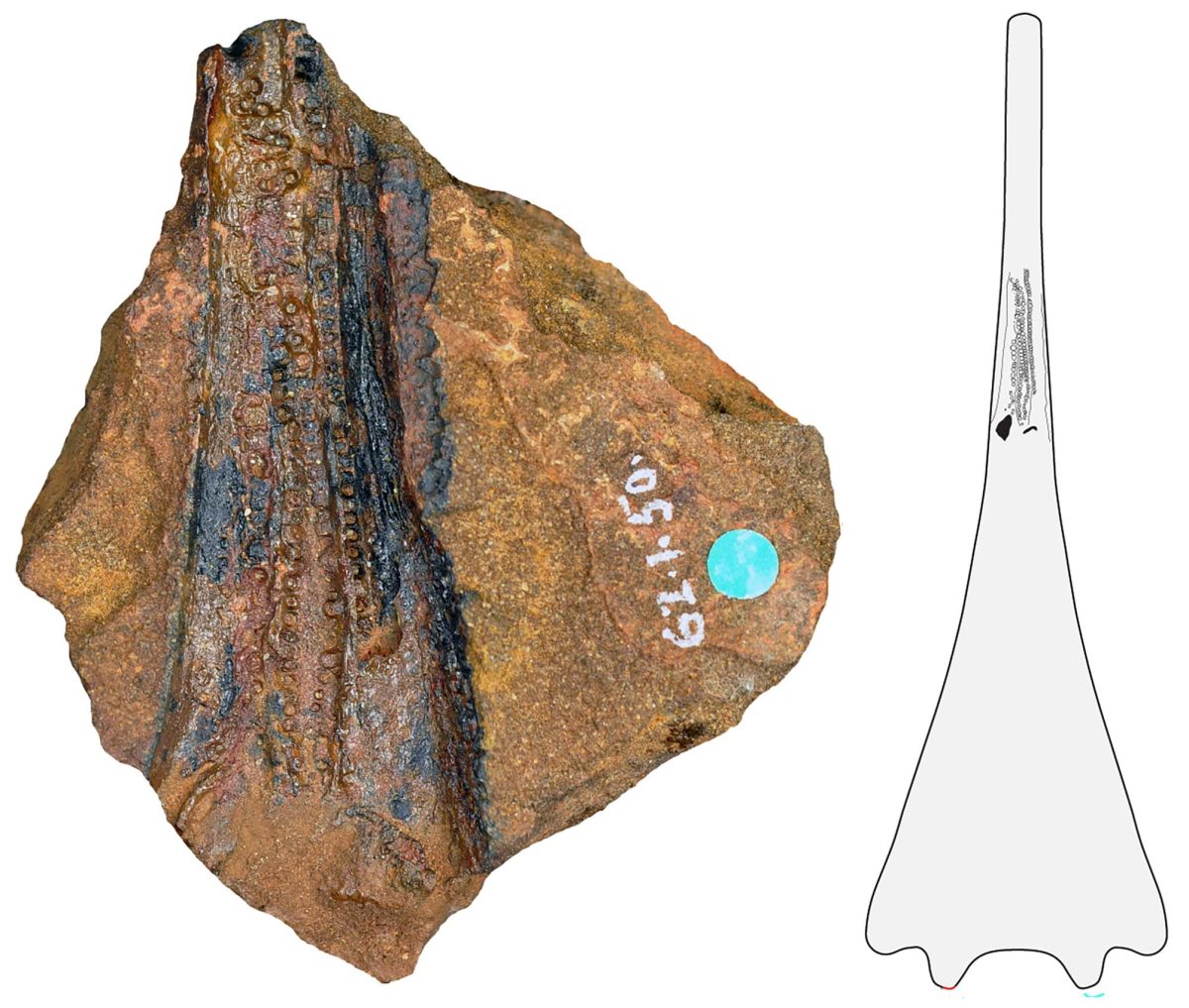
The restoration of marine ecosystems after the largest extinction event in Earth's history remains one of the most complex challenges in paleontology. A recent analysis of ancient marine animal fossils has revealed that remains previously attributed to a single species of predator actually belong to two distinct species.
Mass Extinction and Ecosystem Recovery
About 252 million years ago, the Permian-Triassic mass extinction wiped out up to 90% of marine species and dramatically altered the course of evolution. At the beginning of the Triassic period, as life was just starting to recover, the ecological niches of large aquatic predators began to be filled by new groups of animals. One of the first such groups were the trematosaurids—temnospondyl amphibians that outwardly resembled crocodiles, with elongated skulls and eyes positioned dorsolaterally, which aided in effective hunting in aquatic environments.
Research on Australian Trematosaurids
For a long time in Australia, the only known marine representative of this group was considered to be Erythrobatrachus noonkanbahensis, described in 1972 from fragmentary remains found in the Kimberley region of Western Australia. Previously, it was believed that all trematosaurid finds from this locality belonged to a single species, but new data have led to a reassessment of this view.
An international team of paleontologists conducted a thorough revision of previously discovered specimens thought to belong to E. noonkanbahensis. During their work, they found that the holotype (the main specimen) had long been considered lost, but was rediscovered in the collections of the University of California and returned to Western Australia.
Morphological Analysis and New Discoveries
The researchers carried out detailed morphological studies and high-precision 3D scanning of the available fossils, including a cast of the holotype. This allowed them to re-describe the anatomical features and compare them with other known trematosaurids from different regions of the world, such as Svalbard, Madagascar, Pakistan, and Russia.
As a result, it was established that the remains grouped under the name Erythrobatrachus noonkanbahensis actually belonged to two different animals. The first specimen is an amphibian with a relatively broad skull. The second, found at the same site, turned out to be a narrow-snouted representative of the subfamily Lonchorhynchinae, closely related to the genus Aphaneramma, previously known only from Madagascar. This is the first reliable evidence of this genus in Australia.
Significance of the Discovery and Conclusions
Thus, the validity of the taxon Erythrobatrachus noonkanbahensis has been confirmed, but its description is now based solely on the holotype, which is distinguished by a unique palate structure. The second species either coexisted with it or lived at a different depth, indicating the presence of a complex ecosystem where different predator species occupied various ecological niches in conditions of changing water salinity in the coastal zone.
The find related to the genus Aphaneramma is of great paleobiogeographic significance. This genus was widespread in the Early Triassic on both sides of the ancient Tethys Ocean. Its presence in Australia suggests the possibility of long-distance migrations of marine trematosaurids along the continuous coastlines of the supercontinent Pangaea.
It should be noted that the conclusions are based on a single fragmentary specimen, so the evolutionary relationships of this species remain hypothetical. Furthermore, since both specimens come from the same collection site but were found at different times, it cannot be completely ruled out that they originate from different stratigraphic levels, which casts doubt on their synchronous existence within a single community.