

Astronomers have discovered a possible pulsar near a black hole.
Astronomers have discovered a possible pulsar near the black hole at the center of the Milky Way. Confirming this discovery could help us gain a deeper understanding of the structure and processes within the Universe.
Cursus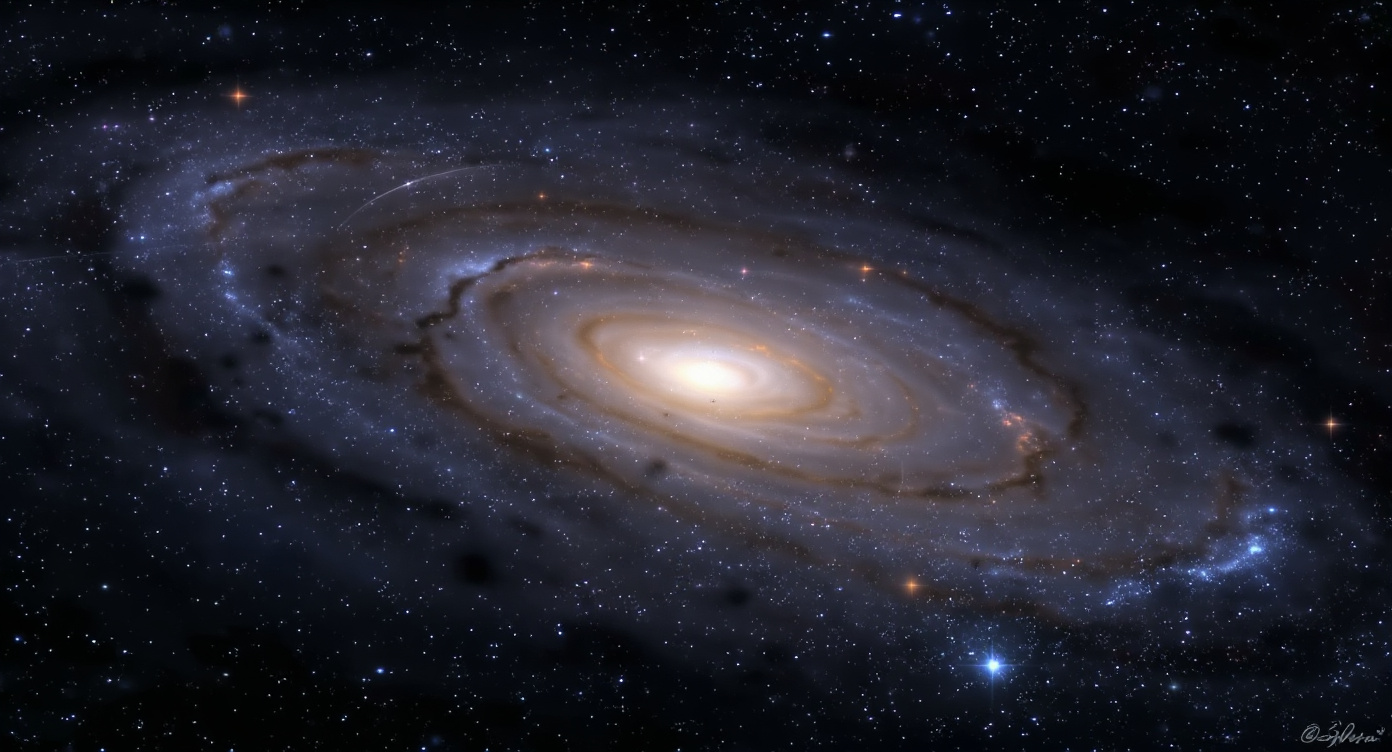
After conducting research, astronomers have suggested the possible discovery of a pulsar at the center of the Milky Way, near the supermassive black hole Sagittarius A*. Confirming this finding could lead to a deeper understanding of the structure and processes within the Universe.
Exploring the Galactic Center
Despite extensive study of the Milky Way, some of its regions remain poorly understood. In 2022, the first image of the supermassive black hole Sagittarius A* was obtained. A pulsar with an extremely strong magnetic field may be located in its immediate vicinity.
Characteristics of Pulsars
Pulsars are neutron stars that rotate at high speeds. For example, the pulsar PSR J1748-2446ad, located about 18,000 light-years from Earth, completes 716 rotations per second and is considered the fastest known. The mass of such objects is comparable to two solar masses, while their diameter is only about 19 kilometers. Pulsars are detected thanks to the electromagnetic radiation emitted from their poles.
Recent Observational Results
Between 2021 and 2023, as part of the Breakthrough Listen program using the Green Bank Telescope (GBT), astronomers detected a pulsar rotating at approximately 122 times per second. However, the number of pulsars found was lower than expected. Calculations indicated that the equipment's sensitivity should have allowed the detection of about 10% of millisecond pulsars and 50% of regular, slower pulsars, assuming their distribution in the galactic center is similar to the rest of the Milky Way. Nevertheless, only one candidate was recorded—Breakthrough Listen Pulsar (BLPSR), which continues to be studied.
The Need for Further Research
Additional observations are required to confirm the existence of the new pulsar, including with the help of the Very Large Array (ngVLA) and the Square Kilometre Array (SKA) telescopes. If the discovery is confirmed, astronomers will gain new data on the structure and evolution of our galaxy and others throughout the Universe.