

James Webb Telescope Unveils the 3D Mysteries of Uranus's Glow
The James Webb Space Telescope has, for the first time, created a three-dimensional map of the auroras on Uranus, allowing scientists to study the planet's atmosphere and magnetosphere in unprecedented detail. The new data confirm previous observations and open up new possibilities for further research on ice giants.
Cursus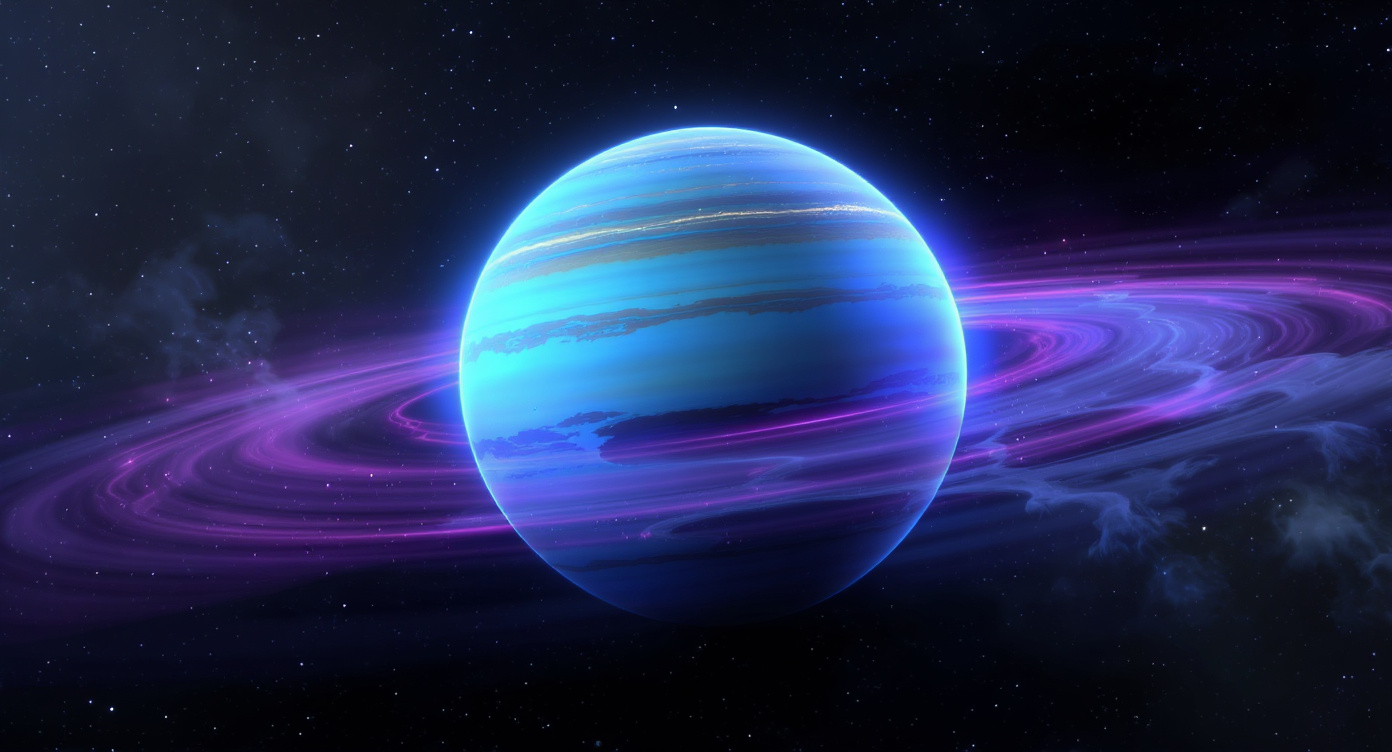
The James Webb Space Telescope has, for the first time, created a three-dimensional map of the auroras on Uranus, marking a significant milestone in the study of ice giants.
New Opportunities for Studying Uranus
Equipped with advanced instruments, the James Webb Telescope enables detailed observations. Recently, it was used to obtain a 3D map of Uranus’s auroras, allowing scientists to examine this phenomenon with remarkable precision.
Unique Features of Uranus’s Magnetosphere
The magnetosphere of Uranus stands out from those of other planets in the Solar System because its axis is tilted relative to the planet’s rotational axis. This creates unique conditions for the formation of auroras.
Utilizing the Infrared Spectrograph
With the help of the telescope’s Near-Infrared Spectrograph (NIRSpec), astronomers were able to study the planet’s rotation and gather new data about its atmosphere. These studies revealed the vertical structure of Uranus’s atmosphere and traced how energy moves upward through its layers, as well as assessed the impact of its asymmetric magnetic field.
Confirmation of Previous Observations
New images clearly show auroras near Uranus’s poles. The telescope also confirmed a trend first detected by Voyager 2, which flew past Uranus in 1986 and recorded cooling in the planet’s upper atmospheric layers. Recent measurements indicate an average temperature of about 426 kelvins (approximately 150 degrees Celsius), which is lower than values obtained by ground-based telescopes and other spacecraft.
Prospects for Further Research
Modern instruments are enabling a deeper understanding of Uranus and the phenomena associated with ice giants. The James Webb Space Telescope is expected to lead to new discoveries in the near future.