

Archaea related to eukaryotes were capable of breathing oxygen
A new study has revealed that ancient archaea—the closest relatives of eukaryotes—possessed the genetic machinery for oxygen respiration even before their symbiosis with bacteria. This discovery changes our understanding of how complex cells originated.
Cursus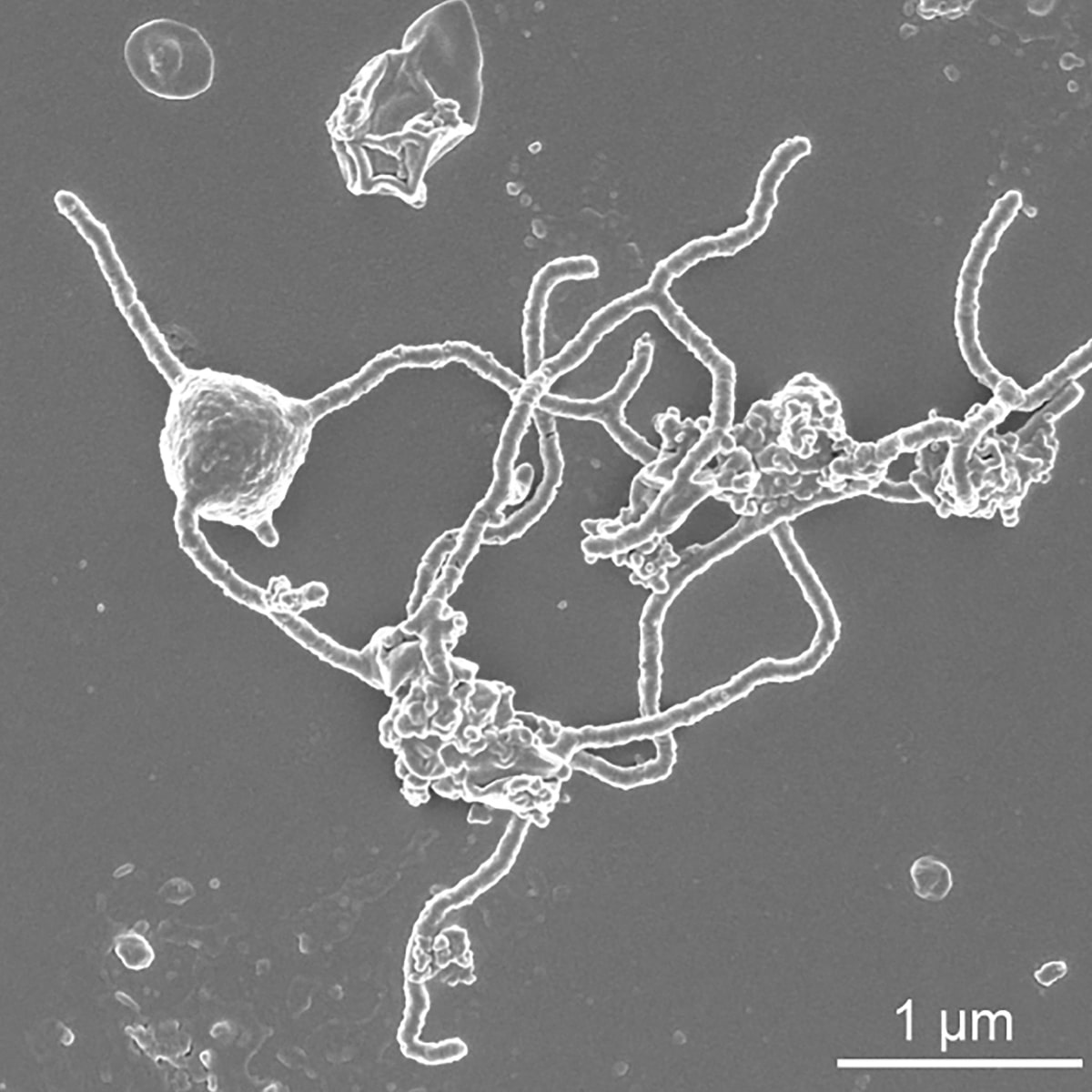
A study by an international team of biologists has revealed that Asgard archaea—the closest microbial relatives of eukaryotes—possess the genetic machinery necessary for aerobic respiration. This discovery challenges previous assumptions that the common ancestors of plants, fungi, and animals were strict anaerobes living exclusively in oxygen-free environments. The new data suggest that archaea could utilize oxygen even before forming symbiotic relationships with bacteria that would later become mitochondria.
Origin of the Eukaryotic Cell
The question of how the eukaryotic cell originated remains one of biology’s central mysteries. For a long time, the prevailing model suggested that an anaerobic archaeon, living in oxygen-free conditions, engulfed an aerobic bacterium, which eventually evolved into the mitochondrion. It was believed that this symbiosis provided the ancestors of eukaryotes with the energy needed to develop a cytoskeleton and a complex intracellular transport system. However, the lack of data on wild Asgard archaea made it difficult to determine their metabolic capabilities before the onset of symbiosis.
Genetic Analysis of Asgard Archaea
In this study, researchers analyzed samples of marine sediments from the Bohai Bay off the coast of China and the deep-sea Guaymas Basin in the Gulf of California. They processed 10 terabytes of sequencing data, which enabled them to reconstruct 869 metagenome-assembled genomes of Asgard archaea—almost twice as many as previously known. Special attention was given to the Heimdallarchaeia class and the Hodarchaeales order, considered the closest relatives to modern eukaryotes.
To determine the functions of the identified proteins, the team used the AlphaFold2 neural network, which predicted the three-dimensional structures of enzymes and confirmed their involvement in energy processes. The genetic profiles of the microbes were also compared with the ecological parameters of their habitats to identify the optimal conditions for the existence of modern descendants of the archaeal ancestor.
Metabolic Capabilities and Oxygen Adaptation
The analysis showed that the Hodarchaeales group possesses a complete set of genes required for the functioning of the respiratory chain. These microbes can independently synthesize heme and neutralize toxic byproducts of respiration. Their genomes contain the regulatory protein CoxD, which in modern eukaryotes is responsible for assembling respiratory complexes.
Today, Asgard archaea are found not only in deep-sea rifts devoid of oxygen but also in coastal sediments with moderate oxygen levels. The structure of their membrane-bound hydrogenases indicates the presence of subunits that enhance the efficiency of ATP synthesis. Molecular models suggest that adaptation to oxygen in this lineage could have begun 50 million years before the Great Oxygenation Event, when atmospheric oxygen levels started to rise due to cyanobacterial activity.
Significance of the Findings
The results indicate that the host archaeon was metabolically more complex and autonomous than early models of eukaryogenesis had assumed. Aerobic respiration likely emerged in the ancestors of eukaryotes even before the symbiotic stage. The high energy yield from oxygen use may have facilitated early cellular complexity, while the subsequent acquisition of mitochondria further enhanced the organism’s existing aerobic capabilities.