

Group selection proven: evolution supports altruism
An analysis of 280 studies has shown that natural selection operates not only at the level of individuals but also at the level of groups, supporting altruism and cooperation. Evolution is a balance between individual and collective interests.
Cursus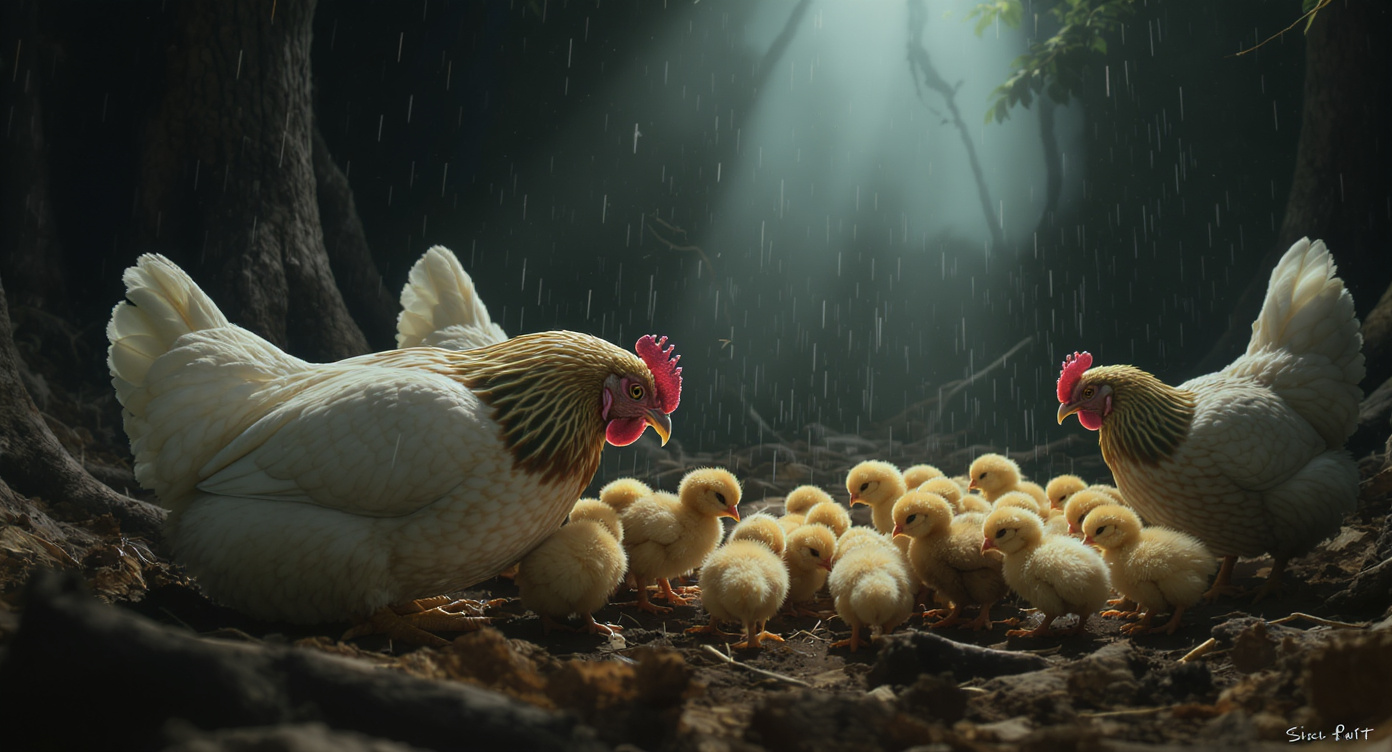
Biologists conducted an analysis of 280 empirical studies and confirmed that natural selection operates not only at the level of individual organisms but also at the group level. Throughout evolution, societies where altruistic behavior was predominant often proved more successful than those dominated by selfishness, even if some individuals sacrificed themselves for the greater good.
Traditionally, evolutionary biology was based on the concept of individual success. In particular, during the 1970s, the idea gained widespread acceptance that all living beings function as mechanisms for the survival and transmission of genetic material, and that any behavior—even seemingly altruistic—ultimately serves the replication of DNA. From this perspective, true altruism was considered a mistake, since expending resources to help others reduces one’s own chances of reproduction.
For decades, the scientific community was skeptical of the idea that evolution could benefit the group as a whole, rather than just the individual. It was believed that in a group of altruists, a selfish individual would inevitably appear, exploit the kindness of others, take all the resources, and eventually outcompete the rest.
However, observations often contradicted the notion of absolute selfishness. To explain these phenomena, the concept of multilevel selection (MLS) was proposed, suggesting that selection can occur simultaneously at different levels—from genes and cells to groups and communities of organisms. This means that a trait disadvantageous to an individual may be beneficial to the group, and vice versa.
As part of the review, 2,800 scientific articles were examined, of which 280 contained empirical evidence for multilevel selection. The results were published in the journal Frontiers in Ecology and Evolution.
Examples of Multilevel Selection
In one experiment, breeders tried to increase the egg-laying capacity of chickens. When selecting the most productive hens within a cage, the offspring came from the most aggressive birds, which pecked their neighbors to gain access to food, ultimately reducing the overall productivity of the cage. In another experiment, productivity was assessed at the group level, and offspring were taken from the most successful collectives. As a result, a line of peaceful birds was formed, mortality decreased, and egg production increased by 160% over five generations.
In another study, selection was based on the number of individuals in groups of flour beetles (Tribolium castaneum). When small groups were favored, the beetles evolved a response—cannibalism—eating the eggs of their kin to maintain a low population size.
In experiments with yeast cultures, selection was based on the speed at which cells settled to the bottom, which required cell adhesion. After 600 rounds of selection, the yeast evolved into multicellular structures, becoming 20,000 times larger and 10,000 times stronger than their ancestors. The cells stopped separating after division, which ensured survival in new conditions. Thus, group-level pressure facilitated the transition from unicellularity to multicellularity.
Field studies showed that colonies of green-headed ants (Rhytidoponera metallica) survived better when the venom composition among workers was maximally diverse, allowing them to defend more effectively against predators and gather more resources.
Study Conclusions
The review settled a long-standing scientific debate: evolution is a balance of forces. The direction of natural selection is shaped by two opposing influences. Individual selection within a group encourages selfish behavior aimed at acquiring resources, while intergroup selection promotes cooperation and suppresses selfishness.
The final outcome depends on which pressure is stronger under specific environmental conditions. Moreover, the study showed that major evolutionary transitions in the history of life on Earth occurred when group-level selection outweighed the interests of individual organisms.