

Ancient humans changed the nature of Europe before the advent of agriculture
A new study has shown that Neanderthals and ancient hunter-gatherers significantly influenced European ecosystems long before the advent of agriculture, altering vegetation through the use of fire and hunting.
Natura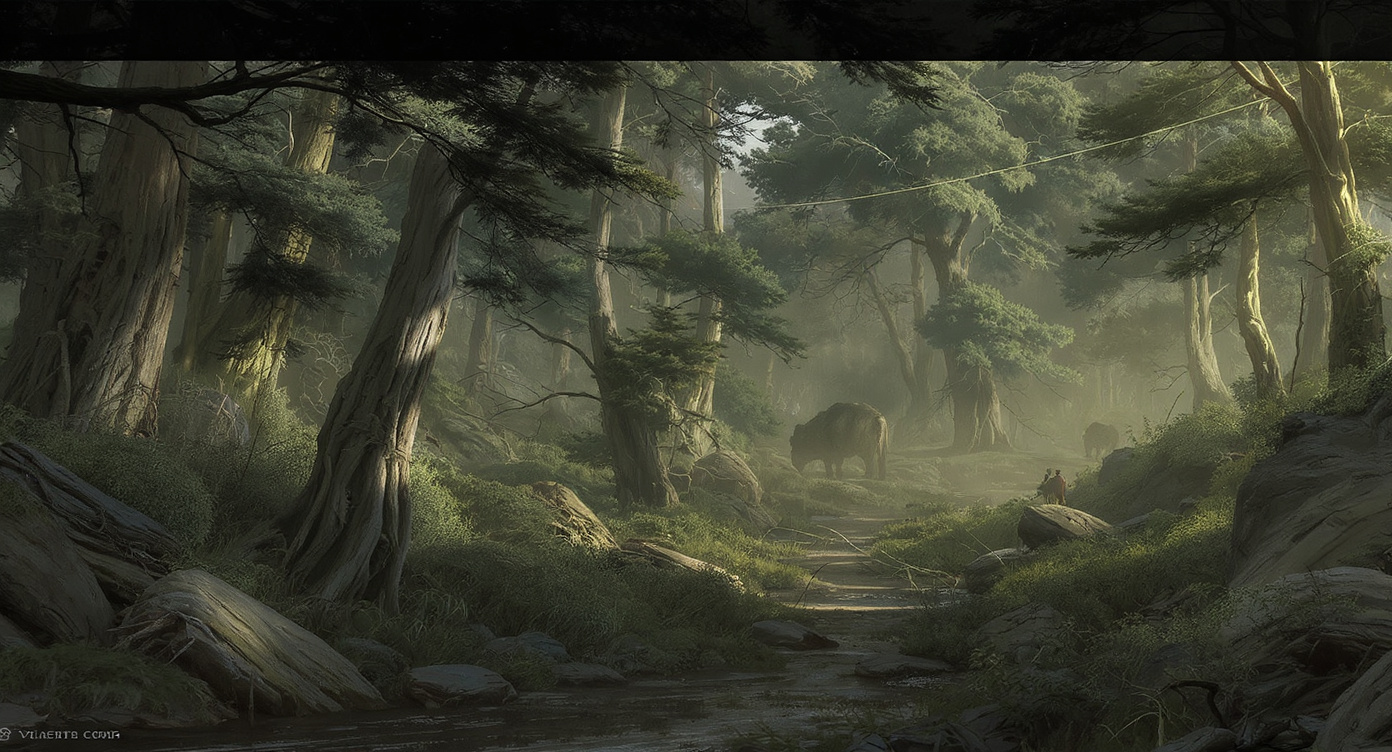
The activities of ancient humans altered Europe's ecosystems long before the advent of agriculture. Through hunting large animals and using fire, Neanderthals and early hunter-gatherers left a significant and lasting mark on European landscapes.
Europe Before Agriculture: Untamed Nature and the First Humans
Tens of thousands of years ago, much of Europe was covered in dense forests, where herds of elephants, bison, and aurochs roamed freely. Small groups of people moved across these territories with fire and spears, actively interacting with their environment.
New Research: The Impact of Ancient Humans on Nature
Recent research by an international team of scientists from Aarhus University has shown that ancient humans had a much greater influence on Europe's natural world than previously thought. Using computer modeling, specialists studied how climate, large animals, natural fires, and human activity affected European vegetation during two warm periods in the past. The modeling results were compared with extensive pollen data from the same eras, allowing researchers to assess the contribution of each factor to changes in plant cover.
The conclusions are clear: both Neanderthals and later Mesolithic hunter-gatherers significantly changed the structure of European vegetation long before the rise of agriculture.
Key Periods and Changes in Ecosystems
The study focused on two warm intervals in European history:
- The last interglacial period (about 125,000–116,000 years ago), when only Neanderthals lived in Europe.
- The early Holocene (12,000–8,000 years ago), just after the last Ice Age, when the region was inhabited by Mesolithic hunter-gatherers, Homo sapiens.
During the interglacial, Europe was home to many large animals: elephants, rhinoceroses, bison, aurochs, horses, and deer. By the Mesolithic, many of the largest species had disappeared or their numbers had sharply declined, reflecting a global wave of megafaunal extinction following the spread of Homo sapiens.
The Human Factor: Fire and Hunting
Modeling showed that Mesolithic hunter-gatherers could have influenced up to 47% of the distribution of vegetation types. The impact of Neanderthals was smaller but still noticeable—about 6% for plant type distribution and 14% for vegetation openness.
Human influence manifested in two main ways: the use of fire to clear trees and shrubs, and hunting large herbivores. Hunting, including the pursuit of giant elephants weighing up to 13 tons, led to a reduction in herbivore populations, which in turn promoted denser and more closed vegetation. However, this effect was limited, as Neanderthals were few in number and did not completely wipe out large animals, unlike Homo sapiens in later times.
A New Understanding of European Landscape History
The findings challenge the idea that pre-agricultural Europe was untouched wilderness. Neanderthals and Mesolithic hunter-gatherers were active co-creators of European ecosystems. The study aligns with ethnographic data on modern hunter-gatherers and archaeological discoveries, but goes further by revealing the scale of human influence tens of thousands of years ago—well before the dawn of agriculture.
Methodology and Perspectives
The project brought together experts in ecology, archaeology, and palynology (the study of pollen). The team developed detailed computer models to simulate ancient ecosystems, for the first time quantitatively assessing how Neanderthals and Mesolithic hunter-gatherers could have shaped Europe's landscapes. The use of a large array of new spatial data and artificial intelligence algorithms allowed the researchers to test many scenarios and identify the most likely outcomes.
Computer modeling showed that changes in climate, herbivore populations, and natural fires alone are not enough to explain the shifts recorded in ancient pollen. To understand the vegetation of that era, both direct and indirect human impacts must be considered. Even without the use of fire, hunter-gatherers altered the landscape, as their hunting of large animals made vegetation denser.
Future Research
Despite these advances, gaps remain in our knowledge of how ancient humans influenced their environment. Similar simulations can be applied to other regions and eras, with North and South America and Australia being of particular interest, as there were no other hominid species before the arrival of Homo sapiens. This will allow for comparisons of landscapes with and without human presence.
While large-scale models provide a general picture, more detailed local studies are needed for a deeper understanding of landscape formation in prehistoric times.