

Desert sand is being transformed into an eco-friendly building material
Scientists from Norway and Japan have developed a method to turn desert sand and organic polymers into an eco-friendly building material, reducing the strain on natural resources. This innovation is particularly promising for arid regions.
Ingenium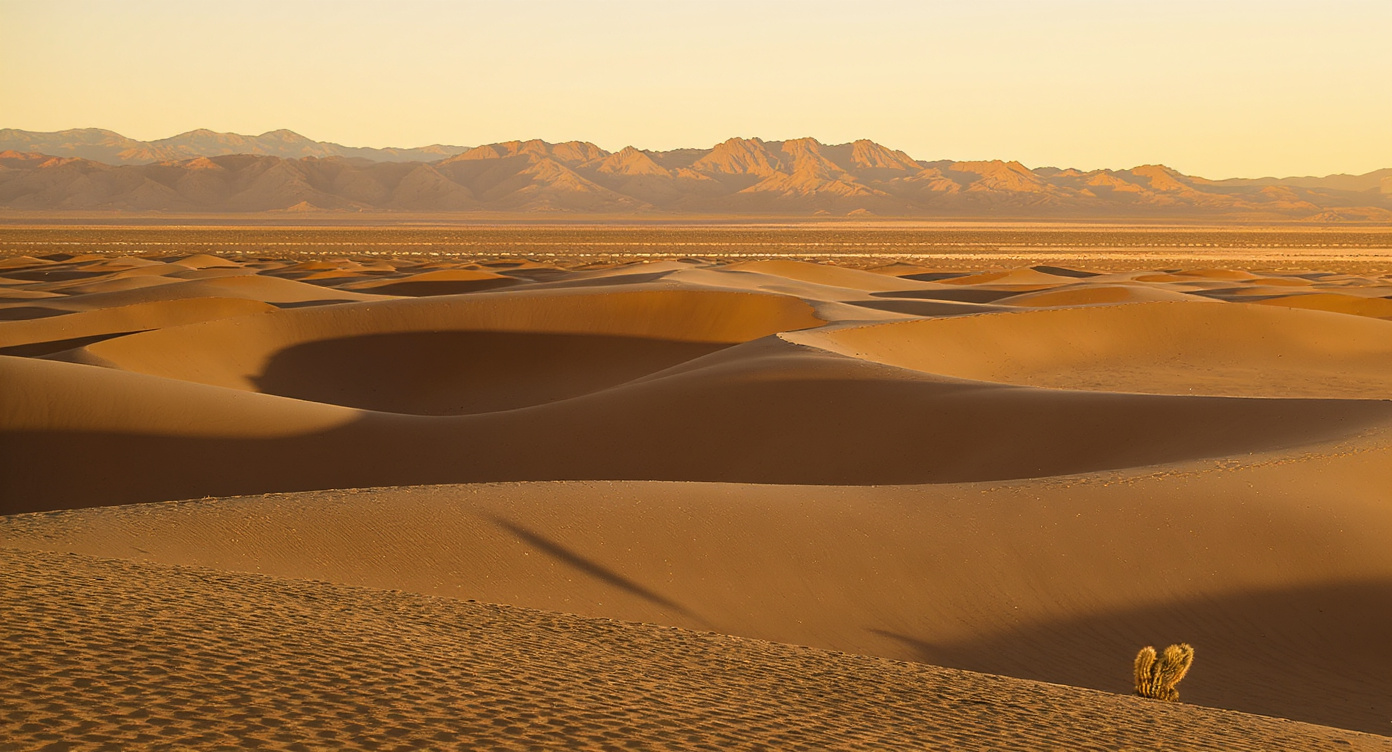
A team of researchers from Norway and Japan has developed an innovative method to transform desert sand into a new construction material that is ideal for paving sidewalks. This technology could significantly reduce the destructive extraction of sand from rivers and other natural sources.
The Problem of Sand Usage
Currently, about 19 million square miles (30.5 million sq. km) of the Earth's surface are covered by deserts. For a long time, this vast amount of sand was considered unsuitable for construction. Meanwhile, construction sand needed for making concrete and mortar is extracted from riverbeds and banks, as well as by crushing rocks in quarries and dredging from the sea floor and underground sources. These methods lead to erosion and depletion of natural resources.
A New Approach: Botanical Sand Concrete
In search of a solution, scientists from the Norwegian University of Science and Technology (NTNU) and the University of Tokyo have created what they call Botanical Sand Concrete (BSC), or Sandcrete. The main challenge was that desert sand is too fine-grained and does not provide the necessary strength for traditional concrete. As NTNU researcher Zhen Wei explains, concrete made from such sand lacks the durability required for construction projects.
Sandcrete Production Technology
After numerous experiments with different types of desert sand and mixing methods, the team developed a formula in which equal parts sand and wood powder are combined at 180 °C and high pressure using a special press. Unlike traditional concrete, which uses cement, Sandcrete employs lignin—an organic polymer found in wood. Under heat and pressure, lignin softens and acts as a natural adhesive, binding the sand particles together. The natural alkalinity of the sand further enhances the bonding process, resulting in blocks strong enough to be used in paving tiles according to Japanese industrial standards.
Prospects and Limitations
The researchers note that Sandcrete is most practical for use in arid regions near deserts, where sand can be sourced locally, minimizing the environmental costs of transportation. The production process is relatively simple, allowing the material to be made in various locations. However, as Zhen Wei emphasizes, further testing is needed—particularly to assess the material's resistance to cold—before it can be implemented in places like Norway.
The team is also exploring the possibility of using agricultural waste instead of wood sawdust to further reduce Sandcrete's environmental footprint.
Conclusion: This new material, based on desert sand and organic polymers, could become an eco-friendly alternative to traditional building materials, especially in regions with abundant sand and limited natural resources.