

How kangaroos outcompeted their rivals in Australia
Recent studies have revealed how kangaroos and wallabies managed to adapt to Australia's arid climate and become the dominant herbivores, outcompeting other rivals. Scientists discovered that key stages in their evolution coincided with environmental changes and the emergence of new ecosystems.
Cursus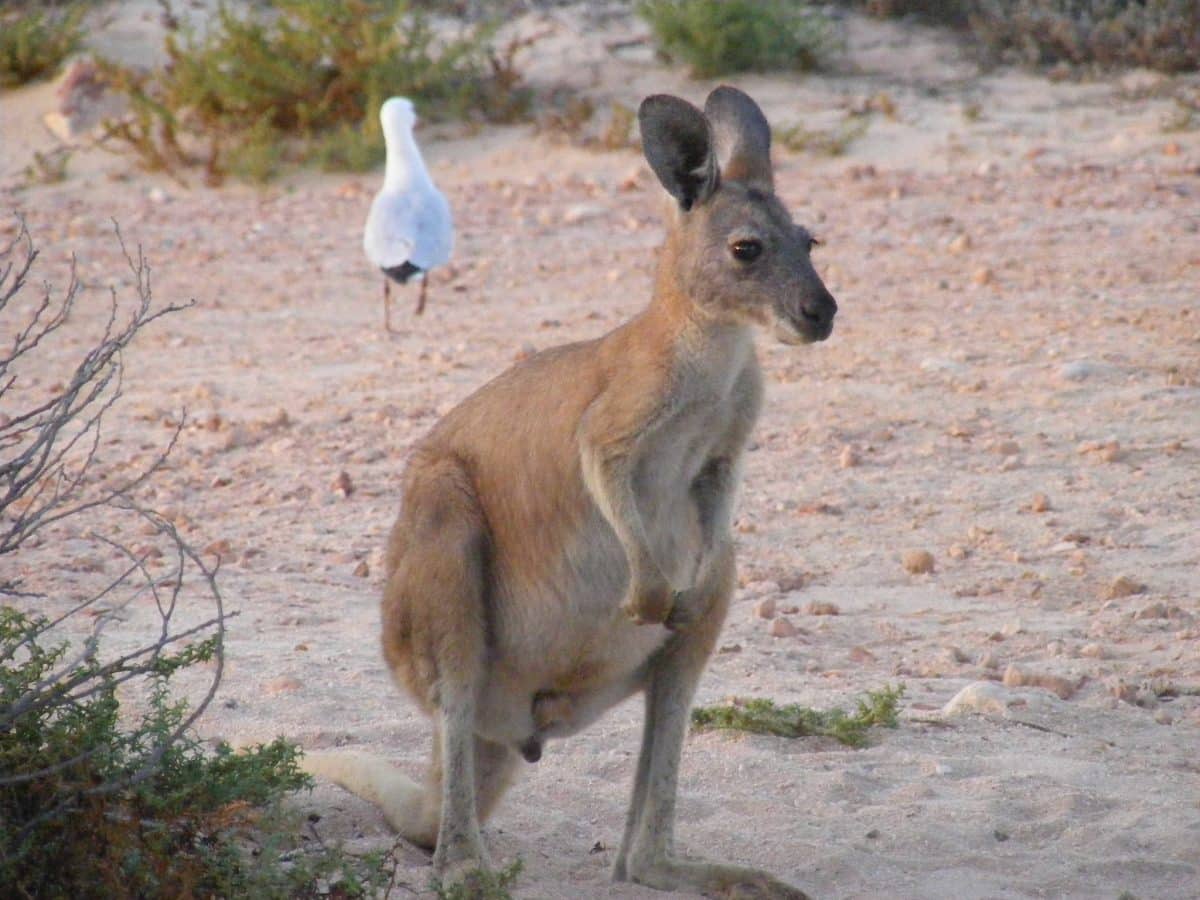
Kangaroos and wallabies are considered symbols of the arid plains of Australia. Recent research has shed light on how their ancestors, who once lived in forests, managed to adapt to a changing climate and outcompete other species in their ecological niches.
Today, kangaroos and wallabies remain the main marsupial herbivores of Australia and New Guinea. These animals are notable for their wide variety of species and their remarkable ability to adapt to life in dry and semi-arid regions. However, their ancestors were small, tree-dwelling or terrestrial animals that were not originally suited to life in arid conditions.
For a long time, the reasons and timing of the evolutionary changes that allowed kangaroos to become dominant—displacing, for example, wombats—remained unclear. To address this question, scientists conducted a large-scale molecular phylogenetic analysis, the results of which were published in the journal Molecular Phylogenetics and Evolution.
The studies revealed that ancient kangaroos were capable of hopping, despite their large size. Previously, it was believed that members of the subfamily Sthenurinae—large extinct kangaroos—moved by walking rather than hopping, as they were thought to be too heavy for jumping.
As part of their work, researchers sequenced complete mitochondrial genomes and 11 nuclear genes from representatives of all modern genera of macropods (Macropodiformes). Using this data, they constructed a refined evolutionary tree, and with the help of molecular clock methods calibrated by fossil finds, they determined the timing of key events. These dates were compared with paleoclimatic reconstructions and data on the diversity of other groups of marsupial herbivores.
The results showed that the first to branch off were the New Guinean forest wallabies, confirming their archaic features. The evolutionary line then split into two groups: one associated with forests and rocky areas, and another that later colonized open habitats.
Dating of this split indicated that the divergence of modern kangaroo lineages occurred not in the middle Miocene, but about five million years later—in the late Miocene, around 8.5 million years ago. It was during this period that aridity sharply increased in Australia, and vast open landscapes appeared. Many herbivore species began to decline in numbers, freeing up ecological niches. Kangaroo ancestors, who were not initially adapted to dry conditions, began to expand during this time, taking advantage of the changing environment.
A second, even more significant burst of speciation occurred about 4.5 million years ago, in the early Pliocene. This coincided with the emergence of the first grassland communities on the continent. During this period, many new genera appeared, including modern large kangaroos, and adaptations for grazing on grass developed.
Scientists concluded that environmental changes shifted the balance in competitive relationships among herbivores, particularly between kangaroos and wombats, in favor of the former. This ultimately led to the dominance of kangaroos in modern Australian ecosystems.