

The scent of a lynx protects young trees from deer
An experiment in the Bavarian Forest showed that the scent of a lynx effectively deters deer from young trees, unlike the scent of a wolf. This confirms the important role predators play in maintaining forest ecosystems.
Natura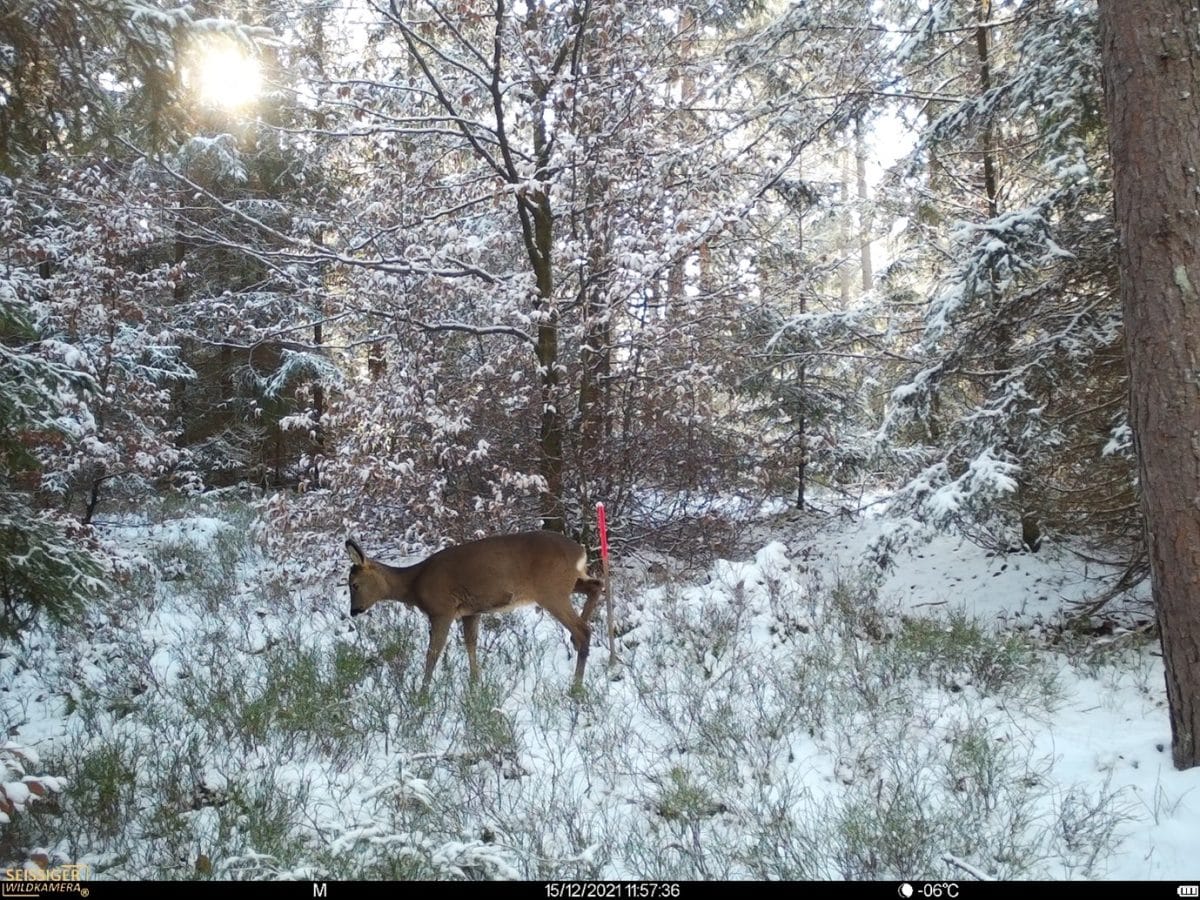
During an experiment in the Bavarian Forest, scientists discovered that the scent of a lynx effectively protects young trees from being eaten by deer, while wolf markings have almost no impact on the behavior of herbivores. Researchers attribute this to differences in hunting strategies: deer perceive the scent of an ambush predator as a signal of immediate danger, which supports the theory of the important role of the "landscape of fear" in preserving forest ecosystems.
Landscape of Fear: The Influence of Predators on Ecosystems
The essence of the "landscape of fear" concept is that even the mere traces of predators are enough to alter the behavior of herbivores and, as a result, affect the entire ecosystem. To test this theory, scientists set up 11 experimental plots, each planted with 30 saplings of spruce, beech, and fir—popular tree species. Camera traps were installed on the plots to monitor animal activity. The results of the study were published in the Journal of Applied Ecology.
Experimental Methodology
To simulate the presence of predators, researchers used olfactory (scent-based) methods: the plots were treated with lynx and wolf urine and feces. Due to a shortage of European lynx (Lynx lynx) biomaterial, they used bobcat (Lynx rufus) urine imported from the USA. As a control, some plots were treated with cow urine, manure, and water.
Results: Herbivore Response to Predator Scents
On plots treated with lynx scent, deer and roe deer spent 3.5 times less time and consumed significantly fewer saplings. The scent of wolves had virtually no effect on herbivore behavior. Scientists link this to differences in hunting strategies: the wolf is a pursuit predator that patrols large territories, so its scent only indicates that a wolf was once present. The lynx, on the other hand, hunts from ambush, attacking suddenly and from close range, so the fresh scent of a lynx is perceived as a signal of immediate threat, prompting animals to quickly leave the danger zone.
Control Scents and Conclusions
The control using cow scents showed that deer do not react to any strong animal odors—cow manure and urine did not cause fear, and saplings on these plots were eaten just as quickly as on those treated with water.
Significance of the Study
The results of the experiment demonstrate that predators benefit the forest not only by reducing deer numbers but also by creating an atmosphere of fear that protects young trees. Simply patrolling their territory and leaving their scent marks, lynx help save thousands of young trees. This is a strong argument in favor of programs to restore predator populations in forest ecosystems.