

Radon in New Homes: Why Are Levels Increasing?
The study found that radiation levels in Russian apartment buildings are generally low, but in some cities, they are noticeably higher due to construction materials and ventilation features. Newer buildings often have increased background radiation; however, this does not pose a significant health risk to residents.
Natura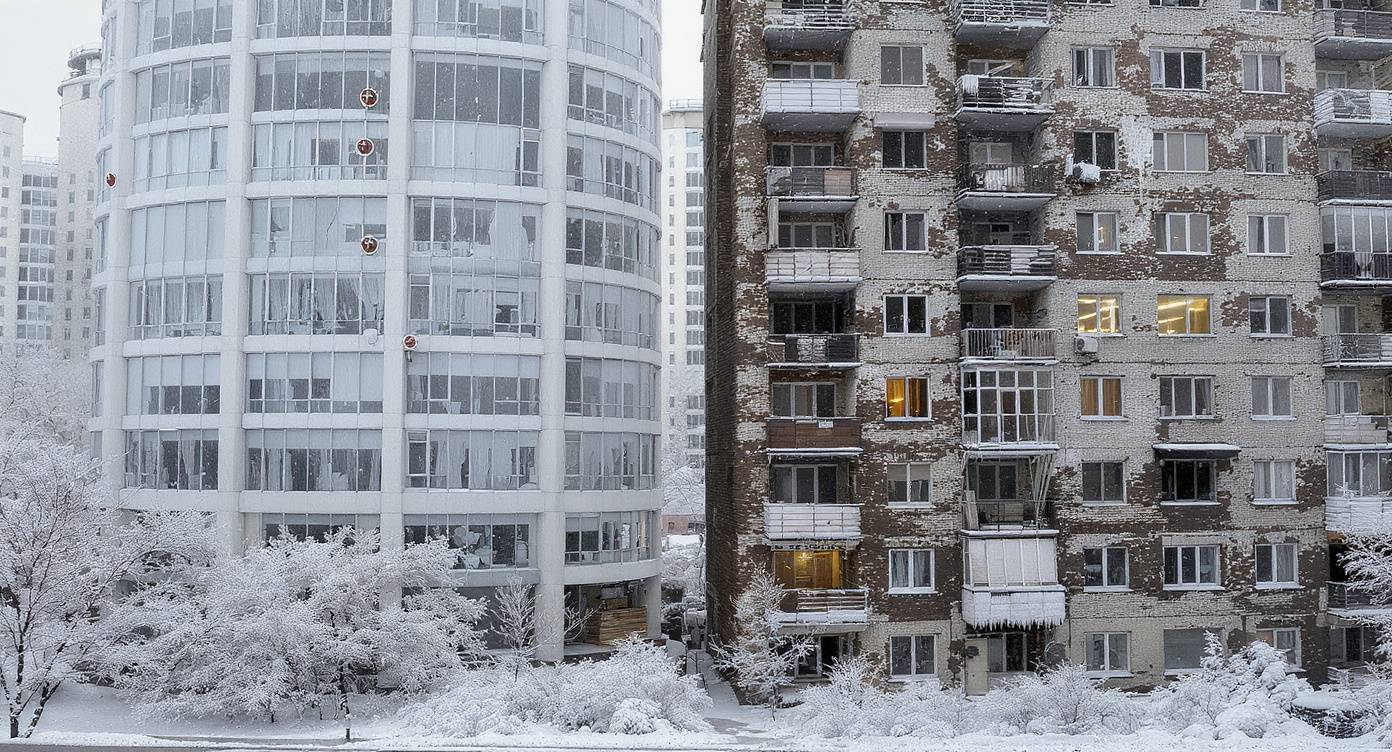
Although radiation levels in Russian apartment buildings are generally low, in some cities they are significantly higher than in other regions. According to the study's authors, the main reason for this difference—and for the fact that new buildings tend to have higher radiation backgrounds than older ones—is related to climate and how people adapt to it. However, some details cast doubt on this explanation.
Study of Radiation Background in Russian Cities
Russian scientists analyzed the radiation background in apartment buildings across nine cities in the country. They found that the main contributor to radiation levels is not cosmic rays, but rather the radiation emitted by building materials used in construction. The results of the study were published in the Journal of Environmental Radioactivity.
The Impact of Building Materials
Building materials inevitably contain small amounts of radon-226, radon-220 (thoron), and potassium-40. Among these, radon plays a key role in the overall radiation dose. Measurements showed that radon concentrations in apartments can vary significantly.
For example, in Krasnodar, the average radon level was just 16 becquerels per cubic meter of air, in Moscow—21, and in St. Petersburg—25. In Yekaterinburg, this figure reached 77 becquerels, which is several times higher than in the south of the country. Researchers suggested that the colder climate leads to less frequent ventilation of rooms, and standard ventilation systems do not always effectively remove heavy gases like radon and its decay products.
Climate or Materials?
However, this hypothesis raises questions. In Novosibirsk, where the climate is even colder, the radon level was only 17 becquerels per cubic meter—just slightly higher than in Krasnodar and four times lower than in Yekaterinburg. Meanwhile, the average annual temperature in Novosibirsk is 1.1 degrees lower than in Yekaterinburg. This suggests that climate does not always determine radon levels. The study's authors also noted that building materials in Yekaterinburg were found to have higher concentrations of radioactive isotopes.
New Buildings and Radiation Background
The scientists also pointed out that buildings constructed after 2000 across Russia have a higher radiation background compared to older structures. This is due to their greater energy efficiency and reduced air leakage through window defects and construction joints.
Impact on Health
From a health perspective, the radiation background in all the cities described poses virtually no danger. On average, across the nine cities, radon and its decay products contributed only 1.21 millisieverts per year, while external sources of radiation (such as cosmic rays) added another 0.27 millisieverts. For comparison, the global average radon exposure is 1.26 millisieverts per year, and astronauts on the ISS receive about 150 millisieverts annually. Notably, the life expectancy of astronauts does not differ from that of professional athletes, and in fact, athletes tend to live even longer than the general population.
Features of Modern Housing
Nevertheless, the study highlights an important feature of Russia's modern housing stock: due to better adaptation to cold climates, contemporary buildings provide less air exchange than those from previous eras. This could theoretically increase the harm from indoor pollution sources, such as gas stoves. Previous research has shown that residents of homes with gas stoves suffer from arthritis 1.76 times more often than those who use only electric stoves.