

The sea anemone has unveiled ancient secrets of genetics
A new study has revealed that the sea anemone possesses a complex system of genetic regulation, comparable to that found in insects and mammals. This challenges the previous belief that its genetic mechanisms are primitive.
Cursus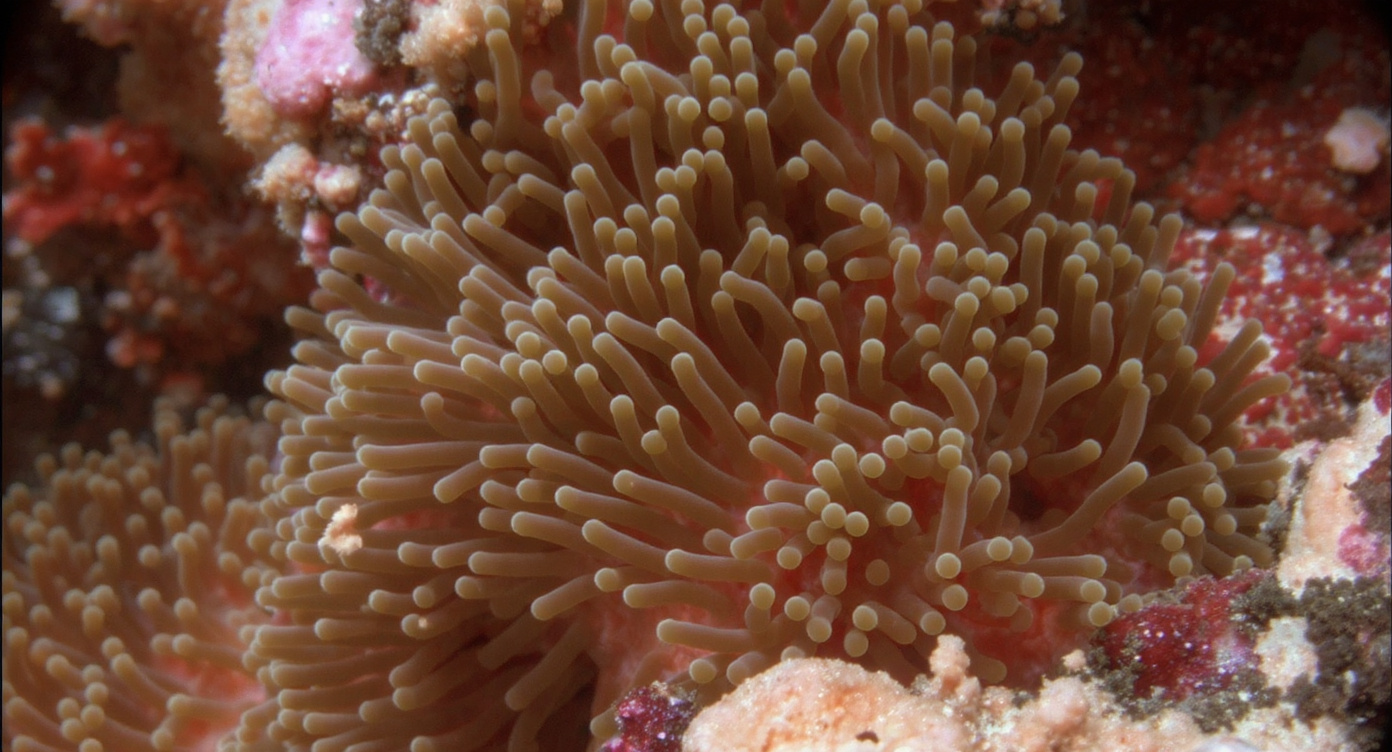
An international team of biologists has debunked the widespread belief that a simple body structure necessarily means primitive genetic mechanisms. By creating a detailed map of the sea anemone genome, scientists discovered that its regulatory network is as complex and architecturally sophisticated as the gene control systems found in fruit flies and mammals.
Sea Anemone: An Ancient Relative with Surprisingly Complex Genetics
The sea anemone Nematostella vectensis branched off from the evolutionary line leading to humans more than half a billion years ago. Outwardly, it resembles a simple sac with tentacles, which long led scientists to assume that its genome regulation system in common ancestors was extremely basic. Biologists believed that the complex mechanisms allowing a single DNA sequence to produce many different cell types appeared much later—alongside the development of eyes, limbs, and brains.
How Genetic Complexity Was Studied
To test these assumptions, the authors of the study published in Nature Ecology & Evolution went beyond simply reading the DNA sequence. They examined the physical state of genetic material in 60,000 individual cells using the scATAC-seq method. This approach reveals regions of chromatin where DNA is “unwound” and accessible for regulatory proteins to bind. In this way, the researchers effectively peered into the nucleus of each cell to see which instructions were active at any given moment.
Unexpected Discoveries in Regulatory Networks
The analysis identified over 112,000 regulatory elements—enhancers and promoters—comparable in scale to those found in organisms with much more complex anatomy. This suggests that the principles governing this system, including the use of distant enhancers to activate genes, were established early in animal evolution.
New Insights into Tissue Evolution
Detailed mapping also brought unexpected findings in the field of tissue evolution. It turned out that the muscles of the anemone’s tentacles and body are controlled by entirely different gene networks, indicating their independent origins. Additionally, the regulatory profile of some neurons was strikingly similar to that of digestive system cells, supporting the hypothesis of a link between the nervous system and ancient digestive mechanisms. The only significant difference from higher animals was the absence of specific sequences (TATA boxes) in promoters, which in more complex organisms are responsible for fine-tuning gene activity.
The Significance of the Study
The results show that the genetic “toolkit” for creating complex life was in place long before the Cambrian explosion. Evolution did not invent regulatory principles anew for humans or insects, but rather used and refined an architecture that emerged more than 600 million years ago.