

Wind turbine blades turn waste into architecture
In Sweden, former wind turbine blades have been repurposed to create the facade of a parking garage, offering an eco-friendly solution to waste disposal and inspiring innovative approaches in architecture.
Aedis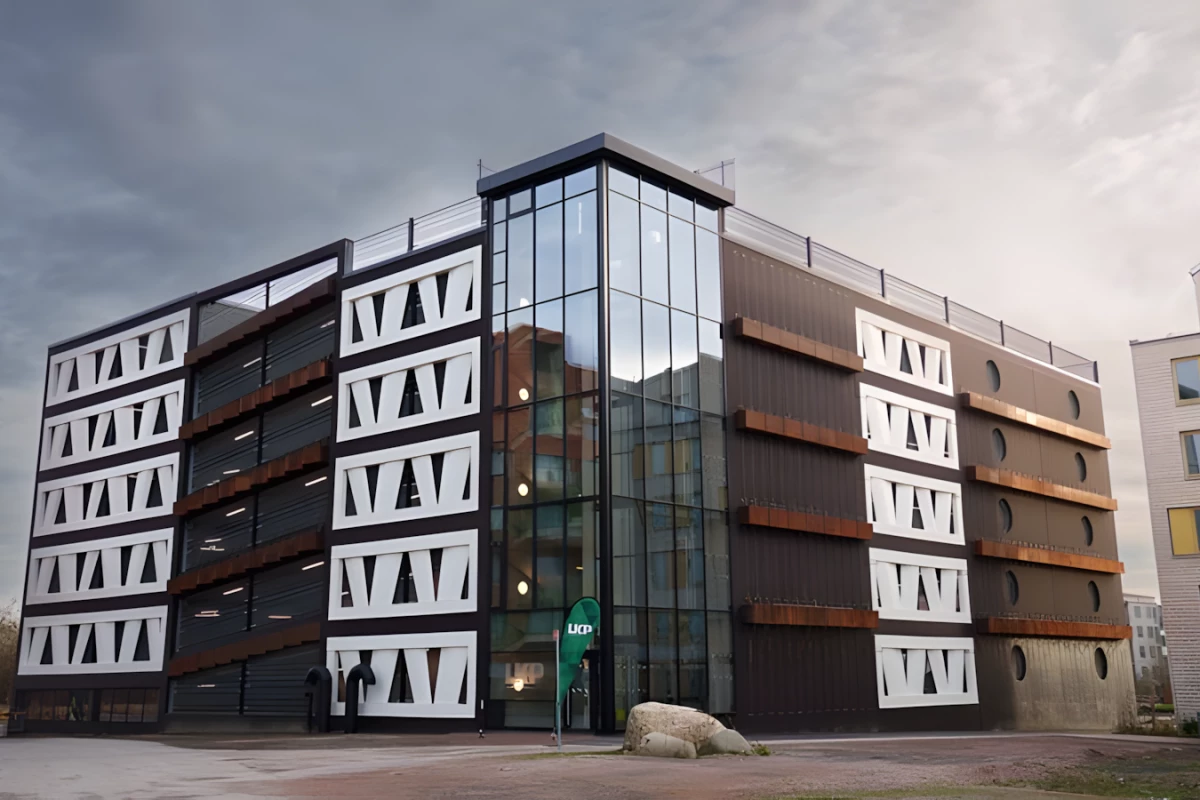
Wind turbines play a crucial role in the transition to renewable energy sources, but their blades often end up in landfills after their service life ends, creating environmental challenges. To address this issue, an architect has proposed an innovative solution—repurposing decommissioned rotor blades as building materials.
New Life for Old Blades
The project was carried out in collaboration with the Swedish energy company Vattenfall, which already had experience reusing turbine components, such as converting former nacelles (the housings containing the generator and gearbox) into tiny homes. The idea to use blades in construction came to architect Jonas Lloyd of Lloyd's Arkitektkontor when developer LKP commissioned him to design a new parking facility.
According to Vattenfall, the inspiration came after reading an article about the challenges of blade disposal in the American wind energy sector. Rotor blades are made from durable composite materials like fiberglass and carbon fiber, designed to withstand decades of wind and weather. However, these very properties make them difficult to recycle.
Niels Bohr Parking Garage: A Model of Sustainable Architecture
The completed building, named the Niels Bohr Parking Garage, is located in the developing Brunnshög district on the outskirts of Lund, Sweden. It offers 365 parking spaces spread over five floors, including 40 charging stations for electric vehicles and its own energy storage battery.
Vattenfall provided 57 decommissioned rotor blades, which were carefully cut and used to create the building’s exterior cladding. While these walls are not load-bearing, they cover large sections of the building’s decorative façade. The exterior also features planters with native plants, which will gradually soften the structure’s appearance over time.
Looking Ahead
Architect Lloyd hopes that this approach will be adopted in other architectural projects and inspire professionals to rethink how construction waste can be reused.
“Above all, I’m glad we’re contributing to sustainable development and that the building has become a symbol of environmental responsibility. It should be an eye-opener. When you see this building, you should pause and think: they made it work—what can I do?” the architect notes.
This project demonstrates how innovative ideas can not only solve waste problems but also create modern, functional, and environmentally friendly structures.