

A new type of concrete captures CO2 and becomes stronger
Engineers have developed a type of concrete that is not only stronger than traditional versions but can also capture carbon dioxide from the atmosphere. This new material could help reduce the carbon footprint of the construction industry.
Ingenium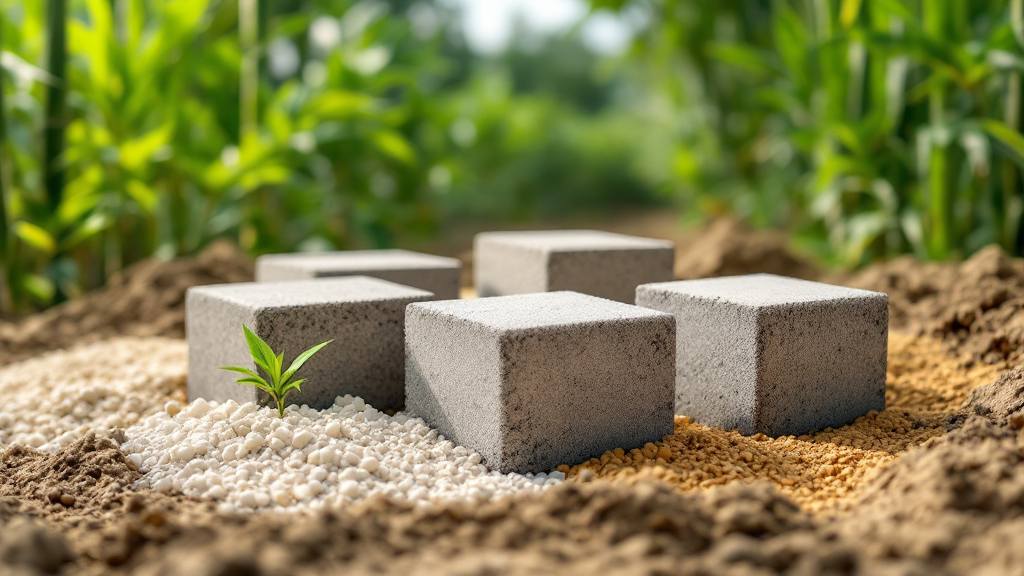
Engineers have developed a new type of concrete that is stronger than traditional materials and can capture carbon dioxide from the atmosphere. A study published in the journal Carbon Research showed that adding certain natural components enables the concrete to perform an additional function—helping to remove CO2 from the surrounding air.
Composition and Features of the New Concrete
The development was carried out at the Mepco Schlenk Engineering College in India with the goal of creating more environmentally friendly construction materials. Two natural substances were used as additives: zeolite—a mineral with high porosity, and bamboo biochar—a material rich in carbon. Both components have a highly porous structure and a large specific surface area, making them effective at capturing gas molecules.
Testing Process
During the experiments, various mixes of M35 grade concrete, commonly used in road infrastructure with moderate traffic, were tested. Zeolite replaced 25% and 50% of the fine aggregate, while bamboo biochar was added in place of cement at concentrations of 0.5%, 1%, and 1.5%. Each formula was evaluated for several characteristics: compressive strength, tensile strength, water absorption, and impact resistance. The aim was to create a mix capable of absorbing more CO2 without compromising strength, and ideally, even increasing it.
Test Results
The most effective mix contained 50% zeolite and 1% bamboo biochar (designated as ZB5). Its compressive strength reached 38.49 MPa, which is 7.48% higher than that of standard concrete, while its tensile strength was 4.39 MPa, 15% greater than the standard mix. The increase in strength is attributed to the interaction between the aluminosilicate structure of zeolite and the hardness of biochar, resulting in a denser and more durable cement matrix.
CO2 Capture Capability
The ZB5 mix also demonstrated the ability to absorb carbon dioxide. In a carbonation chamber, the concrete captured 1.2 grams of CO2 per day, and over seven days, the gas penetrated up to 15 mm into the material. This effect is explained by the microporous structure of zeolite and the high carbon content in the biochar, allowing the concrete to serve not only as a building material but also as a medium for capturing atmospheric CO2.
Application Prospects
The results indicate the potential for creating construction materials with a minimal carbon footprint. ZB5 concrete could be especially useful in areas with elevated CO2 concentrations, such as road surfaces, highway barrier walls, and sewer pipes. Such structures could fulfill their traditional engineering roles while also helping to reduce carbon dioxide levels in the environment.
Further Research
Currently, the technology is at the concept stage and requires additional testing before widespread adoption. Future studies plan to examine the long-term behavior of the concrete, its durability, and its CO2 absorption capacity, as well as to test other types of biochar and different grades of concrete and mortar. Researchers will also investigate whether pre-soaking the biochar can enhance the material’s effectiveness. These experiments will help determine the scalability of the technology for commercial and industrial use. If successful, the construction industry could build stronger infrastructure with a reduced environmental impact.