

A new nanostructure will increase the efficiency of fuel cells
The rapid growth of data center energy consumption is driving the search for new solutions. Scientists have developed a carbon nanostructure that increases the efficiency and lifespan of fuel cells, which could help reduce the strain on the power grid.
Vigor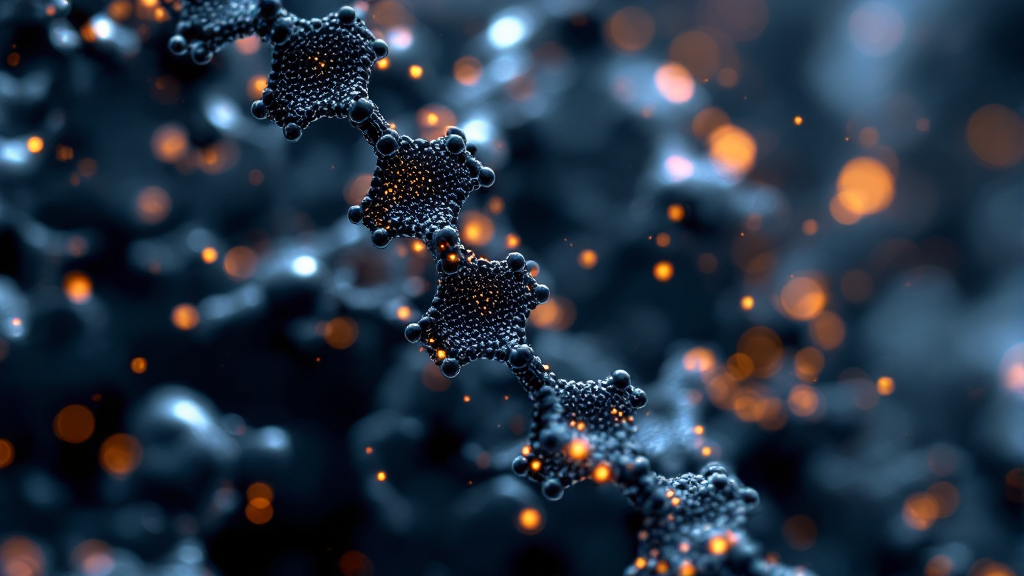
Growth in Data Center Energy Consumption and the Search for Alternative Solutions
In recent years, the United States has seen a significant increase in the number of data centers, leading to greater demand on the national power grid. These facilities require large amounts of electricity to operate computing equipment and maintain cooling systems. According to forecasts by the Electric Power Research Institute, by 2030 data centers could consume up to 9% of the country’s annual electricity production—almost double the 2023 figure of 4%.
Developing New Catalysts for Fuel Cells
To reduce the strain on the energy system, researchers are exploring the use of fuel cells as alternative energy sources. One research group, which includes experts from various universities and national laboratories, has proposed a method to improve the efficiency of low-temperature fuel cells. Their findings were published in Nature Nanotechnology on August 6, 2026.
Fuel cells generate electricity through a reaction between hydrogen and oxygen, producing water and heat as byproducts. Catalysts are used to accelerate this reaction and enhance efficiency, also affecting the device’s lifespan. However, current catalysts do not yet provide the necessary combination of activity and durability for industrial-scale use.
The Use of Platinum and Efficiency Challenges
Platinum is considered one of the most effective catalysts, but its high cost drives researchers to minimize its use without sacrificing performance. One approach is to convert platinum into nanoparticles, which increases the surface area available for chemical reactions and allows for less metal to be used (typically less than a quarter of a milligram per square centimeter).
However, platinum nanoparticles tend to change size and dissolve during operation, which leads to a decline in fuel cell performance over time.
Prospects for Intermetallic Catalysts
Recently, attention has shifted to intermetallic platinum-based catalysts, which can offer better activity and stability compared to conventional alloys. Nevertheless, producing these catalysts requires balancing particle size with the degree of structural order. Achieving a highly ordered structure usually involves annealing at temperatures below 700°C, which is not always sufficient to reach optimal properties.
New Carbon Nanostructure for Catalyst Stabilization
Researchers have developed a new porous carbon structure with radial nanochannels that enables even distribution of intermetallic platinum and cobalt nanoparticles. This architecture allows for dense packing of particles without agglomeration, even at high temperatures, which helps form the desired ordered structure.
In testing, the material retained 85% of its performance after 150,000 voltage cycles, equivalent to about 25,000 hours of operation. The combination of large pores, controlled particle sizes, and a high surface area helped overcome the traditional trade-off between catalyst activity and stability.
Advantages of the New Structure and Application Prospects
The open channels in the carbon support promote uniform distribution of materials involved in ion transport across the electrode and facilitate the movement of protons, oxygen, and water. As a result, platinum and cobalt nanoparticles embedded in this support demonstrate high performance and durability.
If further development is successful, this technology could be used to improve the efficiency of fuel cells in various fields—from transportation to electricity generation. For data centers, such fuel cells could provide a direct source of electricity from hydrogen or other fuels, potentially reducing the load on the power grid.