

The Sea of Clarity turned out to be 300 million years older
A new study of a lunar rock has revealed that the Mare Serenitatis crater on the Moon is older than previously thought—about 4.25 billion years old. This discovery could change our understanding of the early history of the Moon and other planets in the Solar System.
Cursus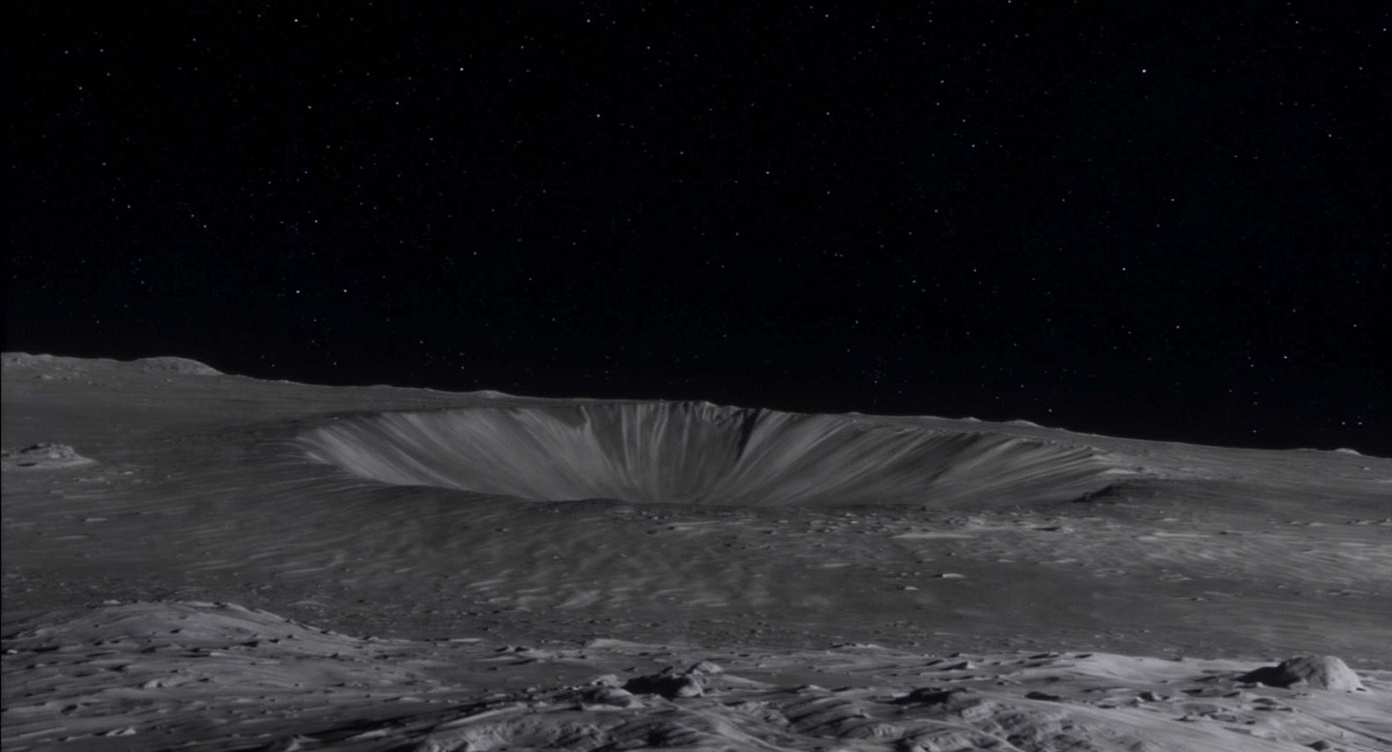
One of the largest impact craters on the visible side of the Moon—Mare Serenitatis—has turned out to be 300 million years older than previously thought. This conclusion was reached by scientists after analyzing a lunar rock brought back to Earth by the Apollo 17 mission in 1972. This discovery could lead to a revision of our understanding of the early history of the Solar System.
Rethinking the Late Heavy Bombardment Hypothesis
According to the late heavy bombardment hypothesis, large craters on the Moon, as well as on Earth, Mercury, Venus, and Mars, were formed as a result of intense meteorite impacts that occurred 4.1–3.8 billion years ago. Until now, it was believed that Mare Serenitatis formed about 3.9 billion years ago, during this same period.
A New Perspective on the Age of Mare Serenitatis
By studying sample 76535—a rock found by Apollo 17 astronauts at the edge of Mare Serenitatis in December 1972—scientists who published their findings in Geophysical Research Letters concluded that this lunar crater formed about 4.25 billion years ago, which is 300 million years earlier than previously assumed.
Features of the Lunar Rock
The sample, weighing just 155 grams, is a troctolite—a rare rock composed mainly of plagioclase and olivine. Isotopic and mineralogical analyses showed that the rock crystallized deep within the lunar crust, at depths of up to 58 kilometers, at temperatures around 850°C, and cooled over hundreds of millions of years. Remarkably, the sample shows no signs of the intense shock pressure typically found in rocks brought up from such depths, which is unusual.
How the Rock Reached the Surface
To understand how such an "unshocked" rock ended up on the surface of Mare Serenitatis, a research team led by Evan Bjonnes from the Lunar and Planetary Institute (USA) used computer modeling based on the iSALE code, which simulates the dynamics of impact crater formation. The results showed that after a giant asteroid impact, deep layers can "float" up to the surface. In the case of Mare Serenitatis, about 140,000 cubic kilometers of material were uplifted—roughly 2% of all ejected rock. It is within this mass that samples like 76535 could have been found. The age of the rock—4.25 billion years—is significantly older than rocks collected from the nearby Mare Imbrium and delivered to Earth by the same mission.
Implications of the Discovery
This discovery has far-reaching implications: if Mare Serenitatis really formed 4.25 billion years ago, then the age of the Moon’s largest impact crater—the South Pole–Aitken basin—could be even greater, up to 4.33 billion years. Scientists explain the connection between the two basins not by their location, but by the relative timing of impacts: the largest basins formed from earlier impacts, while smaller ones may have appeared later. This finding shifts the entire lunar chronology and prompts a reevaluation of the early history and evolution not only of Earth and its satellite, but also of other rocky planets in the Solar System.