

The oldest ape-like primate discovered in Egypt
A new discovery in Egypt has cast doubt on previous ideas about the origins of apes: the ancient primate that was found appears to be closer to the common ancestor of humans and modern apes than the East African species. This finding could change our understanding of the geographic history of primate evolution.
Cursus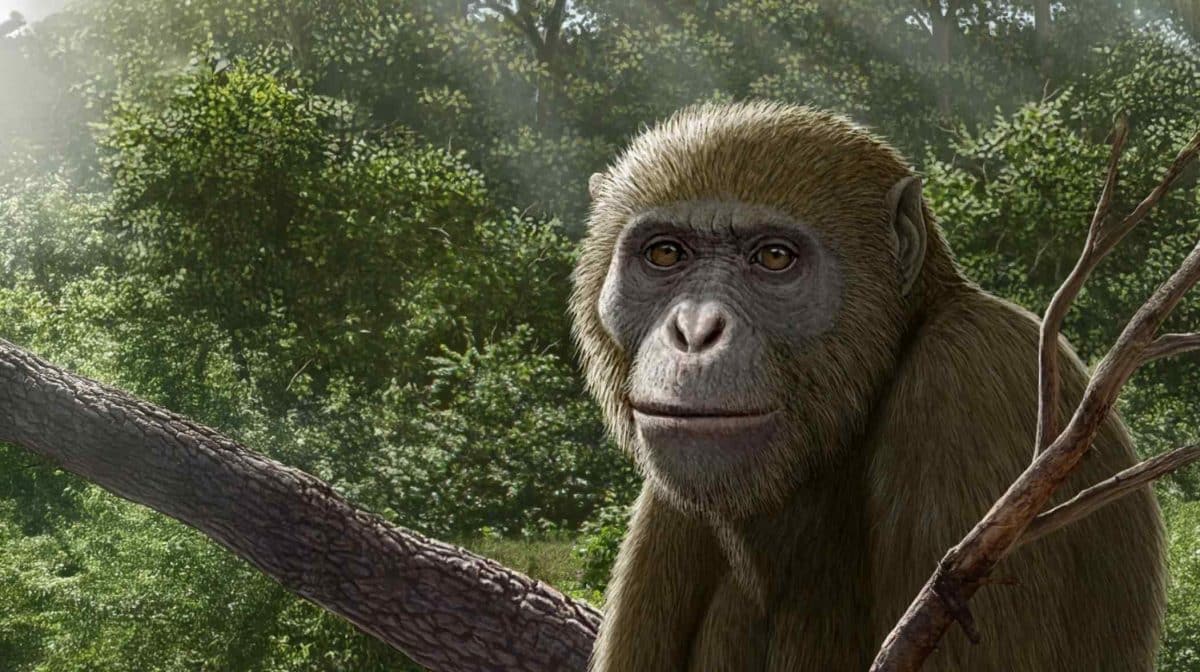
Scientists have determined that the ancestors of modern apes may have originated not from East Africa, as previously believed, but from more northern regions. In Egypt, the remains of an ancient primate dating back 17–18 million years were discovered for the first time. This primate turned out to be genetically closer to modern species than its East African contemporaries.
Discovery Description
An international team of paleontologists from Mansoura University (Egypt) and the University of Southern California (USA) has described a new species of ancient ape—Masripithecus moghraensis (Masripithecus). The name comes from the Arabic word "Masr" (Egypt) and the Greek "pithekos" (ape). The fossil, a fragment of a massive lower jaw with large canines, was found during expeditions in 2023–2024 in the Wadi Moghra area in northern Egypt.
An anatomical analysis showed that the primate's diet was mainly composed of fruit, but its strong teeth also allowed it to eat nuts and seeds. Such a diet enabled adaptation to seasonal climate changes.
Revisiting the Theory of Origin
Previously, only the remains of ancient monkeys had been found in northern Africa, supporting the hypothesis that apes originated in East Africa—in the regions of present-day Kenya and Uganda. The discovery of Masripithecus has cast doubt on this theory.
Researchers compared data on the structure of fossils and modern apes, genetics, and the age of the finds. They established that the newly discovered species occupies a key position on the evolutionary tree and is closest to the common ancestor of humans and modern apes. This finding prompts a revision of the geography of evolution: the presumed "cradle" of apes shifts from East Africa to the north—to the region of North Africa and the Middle East.
Paleogeographic Conditions
Around 18 million years ago, the area that is now desert was covered by tropical forests and rivers. This region served as an important land crossroads between continents. At that time, the African and Arabian tectonic plates were moving northward, colliding with Eurasia. Due to tectonic shifts and fluctuations in sea levels, shallow straits periodically dried up, forming land bridges.
The study showed that apes began to actively evolve and diversify into new species precisely at this northern crossroads, even before newly opened routes allowed them to spread throughout Eurasia.