

Impulse cleaning transforms red mud into a resource
Scientists have developed an innovative method for purifying toxic red mud—a waste product from aluminum production—using electrical impulses. This technology makes it possible to transform hazardous material into a valuable resource for construction and for recovering aluminum, thereby reducing environmental impact.
Opus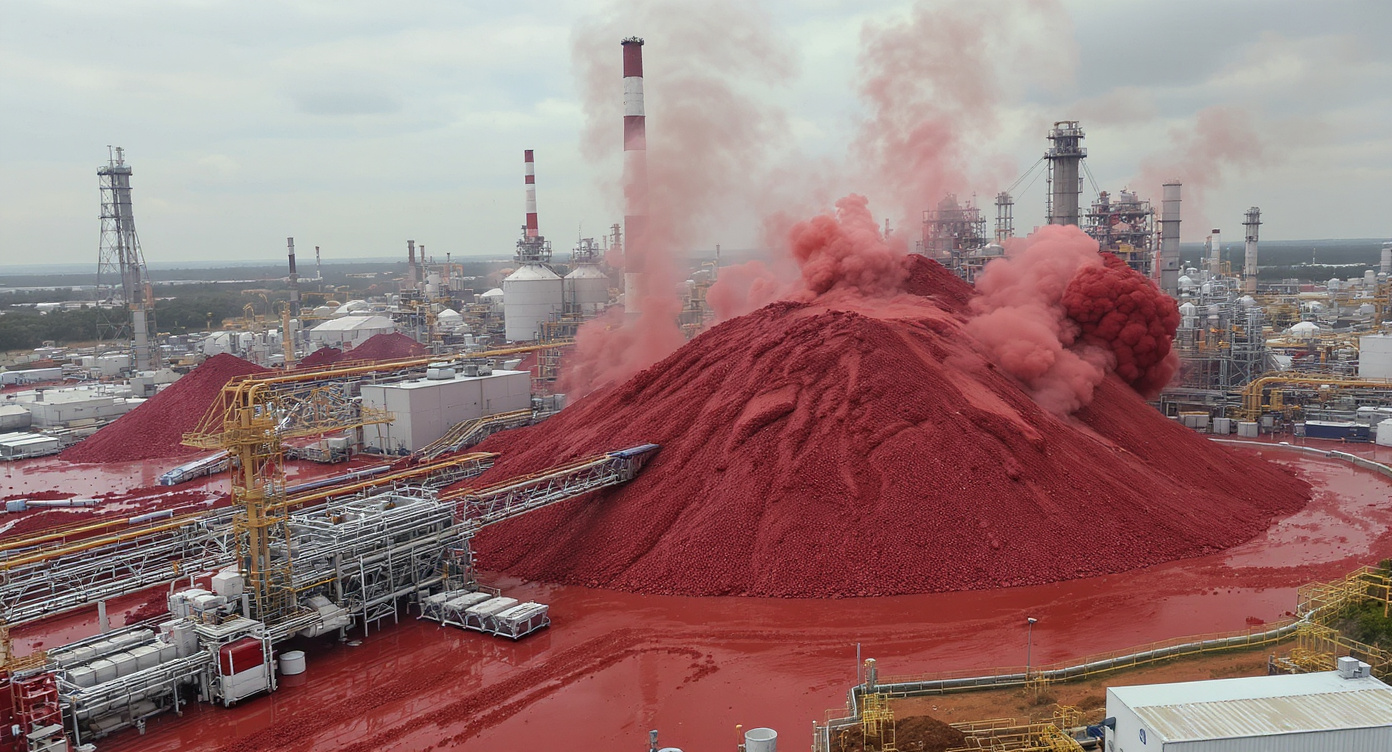
Aluminum production generates a toxic byproduct known as red mud. To reduce the volume of this hazardous waste, scientists have developed an innovative method for its purification using electrical impulses, allowing the red mud to be reused instead of being disposed of.
How Red Mud Is Formed
The process of obtaining aluminum begins with bauxite ore, which contains valuable aluminum minerals along with various impurities such as silicon dioxide, iron oxides, and titanium oxides. The crushed bauxite is mixed with hot concentrated sodium hydroxide solution, which dissolves the aluminum minerals while the impurities remain in solid form.
After filtration or precipitation, alumina—the main product—is extracted from the solution, and the remaining substances form a solid waste called red mud. This mud is highly toxic due to its alkalinity and heavy metal content. It is estimated that for every ton of alumina produced, one to two tons of red mud are generated.
A New Purification Method
In search of a solution to the red mud disposal problem, researchers from Rice University applied a pulsed heating technique based on the Joule effect. They subjected the mud to a brief but powerful electric discharge, similar to a lightning flash. This approach enabled the evaporation of harmful metals and produced a purified compound rich in aluminum. Adding a small amount of chlorine to the chamber with the mud further increased the process’s efficiency.
According to one of the study’s authors, Cimina Lu, “The speed and simplicity of this method set it apart from others: in just 60 seconds, we managed to extract 96% of the iron and nearly all toxic components, while almost all the aluminum was preserved.”
Prospects for Reuse
The purified red mud was transformed by the researchers into ultra-strong ceramic materials suitable for use in construction. Additionally, the cleaned mud can be reused to obtain more aluminum.
Lead researcher James Tour noted, “Our study offers a potentially revolutionary solution to the red mud problem. From an industrial perspective, this is a huge step forward: in less than a minute, toxic waste is turned into a valuable resource.”
Environmental Benefits
According to scientists, purifying red mud brings significant environmental advantages: it reduces the need for bauxite mining, lowers greenhouse gas emissions, and helps eliminate toxic waste that could otherwise cause ecological disasters.
Implementation and Future Development
Currently, the new method is being scaled up by Flash Metals USA, a spin-off from Rice University. The team notes that the technology could also be applied in other industries, such as steel production. This complements a previously proposed method of processing red mud with plasma to produce “green” steel, marking another step toward solving the problem of nearly 200 million tons of this toxic substance generated annually.
As James Tour emphasizes, this is not just about recycling red mud, but also about changing our approach to industrial waste as a whole: “If we can apply this method to other industrial residues, it could mark the beginning of a new era in sustainable materials recovery.”