

Biorobots on Sperm Cells: A Step Toward Infertility Treatment
Scientists have developed biohybrid microrobots based on sperm cells coated with magnetic nanoparticles and, for the first time, tracked their movement inside an anatomical model using X-rays. This technology opens up new possibilities for targeted drug delivery and infertility treatment, though it is still in the early stages of research.
Ingenium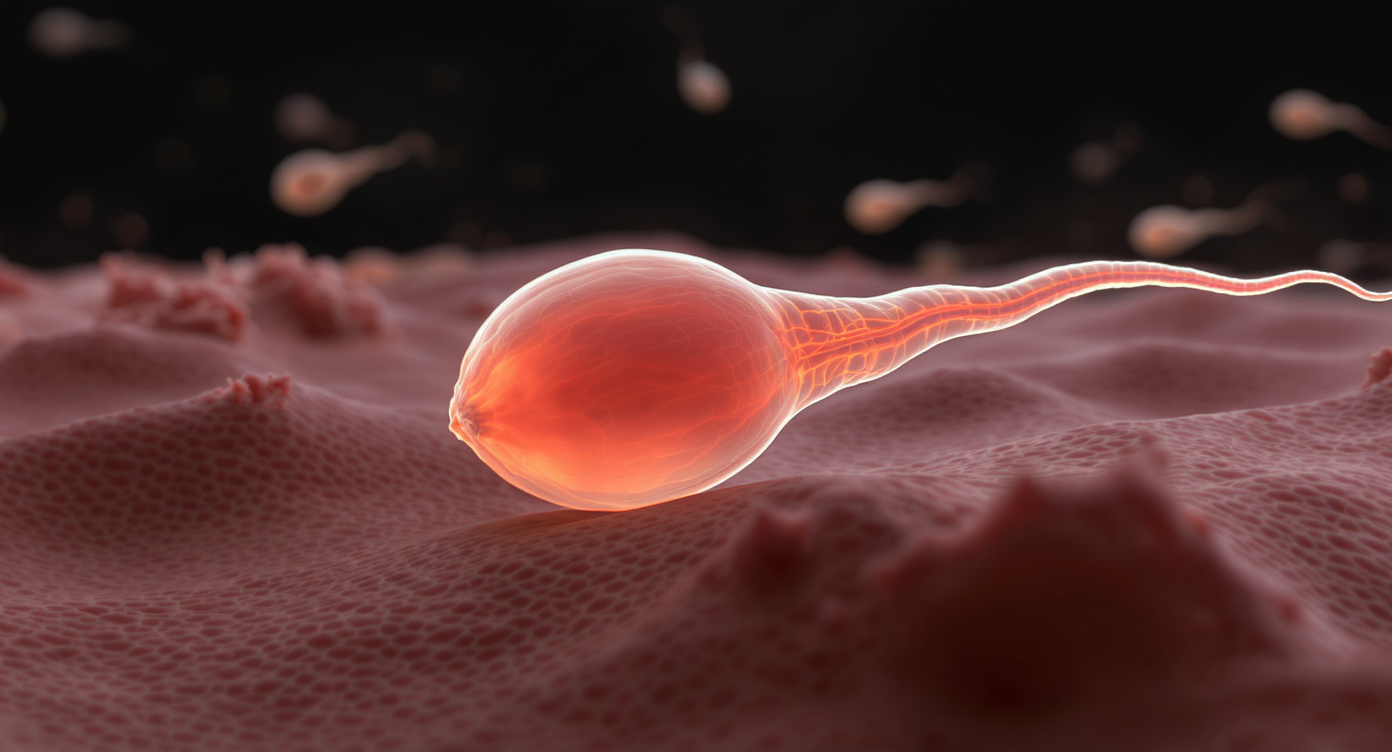
Researchers have developed biohybrid microrobots by coating sperm cells with magnetic nanoparticles. These unique "cyborgs" are controlled using magnetic fields, and for the first time, their movement has been tracked inside an anatomical model of the human body using X-ray imaging. This approach opens up new possibilities for treating infertility and targeted drug delivery.
Why Sperm Cells?
Sperm cells possess unique natural properties: they are fast and efficient swimmers, capable of navigating the complex environment of the female reproductive system. Thanks to these qualities, they are considered a promising biological foundation for creating medical microrobots that can deliver drugs or perform other tasks inside the body.
The Main Challenge: Invisibility
The primary obstacle to using sperm cells as microrobots is their invisibility to standard non-invasive imaging methods. Due to their small size, low density, and near-complete transparency to X-rays, tracking their movement inside the body was previously impossible. Existing optical methods either require surgical intervention or are limited by shallow penetration depth, making them unsuitable for studying processes within the human body.
The Solution: Magnetic Nanoparticles and X-rays
A team of scientists from the Netherlands and Canada proposed a solution to this problem, with their results published in the journal npj Robotics. They used non-living bull sperm cells as the basis for the microrobots. First, the cells were grouped into clusters, then coated with iron oxide nanoparticles using electrostatic self-assembly—particles naturally attach themselves to the surface of the sperm cells. The nanoparticles serve two functions: they make the clusters responsive to external magnetic fields and dense enough to absorb X-ray radiation.
The finished microrobots were placed in a liquid-filled anatomical model of the female reproductive system, which was 3D-printed.
Control and Tracking
To control the robots, the researchers used a robotic manipulator with a permanent magnet that generated a rotating magnetic field. This field caused the clusters to roll along the inner surfaces of the model. For the first time, it was possible to simultaneously control the movement of the biorobots and track their position in real time using X-ray fluoroscopy.
Test Results
During the experiments, the microrobots demonstrated high controllability. They were successfully guided throughout the model—from the cervix, through the cavity, to the right or left fallopian tube. The entire journey took less than 50 seconds. The movement speed depended on the frequency of the magnetic field rotation: as the frequency increased from 2 to 10 hertz, the average speed reached 8–12 mm/s. However, further increases in frequency caused the clusters to break into smaller parts.
Three concentrations of magnetic nanoparticles were tested: 1, 2, and 3 mg/ml. All proved sufficient for reliable control and clear visualization with X-rays. The researchers also checked the biocompatibility of the robots: clusters were placed in contact with a culture of human endometrial cells for 72 hours, and tests showed no significant toxicity—the cell viability remained at 74–88%.
Prospects and Limitations
This work demonstrated the fundamental possibility of creating controllable and visible biorobots based on sperm cells inside the body. In the future, such technology could lead to new methods of targeted drug delivery for treating diseases of the uterus and fallopian tubes, such as endometriosis, fibroids, or cancer.
However, the technology is still in its earliest stages, and clinical application is a long way off. The experiments were conducted in a rigid plastic model that only mimics anatomy and does not reproduce the complex environment of a living organism with soft tissues, fluid flows, and an immune system. Additionally, the disintegration of clusters during movement remains a significant challenge, so it is too early to talk about real disease treatment using such robots.