

Life is possible without water: a new perspective from scientists
Recent experiments have shown that under extreme conditions, not only water but also a mixture of sulfuric acid and organic compounds can serve as a solvent for life. This broadens our understanding of possible forms of life beyond Earth.
Cursus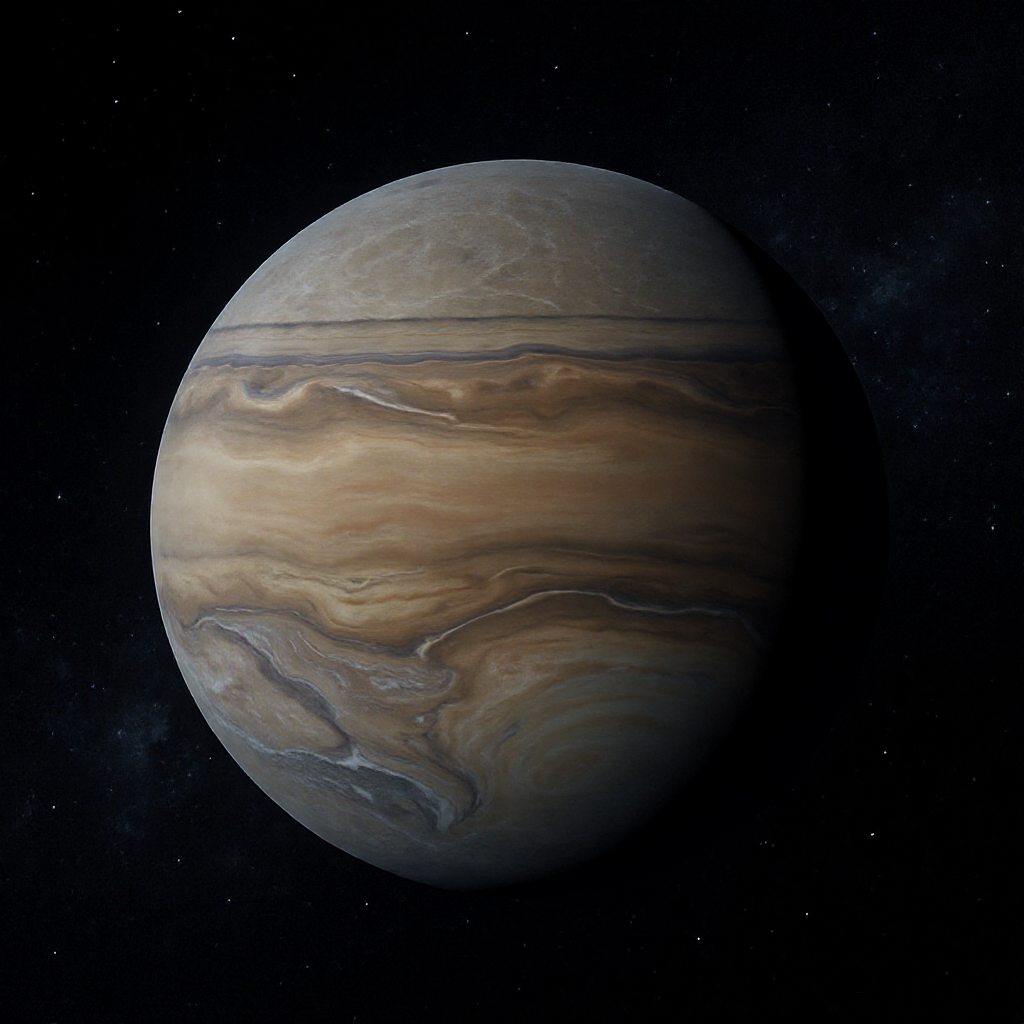
A recent experiment has shown that in conditions lethal to terrestrial organisms, an unusual liquid—a mixture of sulfuric acid and organic compounds—can successfully act as a solvent instead of water. Researchers searching for extraterrestrial life are convinced: we clearly underestimate nature’s ingenuity.
The Mystery of Venus’s Ultraviolet Bands
In the 1920s, advances in astronomical technology made it possible to observe Venus not only in visible light but also in the ultraviolet spectrum for the first time. Astronomers then noticed strange dark bands and patterns on ultraviolet images of the planet, indicating the presence of a substance in Venus’s atmosphere that absorbs this radiation.
Estimates suggest that this absorption occurs at an altitude of 50–70 kilometers—precisely where clouds of sulfuric acid are found. This layer continues to intrigue scientists, as temperatures here range from +20 to +80°C, and the pressure is close to that on Earth, making it far more hospitable than the planet’s surface, where temperatures reach +460°C and pressures exceed 90 atmospheres.
The Unknown Ultraviolet Absorber
The nature of Venus’s ultraviolet absorber has remained an open question for a century. Various substances have been considered—sulfur, its compounds, iron chloride, and others—but none fully explain the observed phenomena. Meanwhile, scientists have noted that on Earth, many microorganisms produce special pigments to protect themselves from harmful radiation, and there are also acidophilic bacteria capable of living in acidic environments.
In 2020, observations using various instruments detected phosphine in Venus’s atmosphere—a gas that, on Earth, is produced exclusively by bacteria in oxygen-free environments. These findings were later challenged, but have not yet been definitively disproven.
Is Water the Only Solvent?
Skeptics argue that even the most resilient extremophiles cannot survive without water, and its amount in Venus’s atmosphere is negligible. However, astrobiologists point out that water is just one of several possible solvents for biomolecules that enable biochemical processes.
In a recent article in the Proceedings of the National Academy of Sciences, scientists from the USA, UK, and Poland demonstrated that water may indeed have an alternative, and this has been confirmed experimentally.
Experiment: A New Medium for Life
The researchers mixed concentrated sulfuric acid with glycine and other nitrogen-containing organic compounds, which have been repeatedly found in meteorites, comets, and asteroids. To simulate Venusian conditions, the substances were placed on fragments of basalt and heated to +80°C. The mixture was then subjected to a vacuum to remove excess sulfuric acid. As a result, a viscous substance formed—so-called ionic liquid.

As the scientists explain, this is a type of salt whose molecules have one end positively charged and the other negatively charged. Such properties are essential for a solvent: its molecules are attracted to oppositely charged parts of dissolved substances, creating conditions for their interaction and movement.
Implications for the Search for Life
Astrobiologists emphasize that many known ionic liquids are not toxic to biochemistry, and their stability at low pressure allows them to exist on planets with thin atmospheres or in their upper layers.
Thus, scientists believe that our traditional understanding of the habitable zone in planetary systems is too limited. Life may find completely unexpected and hard-to-imagine ways to exist, far beyond our usual concepts.